Floor delamination rarely begins at the moment a coating peels or a topping breaks loose. By then, the failure has been developing below the surface, often through trapped moisture, inadequate concrete preparation, or a flooring system that was not specified for the operating environment. Knowing how to prevent floor delamination means controlling those conditions before installation - and protecting the floor after it is placed in service.
For industrial and commercial facilities, delamination is more than a cosmetic defect. It can create trip hazards, harbor contamination, damage lift equipment, interrupt production, and turn a planned maintenance project into an urgent repair. Prevention requires disciplined assessment, preparation, material selection, and installation.
Understand What Causes Delamination
Delamination occurs when a flooring layer separates from the substrate or when layers within a floor system lose bond. The visible result may be blistering, peeling, cracking, hollow-sounding areas, edge lifting, or sections that break away under traffic. The underlying cause is usually a bond failure.
Moisture is one of the most common drivers. Concrete releases moisture vapor for a long period, and moisture can also enter through a slab with no effective vapor barrier, groundwater pressure, washdowns, leaks, or changing humidity conditions. When vapor pressure exceeds the flooring system's tolerance, it can push coatings, mortars, and toppings away from the concrete.
Surface contamination is another frequent cause. Oil, curing compounds, hardeners, old adhesive, paint, dust, and weak concrete laitance can all prevent a new system from developing a reliable mechanical bond. A clean-looking slab is not necessarily a sound substrate.
System mismatch also matters. A floor designed for pedestrian traffic may fail under hard-wheeled forklifts. A coating with limited chemical resistance may soften in a processing area. Thermal shock from hot washdowns can stress a system that was not designed for rapid temperature change. The floor must be selected for actual operating conditions, not assumed conditions.
How to Prevent Floor Delamination Before Installation
The most effective prevention work happens before material arrives on site. A qualified contractor should evaluate the slab, the existing floor system, the facility environment, and the operational demands that will affect the finished floor.
Test the concrete, not just the schedule
Concrete age alone does not confirm readiness for flooring. A slab can meet a calendar-based cure period and still retain excessive moisture or contain weak surface material. Moisture testing should be selected based on the system being installed and the slab condition. Relative humidity testing, calcium chloride testing, and pH evaluation may each have a role in determining risk.
Test results should be interpreted against the flooring manufacturer's published limits. If moisture exceeds those limits, the solution may involve additional drying time, moisture mitigation, drainage corrections, or selection of a system designed for the conditions. Installing over a known moisture problem simply transfers the risk to the finished floor.
Specify the floor around the operation
A durable floor begins with a clear use profile. Define the traffic type, wheel loads, point loads, chemical exposure, temperature range, washdown frequency, sanitation requirements, and expected service life. Also consider where damage is most likely: loading zones, battery charging areas, doorways, production lines, racks, and equipment pads often need more than a standard coating application.
Thickness, resin chemistry, broadcast aggregate, joint detailing, and substrate repair methods should follow this profile. There is no single best industrial flooring system. The right specification depends on the operation and the condition of the existing slab.
Address slab movement and joints
Concrete moves. It shrinks, expands, and responds to temperature and moisture changes. Existing control joints, construction joints, and cracks need to be evaluated before a jointless floor or resinous system is installed.
Bridging active joints with rigid material can lead to cracking and bond failure beside the joint. In facilities with heavy forklift traffic, deteriorated joints can also create impact that accelerates surrounding floor damage. Proper joint repair, sealant selection, and transition detailing are part of delamination prevention, not separate maintenance items.
Surface Preparation Determines Bond Strength
Surface preparation is where long-term performance is won or lost. Coatings and toppings bond to the prepared concrete profile, not to dirt, laitance, old paint, or weak material left behind.
Mechanical preparation is generally the most dependable approach. Shot blasting, diamond grinding, scarifying, or milling may be used according to the condition of the slab and the required concrete surface profile. The objective is to remove unsound material, open the concrete surface, and create the profile needed for the selected system.
Grinding has a role, particularly where access, dust control, edge work, or slab flatness requires it. But it must be performed correctly. Over-polishing can close the concrete surface and reduce adhesion. Incomplete removal of old coatings can create isolated bond failures. The preparation method should match the system and the substrate, rather than being selected only for speed.
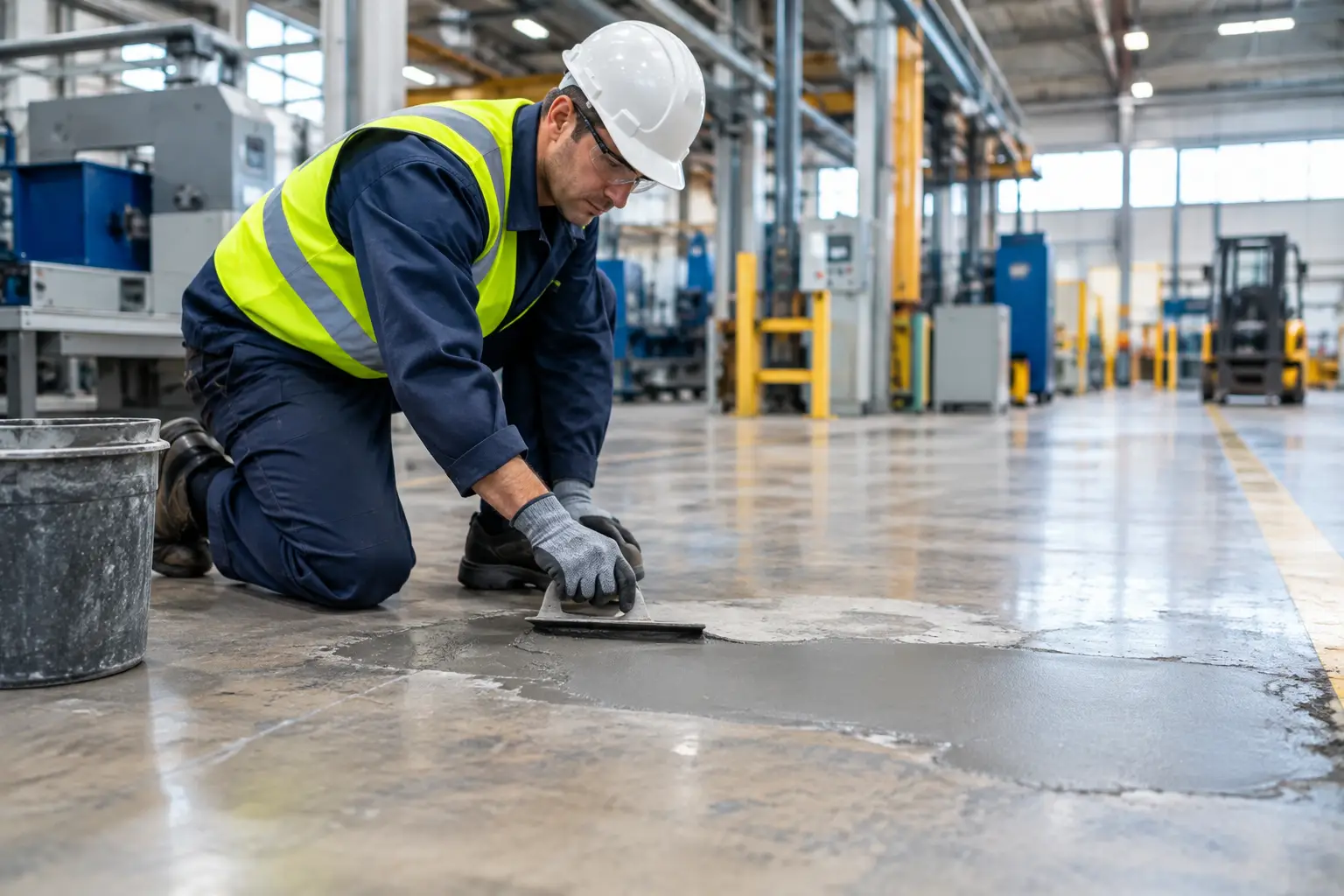
After preparation, the floor should be inspected for weak areas, cracks, spalls, exposed aggregate, and contamination that was not visible before. Repairs need compatible materials and sufficient cure time. Applying a high-performance floor over unstable repairs creates a weak point within an otherwise sound installation.
Control Installation Conditions
Even a well-prepared slab can fail if installation conditions are unmanaged. Temperature, humidity, substrate temperature, dew point, mixing accuracy, recoat windows, and cure time all affect adhesion and final performance.
Condensation is a particular concern. When the slab temperature is near the dew point, moisture can form on the surface even when it is not obvious to the installer. Applying resin over that moisture compromises the bond. Conditions should be checked throughout the work period, especially in facilities with open dock doors, active HVAC changes, or variable weather exposure.
Material mixing and placement must follow the manufacturer's requirements. Incorrect mix ratios, incomplete blending, excessive thinning, or working beyond pot life can weaken a resin system. These are avoidable execution failures, but only when the installation team has the controls and discipline to stop work when conditions are outside specification.
Operational pressure can create risk here. Fast return-to-service requirements are common in active facilities, but accelerated schedules cannot replace curing requirements. A floor placed back into forklift service, chemical exposure, or washdown before it reaches its required cure can suffer damage that appears later as delamination.
Protect the Floor After Handover
Prevention continues after installation. Facility teams should protect new floors from conditions that can overwhelm the specified system or compromise vulnerable details.
Keep drainage functional and address leaks quickly. Standing water at walls, drains, and equipment bases can migrate into the slab or under floor edges. Review cleaning chemicals before changing sanitation programs. A product that is acceptable for concrete may not be suitable for a resinous floor, especially at higher concentrations or elevated temperatures.
Traffic management also matters. Hard wheels, overloaded forklifts, and repeated turning in the same location impose high shear stress on floor surfaces. In heavy-use zones, planned inspections can identify joint breakdown, coating wear, and impact damage before moisture or traffic reaches the substrate.
When repairs are needed, do not patch over loose material. The failed area must be cut back to sound concrete or firmly bonded flooring, prepared to the correct profile, and repaired with a compatible system. Quick cosmetic repairs may reduce the appearance of damage but can leave the bond failure active beneath the surface.
Use Early Warning Signs to Avoid Larger Failures
A hollow sound during tapping, localized blistering, hairline cracking around repairs, discoloration, and coating wear at high-traffic transitions all warrant investigation. These conditions do not always require full replacement, but they should not be ignored.
Early intervention may be limited to drainage correction, joint repair, targeted grinding, moisture mitigation, or localized resurfacing. The longer a bond failure is exposed to traffic and moisture, the more likely it is to spread beyond the original area.
For facilities where uptime, safety, and equipment movement are critical, the lowest-cost installation is rarely the lowest-cost floor over its service life. Osis Group approaches industrial flooring around substrate condition, operational demands, and execution control because those details determine whether a floor remains bonded under real working conditions.
A floor should be treated as operating infrastructure. When moisture, preparation, specification, and installation discipline are addressed together, delamination becomes a manageable risk rather than an expensive surprise.