A very narrow aisle warehouse only performs as designed when every element supports controlled truck travel. The wire guidance system benefits that matter most are measurable: precise positioning, reduced rack contact, higher storage density, and dependable travel through narrow operating aisles. Those outcomes depend on more than the guidance wire itself. Floor flatness, surface condition, installation accuracy, and ongoing floor repair all affect system performance.
For facilities operating VNA forklifts, wire guidance is not a convenience feature. It is an operating control that protects rack systems, equipment, inventory, and throughput.
What a Wire Guidance System Does
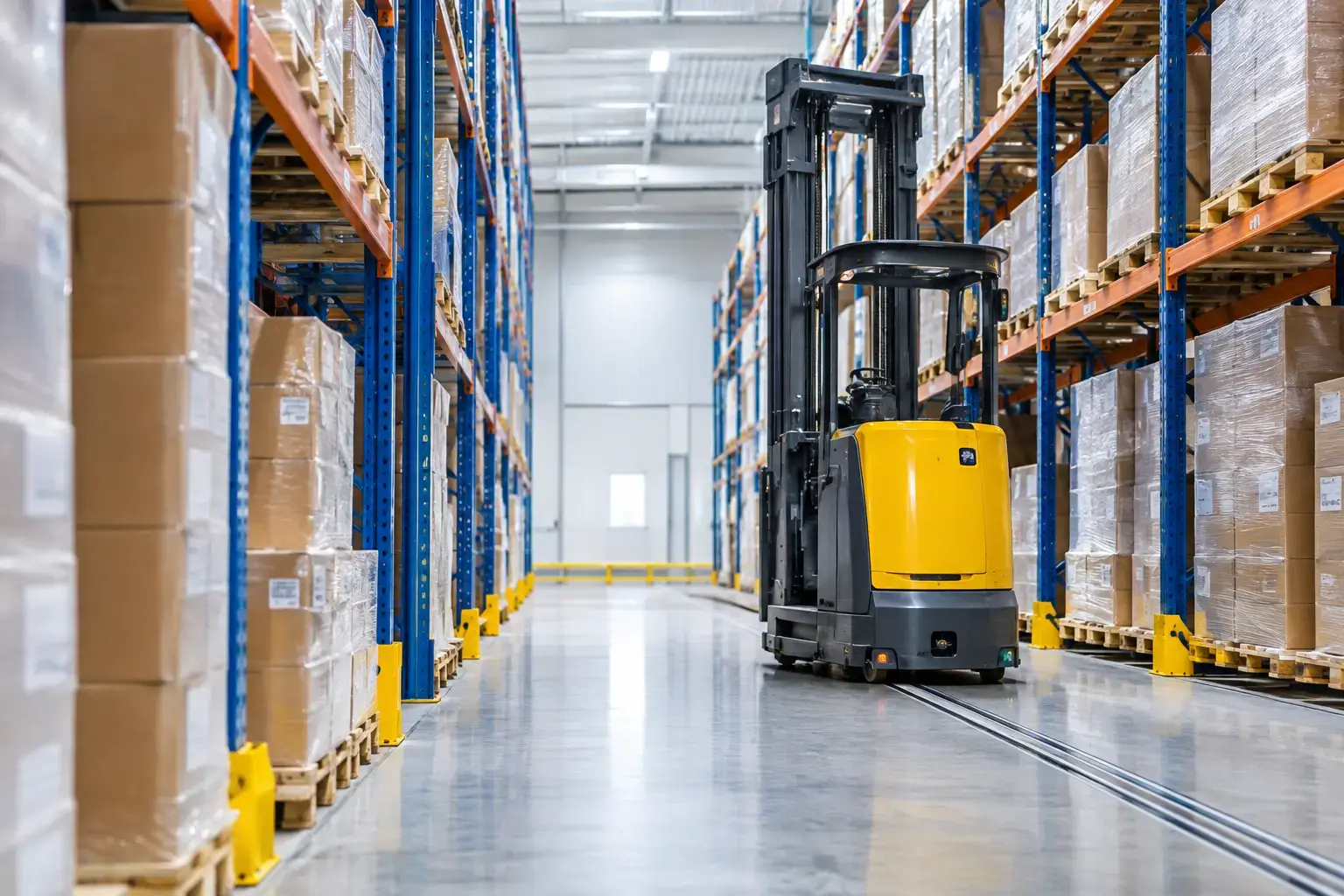
A wire guidance system uses an energized wire installed in the warehouse floor to create a path for compatible VNA lift trucks. Sensors on the truck detect the signal and keep the vehicle centered in the designated aisle. Once engaged, the operator can focus on load handling while the truck follows the wire guidance path.
This approach allows aisles to be considerably narrower than conventional forklift aisles. The resulting increase in pallet positions can improve the value of the warehouse footprint without expanding the building. In high-volume distribution, manufacturing, and cold-storage environments, that density can have a direct effect on capacity planning.
The system is typically installed in a precisely cut channel within the slab. The wire is placed at the required depth, tested, and sealed with a compatible repair material. The finished line must be protected from wear, moisture intrusion, joint movement, and traffic damage. A poorly executed installation can create inconsistent vehicle guidance or leave a repair line that breaks down under hard-wheel traffic.
Wire Guidance System Benefits in Daily Operations
The strongest benefit is repeatable travel accuracy. In a narrow aisle, there is little tolerance for steering variation. Wire guidance maintains a consistent truck path from aisle entry to aisle exit, reducing the likelihood of mast, load, or truck contact with rack uprights.
That accuracy supports rack protection. Rack damage is not merely a maintenance issue. It can create safety exposure, interrupt storage locations, trigger inspections, and lead to unplanned repair costs. Keeping trucks consistently centered helps reduce impacts caused by minor steering corrections, operator fatigue, limited sightlines, or high travel frequency.
Wire guidance also supports more productive use of labor. Operators spend less effort making continuous steering adjustments in long, constrained aisles. Travel becomes more predictable, especially when truck operators handle repetitive put-away and retrieval tasks throughout a shift. The gain is not that guidance eliminates the need for skilled operators. Safe loading, speed control, and load handling still require disciplined operation. It does reduce a source of variability that can slow work and increase risk.
For facilities where space is at a premium, narrower aisles are another material advantage. VNA layouts can increase storage capacity within an existing footprint, but only when the floor and rack layout meet the requirements of the selected equipment. Wire guidance provides the controlled travel path that makes these tight aisle dimensions practical.
The system can also improve consistency across shifts. New operators and experienced operators work within the same defined path, which supports standardized operating practices. That consistency is useful in facilities with multiple shifts, seasonal labor, or high equipment utilization.
Floor Quality Determines Guidance Performance
Wire guidance does not correct a floor that is unsuitable for VNA traffic. The guidance wire controls lateral travel, but lift trucks still respond to elevation changes, slab movement, damaged joints, surface wear, and localized flatness problems. A truck can remain on its wire path while experiencing load sway, vibration, wheel wear, or instability caused by the floor beneath it.
This is why VNA floor evaluation should begin before wire installation. The floor must be assessed against the operating requirements of the truck, rack configuration, load height, wheel type, and travel path. General warehouse flatness criteria may not be sufficient for very narrow aisle equipment. Defined wheel paths and high lift heights often require more exacting tolerances.
Joint condition requires equal attention. Open, broken, or rocking joints can produce repeated impacts as trucks enter and exit aisles. Those impacts affect ride quality and can damage the joint edge, lift truck wheels, and loads over time. Joint repair, load transfer solutions, or localized slab correction may be required before a wire guidance installation proceeds.
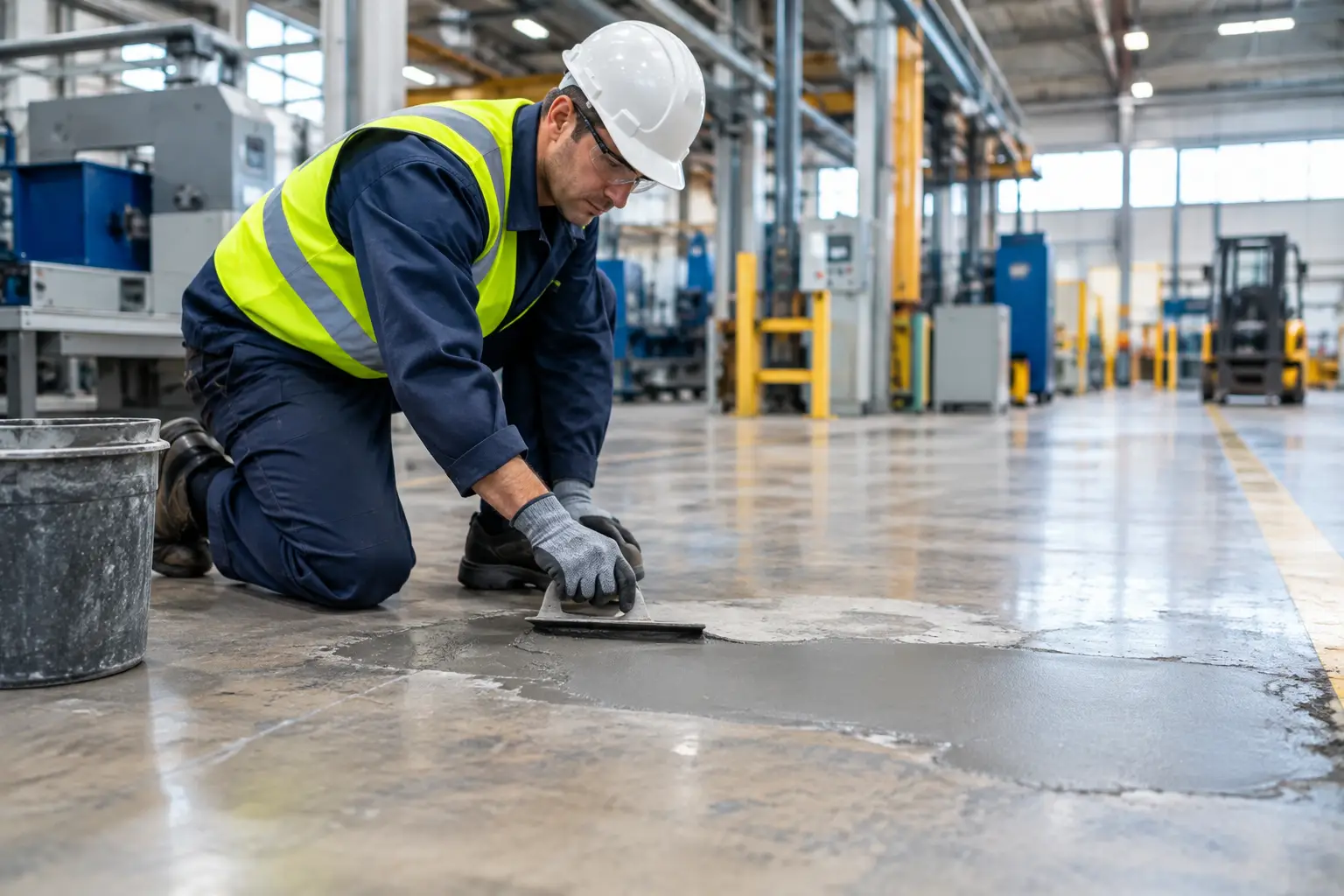
Surface defects matter as well. Spalls, delamination, old patch repairs, and worn concrete can make saw-cut work less predictable and may compromise the durability of the finished wire channel. The right sequence is to correct the substrate first, then install the system on a stable, prepared floor. Installing guidance into a failing slab only relocates the problem.
Installation Accuracy Is a Long-Term Cost Issue
A wire guidance system is a precision installation. The specified centerline must align with the engineered operating aisle and rack geometry. Changes in wire position, inconsistent saw-cut depth, improper terminations, or inadequate sealing can affect guidance reliability and create future maintenance exposure.
The work should be planned around active warehouse operations. This includes defining work zones, sequencing aisle closures, controlling dust from saw cutting, protecting adjacent traffic, testing each completed circuit, and returning areas to service in a controlled order. Facilities rarely have the option of stopping all shipping and receiving activity for a floor project. The installation plan needs to protect uptime while maintaining workmanship standards.
Material selection is also practical, not cosmetic. The channel fill must bond to the prepared concrete, tolerate expected traffic, and remain stable under the temperature and service conditions of the facility. A repair material that performs well in a light-duty interior may not be the right choice for aggressive forklift traffic, wet processes, thermal movement, or cold environments.
At Osis Group, wire guidance work is approached as part of the operating floor system, not as an isolated saw-cut and fill task. That perspective helps align surface preparation, joint repair, floor corrections, and installation sequencing with the actual demands of VNA equipment.
When Wire Guidance Is the Right Choice
Wire guidance is particularly well suited to high-density storage operations with repeatable VNA travel patterns. It is commonly selected where facilities need to maximize pallet positions while maintaining controlled movement through long, narrow aisles. The system is proven, physical, and independent of visual markers that can become obscured by dirt, wear, or warehouse activity.
It is not automatically the best option for every warehouse. Operations with frequently changing aisle layouts may prefer a solution with more flexibility. Existing slabs with extensive cracking, moisture-related deterioration, or significant flatness deficiencies may require substantial corrective work before wire guidance is cost-effective. The available fleet also matters, since trucks must be equipped and configured for the selected guidance method.
A sound decision considers the full operating model: required storage density, truck type, lift height, slab condition, rack protection goals, installation window, and maintenance expectations. Looking only at the initial installation cost can overlook the value of reduced rack strikes, fewer interruptions, and better use of available square footage.
Protecting Performance After Installation
Once installed, the guidance path should be included in the facility's floor inspection routine. Watch for cracking or wear along the channel, failed seals, joint movement near aisle entries, and damage from maintenance work or floor penetrations. Any repair near a guidance wire requires careful identification of the circuit before cutting, drilling, or grinding begins.
Housekeeping also has a role. While the wire is embedded and protected, clean travel surfaces support truck performance and make developing floor defects easier to identify. Regular checks of lift truck guidance components, wheel condition, and aisle clearances help maintain the system as intended.
The best time to address VNA floor constraints is before rack installation and truck commissioning. A detailed evaluation of the slab, joints, wheel paths, and guidance layout gives a facility a better basis for protecting capacity long after the first pallet is stored.