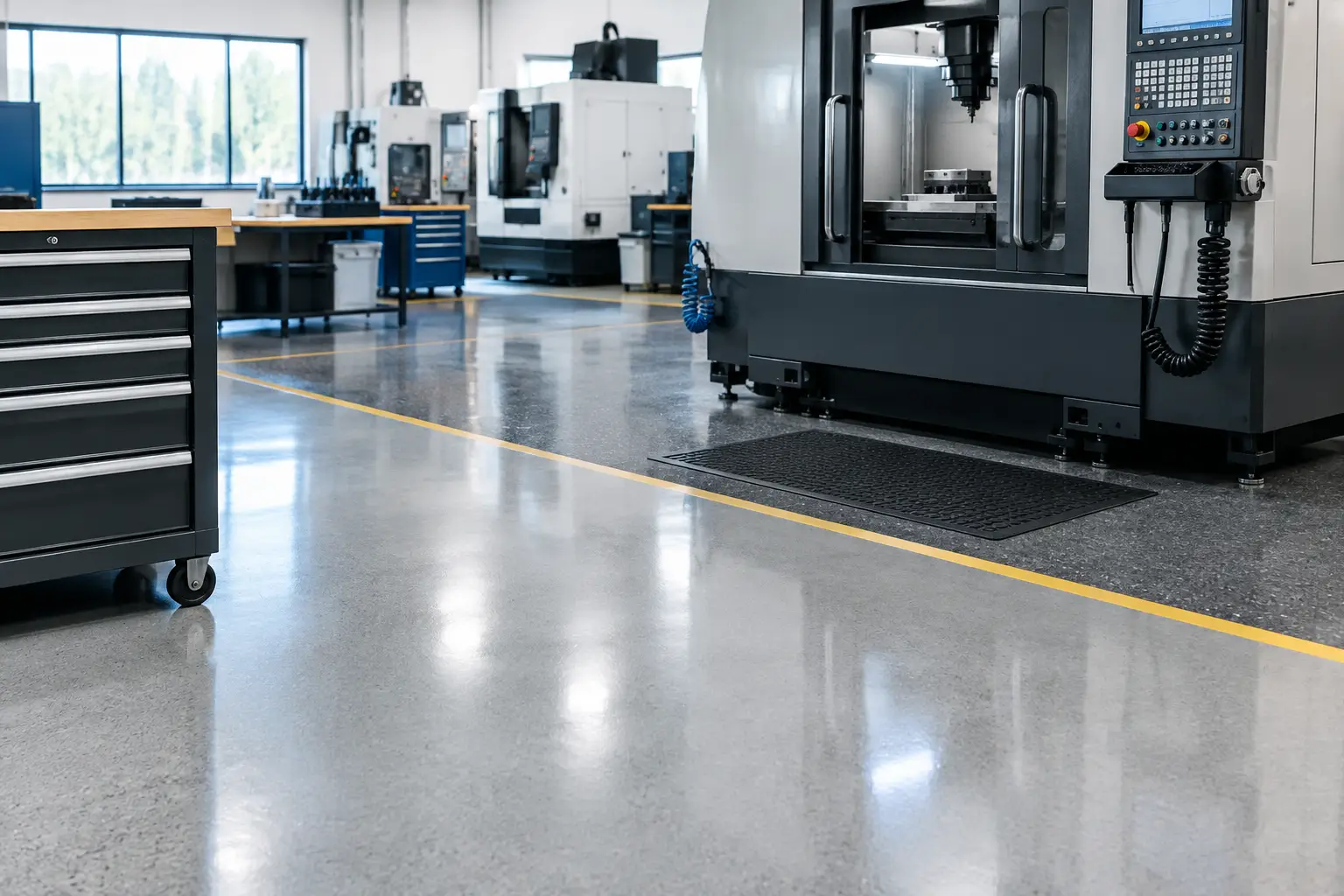
A failed joint under a forklift lane rarely stays a small repair. Edges break away, wheels strike harder, operators change routes, and damage spreads into the slab. That is why industrial floor repair trends are moving away from reactive patching and toward repair strategies that protect traffic flow, safety, and long-term floor performance.
For plant managers and facilities leaders, the practical question is not whether a damaged floor can be patched. It is whether the repair will hold under the actual loading, traffic pattern, moisture conditions, and operating schedule of the facility. The best repair decisions begin with that standard.
Industrial Floor Repair Trends Changing Project Decisions
The central trend is a shift from surface-level fixes to condition-based repair planning. Facilities are looking beyond visible spalls and cracks to identify why damage occurred. A failed repair may point to joint movement, poor edge support, weak concrete, impact loading, moisture pressure, or an incompatible previous coating. Treating only the visible defect can put the operation back in the same position within months.
This is especially relevant in distribution centers, manufacturing plants, food and beverage facilities, warehouses, and logistics operations. Higher traffic volumes, heavier wheel loads, automated equipment, and tighter tolerances are exposing floor weaknesses sooner. Repairs must now perform as part of the operating system, not as a temporary maintenance task.
Faster Return-to-Service Materials
Rapid-cure repair materials remain a major priority, but speed alone is not the measure of success. Facilities need materials that can return a traffic lane to service quickly while still resisting impact, abrasion, thermal cycling, and chemical exposure where required.
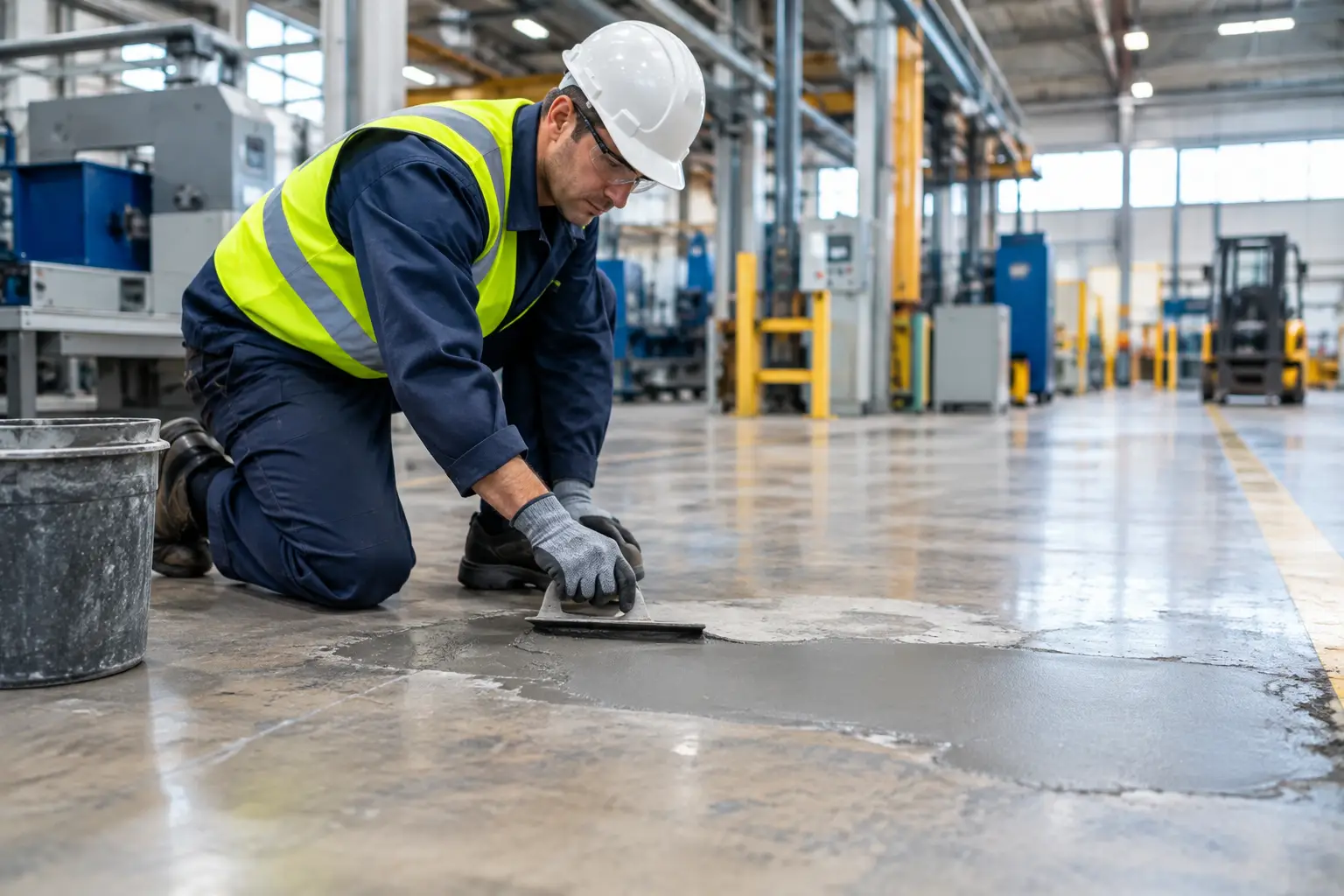
Fast-setting mortars and resinous repair systems can be an effective choice for localized spalls, joint-edge failures, and urgent deterioration in active areas. The trade-off is that rapid installation demands disciplined preparation. If damaged concrete is not removed to sound material, edges are not properly cut, or surface contamination remains, even a premium repair material can fail prematurely.
The right schedule is therefore based on more than cure time. It accounts for demolition, preparation, placement, cure, return-to-traffic requirements, and protection from early abuse. A repair that opens a few hours later but requires repeated intervention is not a productivity gain.
Joint Repair Built for Traffic, Not Just Appearance
Joint failure remains one of the most common and costly issues in industrial concrete floors. Forklift traffic transfers repeated impact into joint edges. Once an edge begins to break down, the joint can become a source of equipment vibration, product damage, operator discomfort, and accelerating concrete loss.
Current repair strategies place greater emphasis on rebuilding joint shoulders with materials designed for hard-wheel traffic and restoring a clean, supported joint profile. Joint fillers must also be matched to the facility. A high-traffic warehouse with narrow-aisle equipment has different needs than a production floor with thermal movement, washdown exposure, or occasional cart traffic.
Repair timing matters. Addressing small joint-edge damage early is generally less disruptive than waiting for a broad failure zone. Planned joint repair programs allow facilities to focus work during low-volume windows, isolate smaller sections, and prevent defects from becoming safety concerns.
Grinding as an Upgrade Strategy
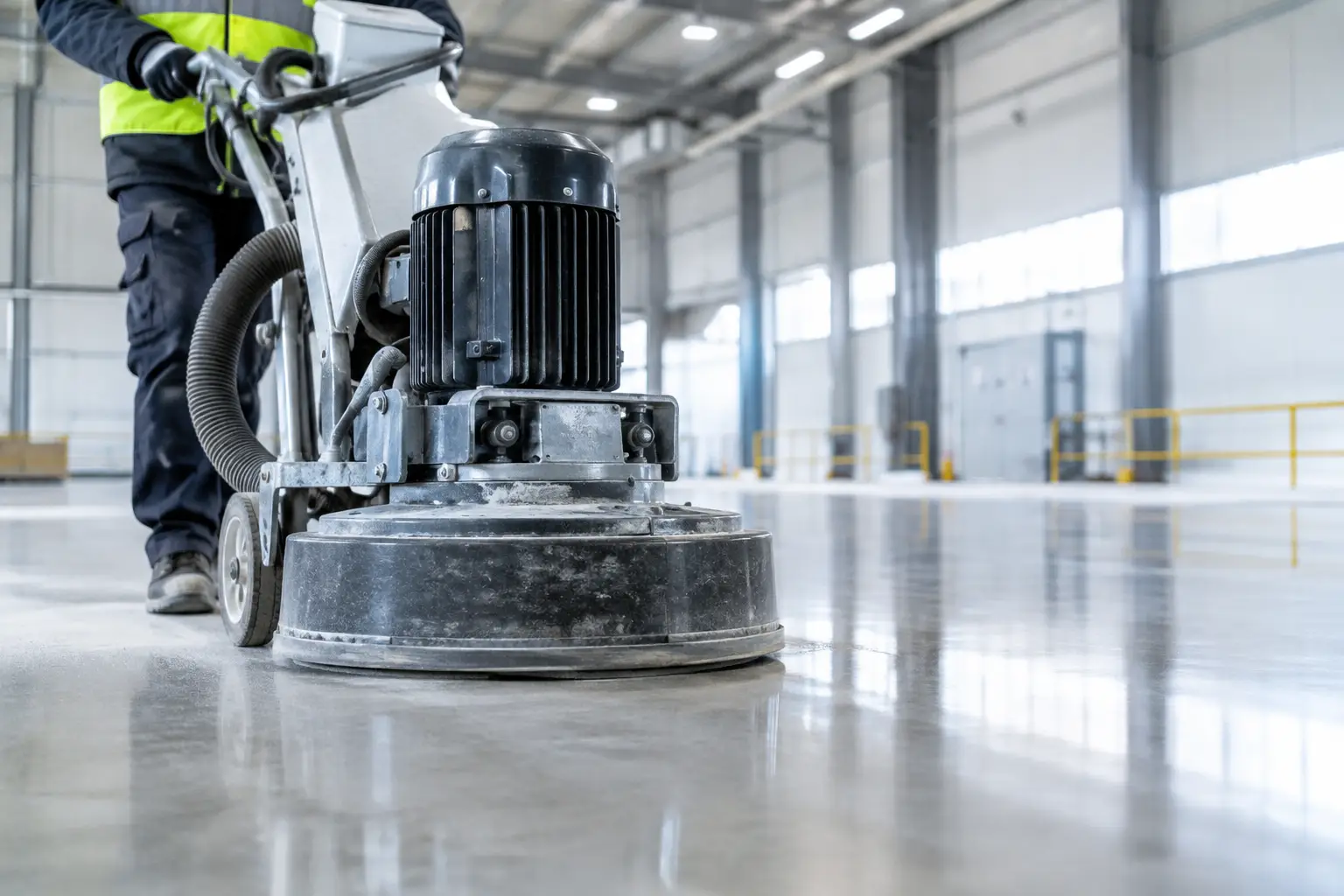
Concrete grinding is increasingly used as a floor upgrade tool, not simply a corrective measure. In the right conditions, grinding can remove surface irregularities, improve ride quality, reduce trip points, prepare concrete for a new system, or restore a floor that has worn unevenly under traffic.
For very narrow aisle operations, flatness and levelness are operational requirements. Superflat VNA floors must support dependable truck travel, rack clearances, lift stability, and productivity at elevation. Where an existing slab falls short, selective grinding and targeted remediation may improve performance. However, grinding is not a universal answer. Excessive grinding can reduce cover over reinforcement, expose weak aggregate zones, or create unacceptable transitions if the floor condition has not been properly evaluated.
The repair plan should establish what must be corrected, what tolerance is required, and how the work will be verified. Measuring before and after the work is essential when equipment performance depends on the result.
More Repairs Are Being Planned Around Operations
Industrial repair work is increasingly scheduled around production and logistics constraints. This reflects a simple reality: a technically sound repair still creates a problem if it blocks a critical aisle, loading area, production line, or emergency route at the wrong time.
Phased execution is now common in active facilities. Work may be sequenced by traffic lane, shift, department, or zone so that operations retain access to essential areas. This approach requires clear planning for containment, demolition noise, dust control, material staging, cure protection, and reopening criteria.
The most effective contractors treat project planning as part of the repair system. They confirm traffic routes, equipment types, access requirements, and operational windows before work begins. They also identify where temporary transitions or alternate routes are needed to protect both the repair and the people moving through the facility.
Jointless Systems and Targeted Floor Replacement
Another important direction is the use of larger-area upgrades when recurring joint problems show that isolated repairs are no longer economical. Jointless floor systems can reduce the number of vulnerable construction joints across high-traffic areas. Fewer joints can mean fewer maintenance points, smoother material movement, and less impact on vehicles and loads.
That does not mean jointless construction is the correct answer for every facility. Existing slab conditions, building geometry, loading, temperature exposure, and budget all influence the decision. In some cases, a targeted replacement of a heavily damaged aisle or dock approach delivers better value than extensive repair across a distressed area. In other cases, well-executed joint repair and grinding can extend useful service life without the disruption of replacement.
The trend is not toward one repair method. It is toward choosing the scope that best reduces lifecycle cost and operational risk.
Wire Guidance Requires Floor Precision
Wire-guided lift truck systems create another reason to approach repair with precision. Damaged concrete, failing joints, and poorly planned repairs can affect the floor surface around wire guidance infrastructure. When work is required in guided travel paths, repair planning must account for both concrete performance and the guidance system's operating requirements.
Repairs in these areas should be carefully surveyed before demolition. The goal is to avoid unplanned interruptions, preserve alignment, and restore a surface that supports stable equipment travel. For facilities adding or modifying wire guidance, floor repair and floor tolerance should be evaluated early rather than treated as separate issues.
Surface Preparation Is Still the Deciding Factor
Material innovation gets attention, but surface preparation remains the foundation of durable repair. Industrial concrete can carry oil, tire residue, curing compounds, coatings, moisture, and weak surface paste. Each can interfere with adhesion and shorten repair life.
Mechanical preparation, proper edge cuts, removal of unsound concrete, and attention to moisture conditions are not optional details. They determine whether the repair becomes integrated with the slab or remains a vulnerable patch. The same standard applies before installing protective coatings or resinous flooring over a repaired area.
A high-performance flooring system can improve cleanability, chemical resistance, and abrasion resistance. But it cannot compensate for unresolved slab movement, active moisture issues, or failed substrate conditions. The repair scope must address the cause before the finish layer is selected.
What to Evaluate Before Approving a Repair
Before committing to a repair scope, facilities should ask a few direct questions. What is causing the damage? What traffic and loads will the repaired area carry? How much downtime is truly available? Is the defect isolated, or is it evidence of wider floor distress?
It is also worth defining success in measurable terms. That may mean a smooth transition across a joint, a required floor tolerance in a VNA aisle, a specified return-to-service window, or a repair system that withstands washdown and chemical exposure. Clear criteria protect the facility from repairs that look acceptable on day one but fail under service conditions.
The best industrial floor repair trends are not about chasing the newest material or the fastest patch. They are about making repair work fit the facility's real demands. Osis Group approaches that work with the same standard applied to every industrial floor: prepare correctly, specify for the service environment, and deliver a result that supports the operation long after the work area reopens.