A resin floor can look similar on day one and perform very differently by year three. In the epoxy versus urethane decision, the correct answer depends on what happens on the floor: traffic patterns, temperature movement, chemical exposure, cleaning methods, substrate condition, and the shutdown window available for installation. Selecting by initial cost or appearance alone often shifts risk into operations.
For industrial facilities, flooring is not a finish applied at the end of construction. It is a working surface that supports people, forklifts, wheeled equipment, sanitation procedures, and production schedules. The right system starts with a clear understanding of service conditions and ends with disciplined surface preparation and installation.
Epoxy Versus Urethane Flooring: The Core Difference
Epoxy and urethane are both high-performance resinous flooring materials, but they manage stress differently. Epoxy is typically harder, thicker-building, and highly adhesive to a properly prepared concrete substrate. It is widely specified where chemical resistance, mechanical strength, and a dense, cleanable surface are required.
Urethane, often called polyurethane flooring, is generally more flexible and more resistant to ultraviolet light and thermal movement. It can better tolerate certain temperature swings, impact conditions, and exterior or sunlit exposures where standard epoxy can amber or chalk over time.
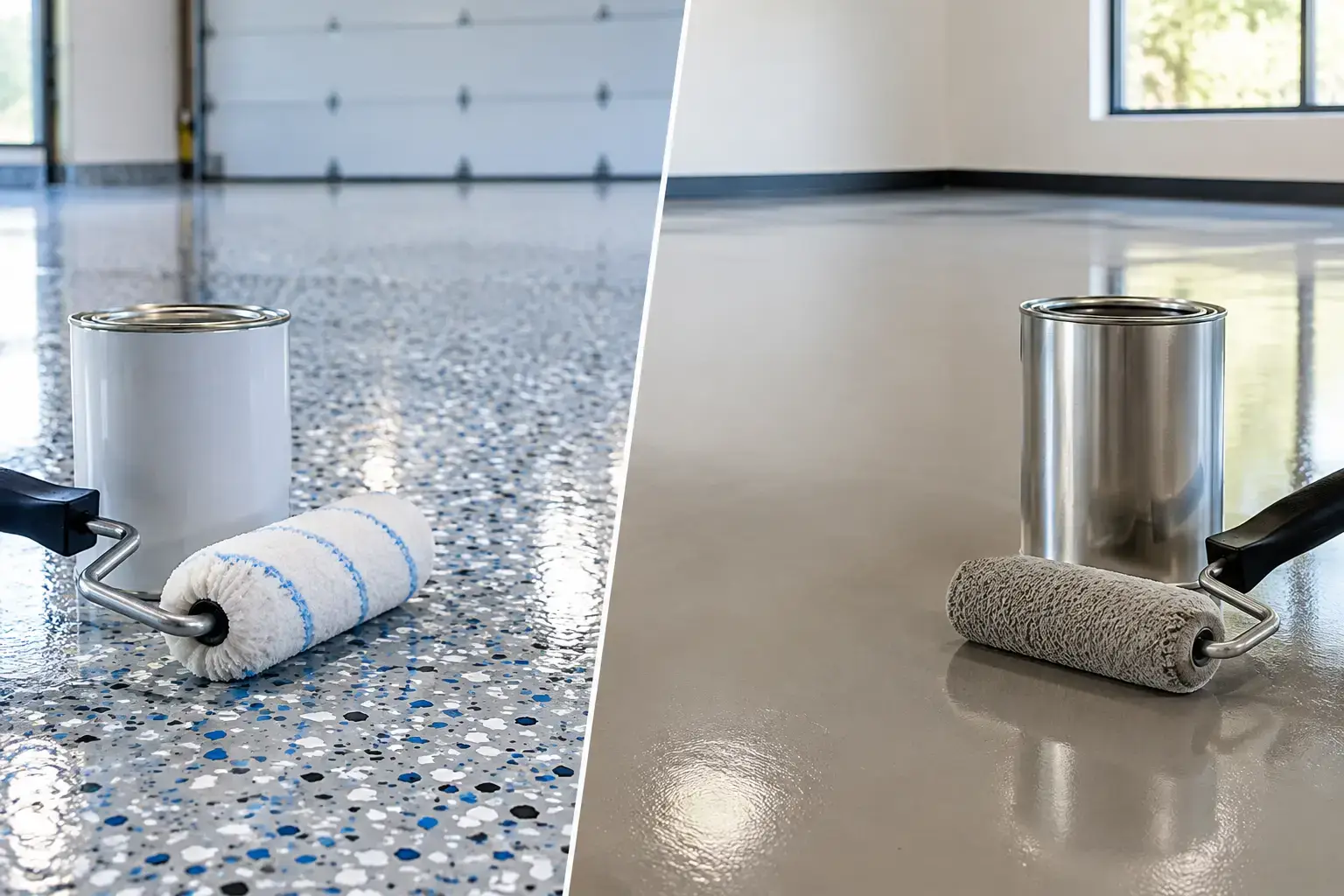
These differences do not make one material universally better. Many successful industrial floor systems use both. An epoxy primer or body coat may provide build and bond strength, while a urethane topcoat adds wear, color stability, and improved resistance to a defined exposure. The system should be engineered as a complete assembly, not selected from a single product label.
Where Epoxy Performs Best
Epoxy is a proven choice for warehouses, manufacturing areas, laboratories, maintenance spaces, equipment rooms, and many commercial back-of-house environments. Its ability to create a seamless, nonporous surface supports cleaning, dust control, and visual organization. Broadcast epoxy systems can also be built with texture for slip resistance in areas where dry contamination or incidental moisture is expected.
A properly specified epoxy floor handles many common industrial exposures well, including oils, fuels, alkalis, and selected chemicals. It also provides substantial compressive strength and can be installed in multiple thicknesses, from thin-film coatings to heavy-duty mortar systems designed to restore worn or damaged concrete.
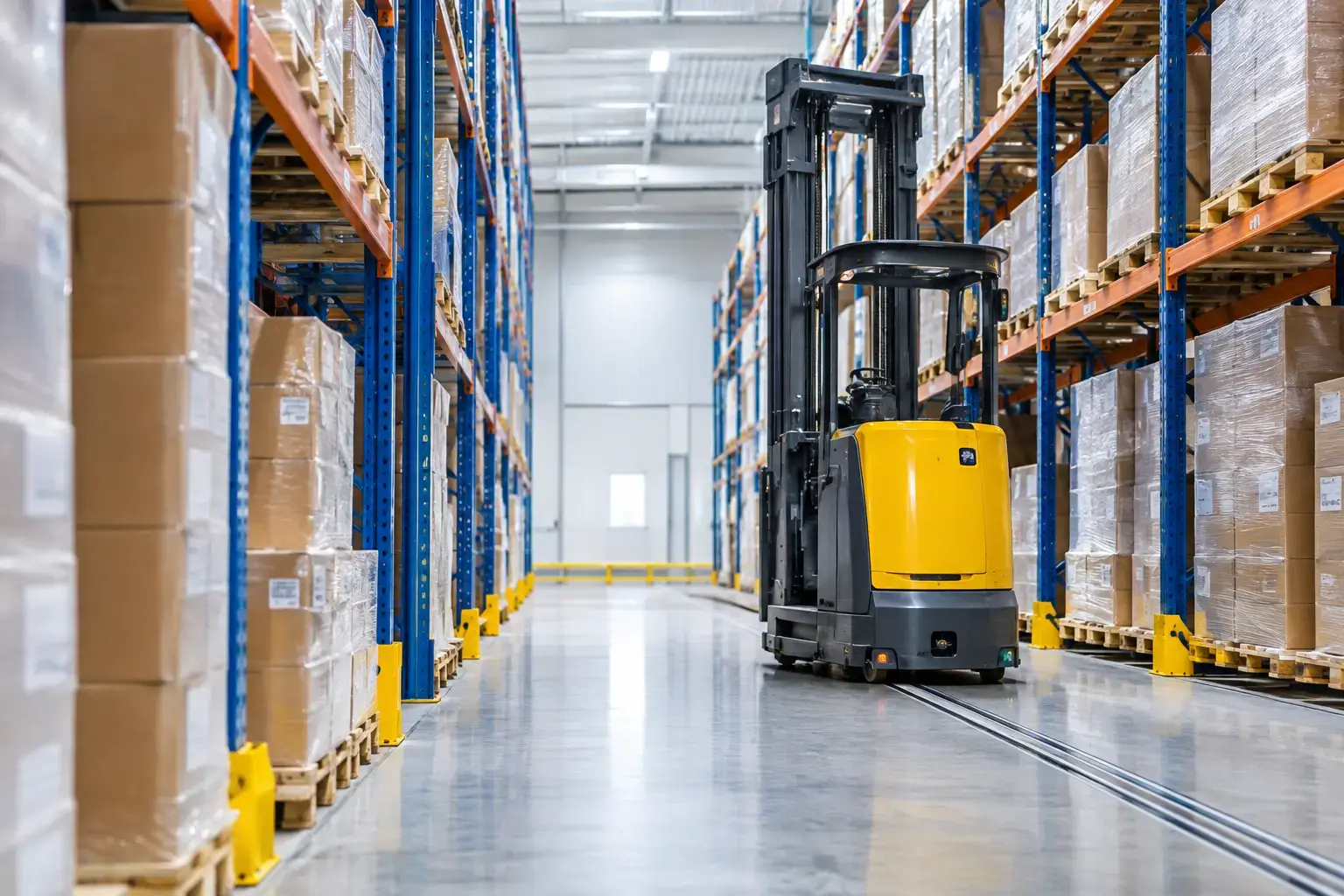
Epoxy is especially effective when the facility needs a level, durable floor surface under consistent indoor environmental conditions. In distribution facilities, floor quality also affects rolling resistance, equipment wear, and operational efficiency. Where very narrow aisle equipment is planned, the resin system must support the Superflat floor tolerances beneath it rather than compensate for a slab that does not meet the operational requirement.
Its limitations need to be understood early. Standard epoxies are less tolerant of thermal cycling than urethane systems. They can also yellow when exposed to sustained sunlight. In applications involving repeated hot washdowns, steam, severe thermal shock, or frequent temperature changes, a conventional epoxy system may not be the long-term answer.
Where Urethane Performs Best
Urethane coatings are often selected as topcoats over epoxy because they offer strong abrasion resistance and retain color more effectively under ultraviolet exposure. A urethane topcoat can be a practical choice for loading dock approaches, sunlit manufacturing spaces, exterior-adjacent areas, and facilities where the floor must maintain a consistent appearance under high traffic.
Because urethane has greater flexibility, it can be better suited to slabs that experience moderate movement from temperature changes. It also offers useful resistance to abrasion from wheels, carts, and regular foot traffic. That does not mean it eliminates the need for joint management. Moving joints must still be properly detailed, and failed joints require repair before a seamless floor system is installed across the surrounding area.
Cure urethane cement systems deserve separate attention. These are not simply urethane topcoats. Urethane cement is a thicker, moisture-tolerant system designed for severe industrial conditions, particularly in food and beverage processing, commercial kitchens, beverage production, cold storage transitions, and wet-process areas. It is well suited to thermal shock, hot-water washdowns, organic acids, and demanding sanitation practices.
Urethane cement can often be installed over concrete with higher moisture levels than a standard epoxy system can accept. Even so, moisture testing and substrate evaluation remain essential. A flooring system is only as dependable as the concrete beneath it and the preparation work performed before application.
Chemical Resistance Is Exposure-Specific
“Chemical resistant” is not a complete specification. The actual chemical, concentration, temperature, dwell time, and cleaning process determine whether a floor will perform. A coating that withstands an occasional oil spill may not tolerate a daily hot caustic washdown. A system that resists a diluted acid at room temperature may fail when exposed to a higher concentration at elevated temperatures.
Epoxy commonly performs well against a broad range of industrial chemicals, which is why it remains a standard in many manufacturing and maintenance environments. Urethane cement is frequently stronger in wet, hot, and thermally aggressive processing environments. Aliphatic urethane topcoats can provide additional protection against abrasion and ultraviolet exposure.
The correct approach is to review the facility's real exposure profile before selecting materials. This includes process chemicals, cleaners, degreasers, battery charging areas, hydraulic fluids, forklift traffic, and the likelihood of standing water. A flooring specification should account for routine conditions, not only exceptional spills.
Installation Conditions Matter as Much as Material Choice
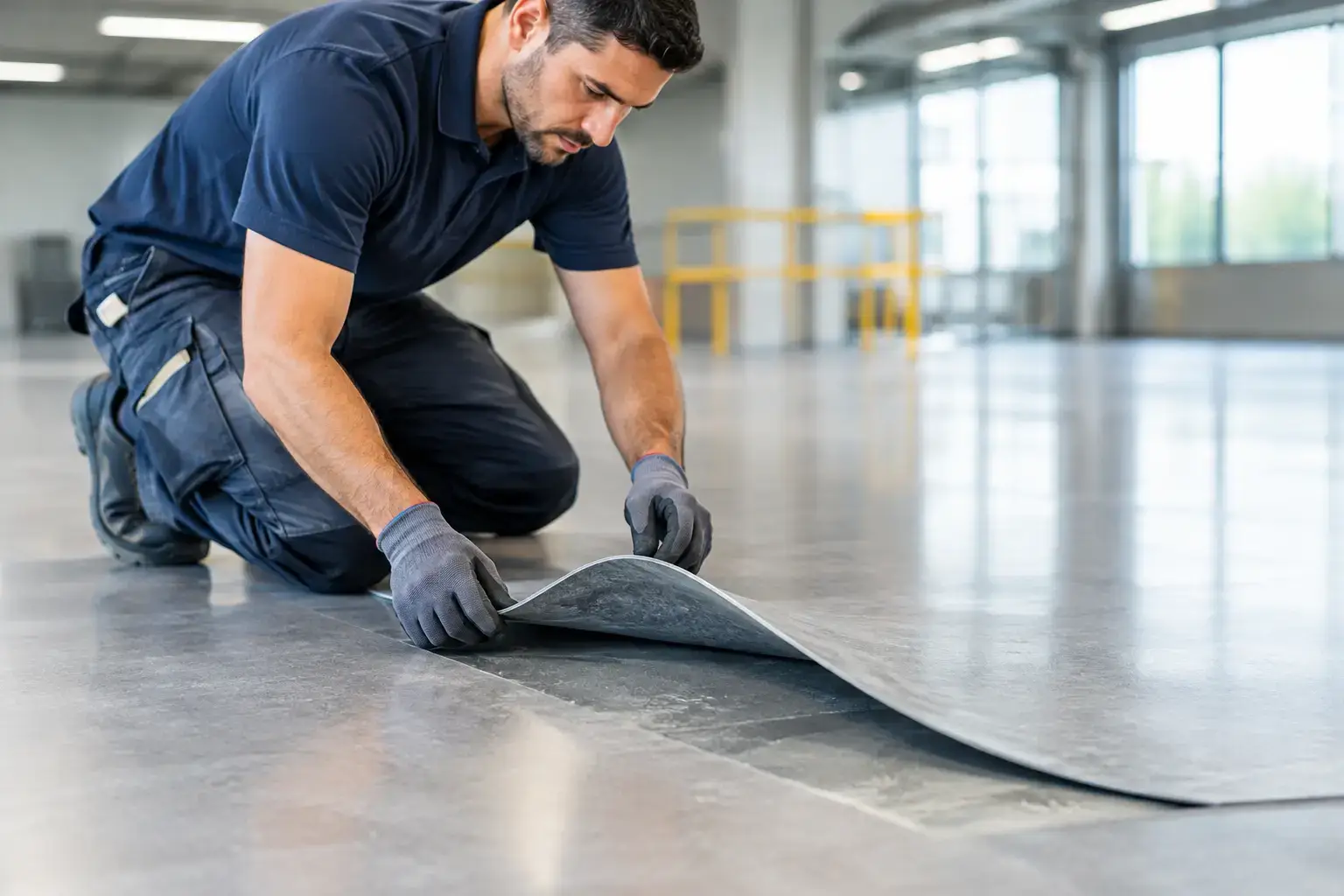
Concrete preparation is the foundation of resinous flooring performance. Coatings require a clean, sound, properly profiled substrate. Contaminants, weak surface paste, existing failed coatings, and uncontrolled moisture can all compromise adhesion. Grinding, shot blasting, scarifying, localized concrete repair, and joint restoration may be necessary before the resin work begins.
Active facilities face another constraint: downtime. Epoxy and urethane products vary widely in cure times, recoat windows, temperature requirements, and return-to-service schedules. Fast cure materials may reduce closure time, but they demand precise installation control. A rushed application without adequate substrate preparation is not a schedule solution. It is a future repair project.
Project planning should identify work zones, access routes, staging areas, cure protection, and equipment movement before crews arrive. This is particularly important in operating warehouses and plants, where floor work must be sequenced around production, shipping, safety requirements, and critical opening dates.
How to Specify the Right System
Start with the operational demand, then define the flooring assembly. A facility manager should be able to answer several basic questions: What traffic loads cross the floor? Are there thermal changes or washdowns? Which chemicals contact the surface? Is slip resistance required? What level of flatness is needed? How much downtime is available?
From there, the specification can address system thickness, aggregate broadcast, cove bases, joint treatment, line marking, and finish coats. A thin-film epoxy may be appropriate for a dry electrical room. A broadcast epoxy with a urethane topcoat may suit a busy manufacturing aisle. A urethane cement system may be required for a wet processing room with aggressive sanitation.
The choice also affects lifecycle cost. A lower-cost material that requires premature replacement can disrupt operations far more than a properly designed system installed once. The objective is not to install the most expensive floor. It is to install the floor that manages the facility's actual risk for the expected service life.
Performance Depends on Execution
Even the best resin system will not overcome poor preparation, unsuitable conditions, or weak detailing at joints, drains, edges, and transitions. These areas receive concentrated stress and are frequently where failures begin. They require the same attention as the main field of the floor.
Osis Group approaches industrial flooring as a performance requirement, not a commodity coating application. Proper evaluation, surface preparation, system selection, and installation discipline protect uptime and create flooring that supports the work happening above it.
The most useful question is not whether epoxy or urethane is better. It is which system will still protect the operation after daily traffic, cleaning, temperature changes, and production pressure have tested it for years.