In the heart of the Piraeus Container Terminal at Perama, the PCDC AE facility serves as a critical node in Greece’s cold chain logistics. Operating at the highest standards of international shipping and distribution, any downtime in this facility ripples through the entire supply chain. When the structural integrity of the main freezer chamber thresholds began to fail, Osis Group was called upon to deliver a high-stakes engineering solution that defied traditional construction timelines and environmental constraints.
The Challenge: A Convergence of Thermal Shock and Heavy Logistics
The transition point between an ambient temperature loading bay and a -20°C freezer chamber is one of the most demanding environments a concrete floor can endure. At PCDC AE, these thresholds were subjected to constant "thermal shock"—the physical stress caused by the massive temperature differential across a single structural joint.
Over time, this thermal cycling, combined with the relentless pounding of high-capacity forklifts and pallet jacks, led to severe structural degradation. The concrete began to experience:
- Deep Structural Cracking: Compromising the load-bearing capacity of the slab edges.
- Surface Spalling: Creating "potholes" that rattled equipment and posed a significant safety risk to operators.
- Joint Contraction: Expanding gaps that invited further moisture ingress and ice formation.
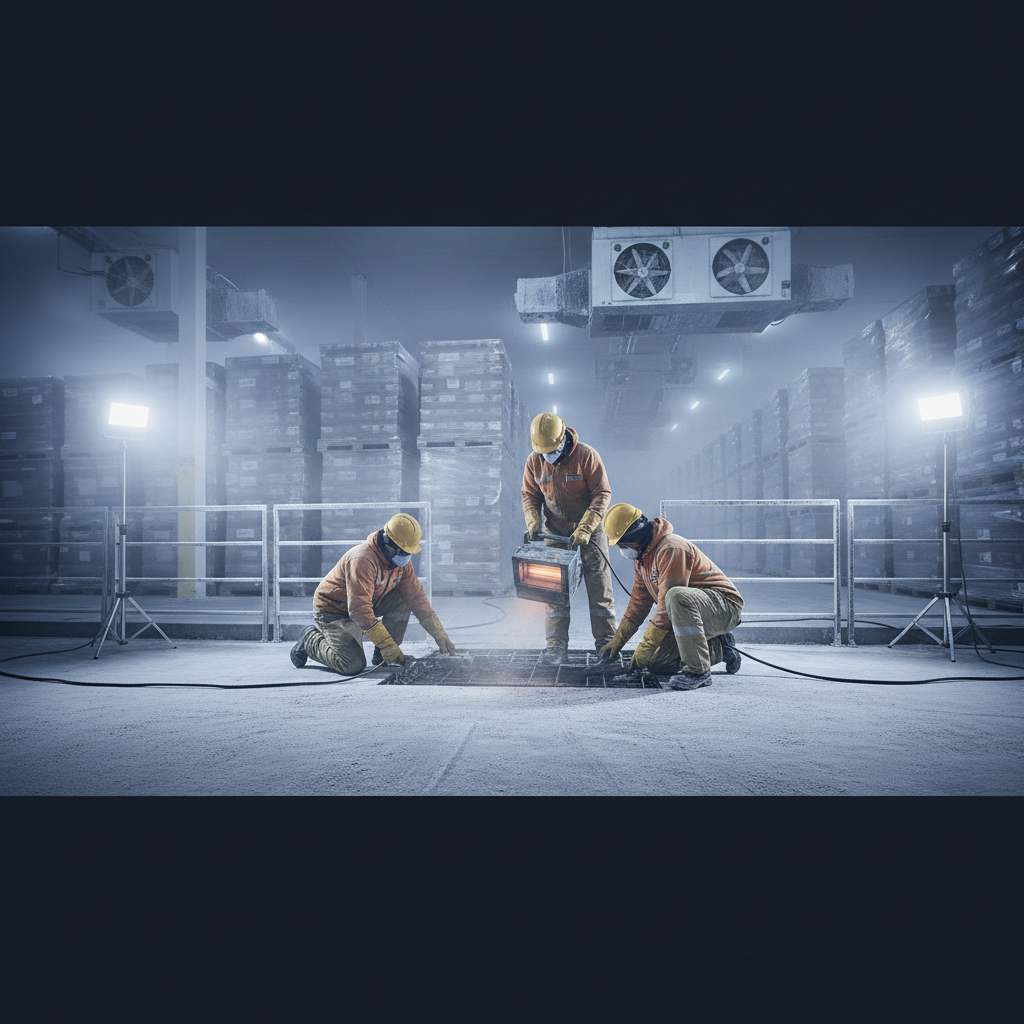
The primary hurdle, however, was not just the damage; it was the operational reality. PCDC AE could not afford to decommission the freezer. Transitioning the chamber back to ambient temperature for a standard repair would take days of warming and weeks of cooling, costing a fortune in energy and lost revenue. The repair had to be performed at -20°C.
The Solution: Advanced Polymer Chemistry and Rapid Mobilization
Standard epoxy and cementitious repair mortars fail instantly in sub-zero temperatures; they cannot chemically cure, and the water content freezes before hydration occurs. To meet the 48-hour return-to-service window required by the client, Osis Group deployed a specialized technical approach.
1. Sub-Zero Material Selection
We utilized a proprietary, ultra-rapid-setting methyl methacrylate (MMA) and high-performance polyurea hybrid system specifically engineered for cryogenic environments. These resins are designed to undergo exothermic polymerization even at temperatures as low as -30°C, ensuring a full chemical bond and structural strength without the need for external heating.
2. Surgical Preparation
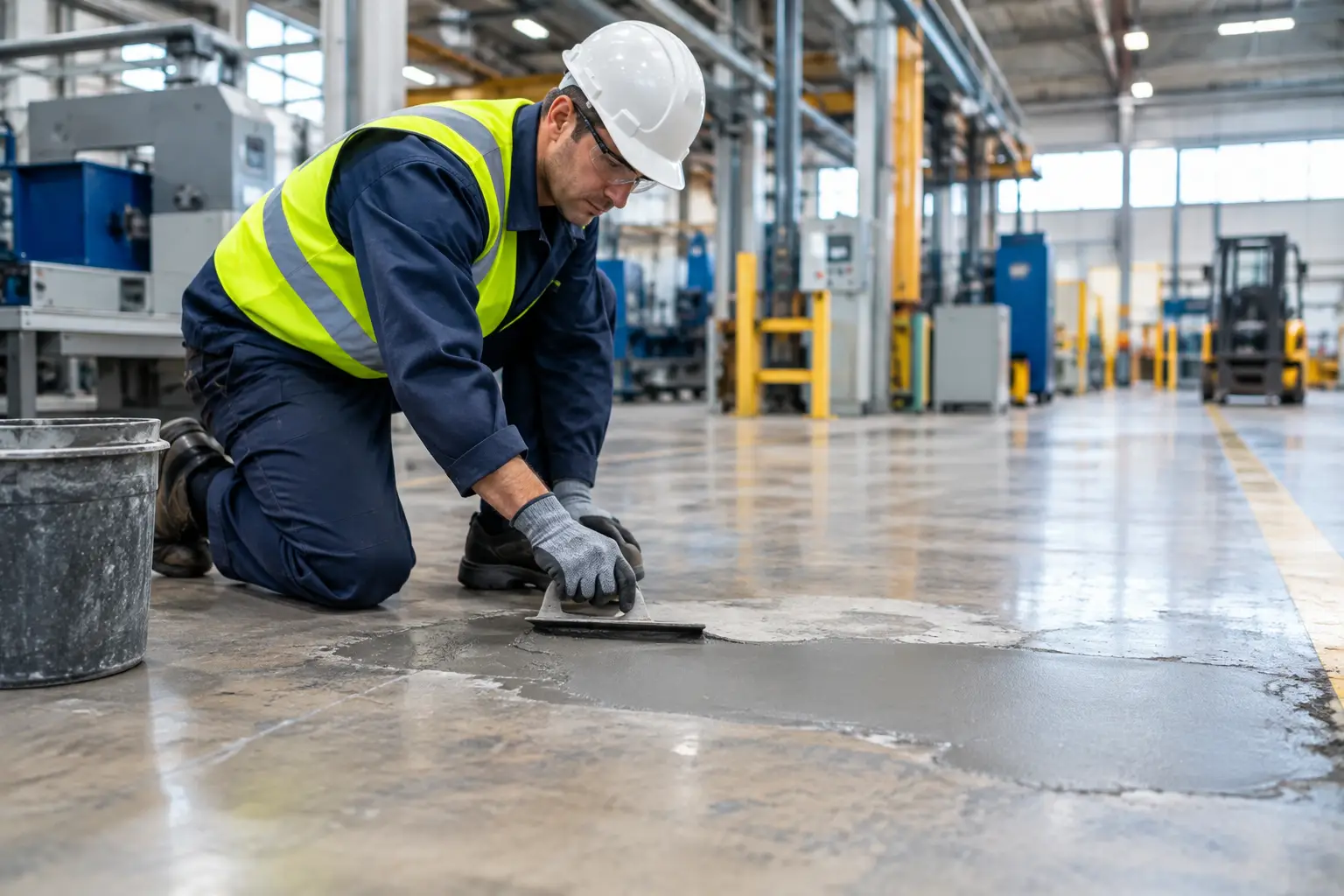
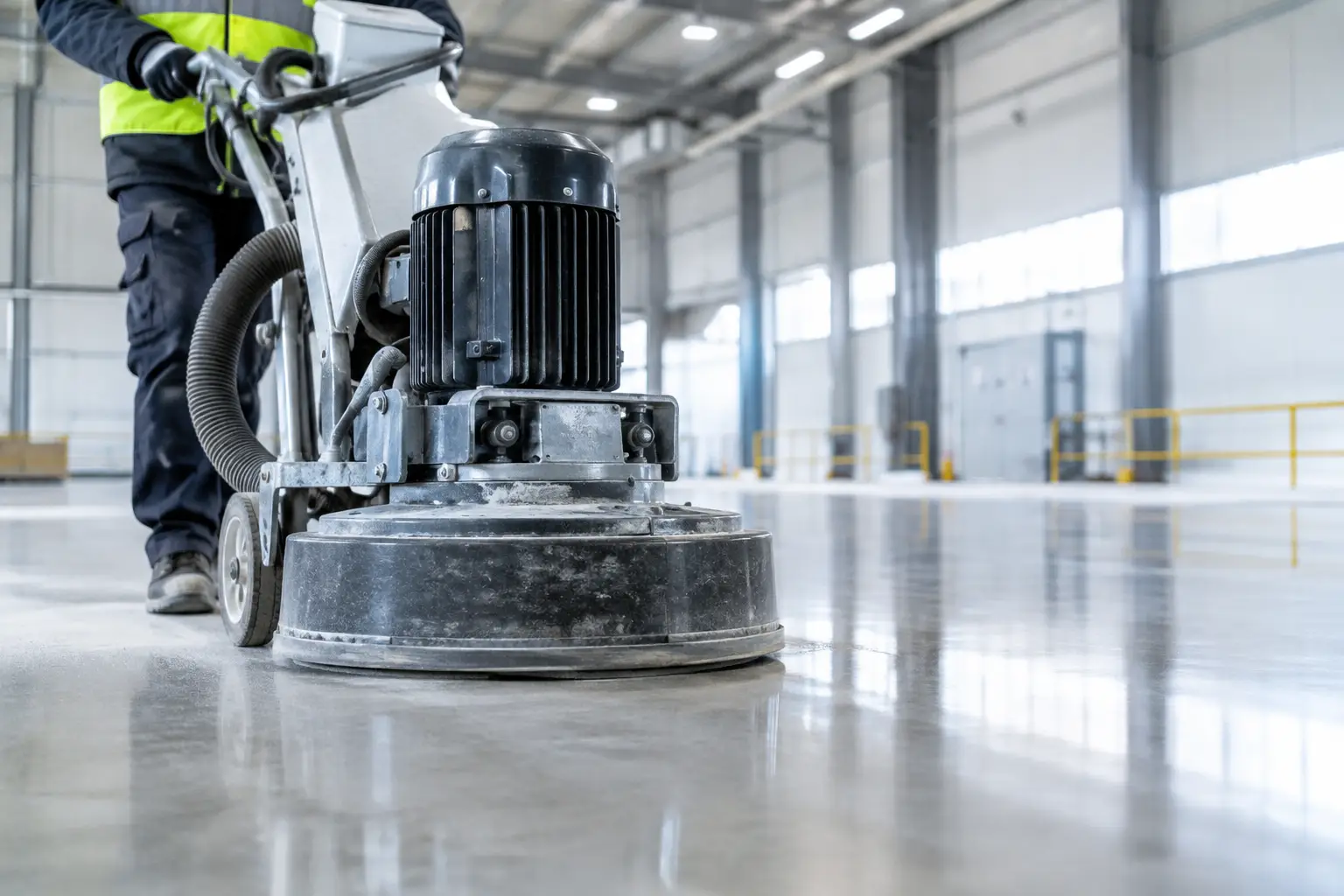
Precision was paramount. Using dust-controlled diamond grinding and vertical saw cutting, our team excavated the degraded concrete down to a sound structural base. By creating clean, vertical shoulders for the repair, we ensured that the new material would not "feather edge," which is a common cause of repair failure under forklift traffic.
3. Structural Re-Anchoring
To address the cracking, we implemented a structural stitching technique. High-tensile steel dowels were embedded across the primary cracks and grouted with low-viscosity resin to "lock" the slab sections together, preventing further independent movement while allowing for controlled thermal expansion.
The Process: A 48-Hour Race Against Time
The project timeline was managed with military precision. By working in shifts and utilizing materials with a 45-minute "full-load" cure time, Osis Group transformed a crumbling threshold into a high-performance industrial surface in a single weekend.
- Hour 0-8: Area isolation and mechanical removal of compromised concrete.
- Hour 8-16: Deep cleaning and moisture evacuation (ensuring no ice crystals remained in the pores of the concrete).
- Hour 16-32: Application of the multi-layer structural repair system and specialized slip-resistant quartz broadcast.
- Hour 32-40: Final chemical curing and surface profiling.
- Hour 48: Re-opening to full forklift traffic.
Results and Specifications
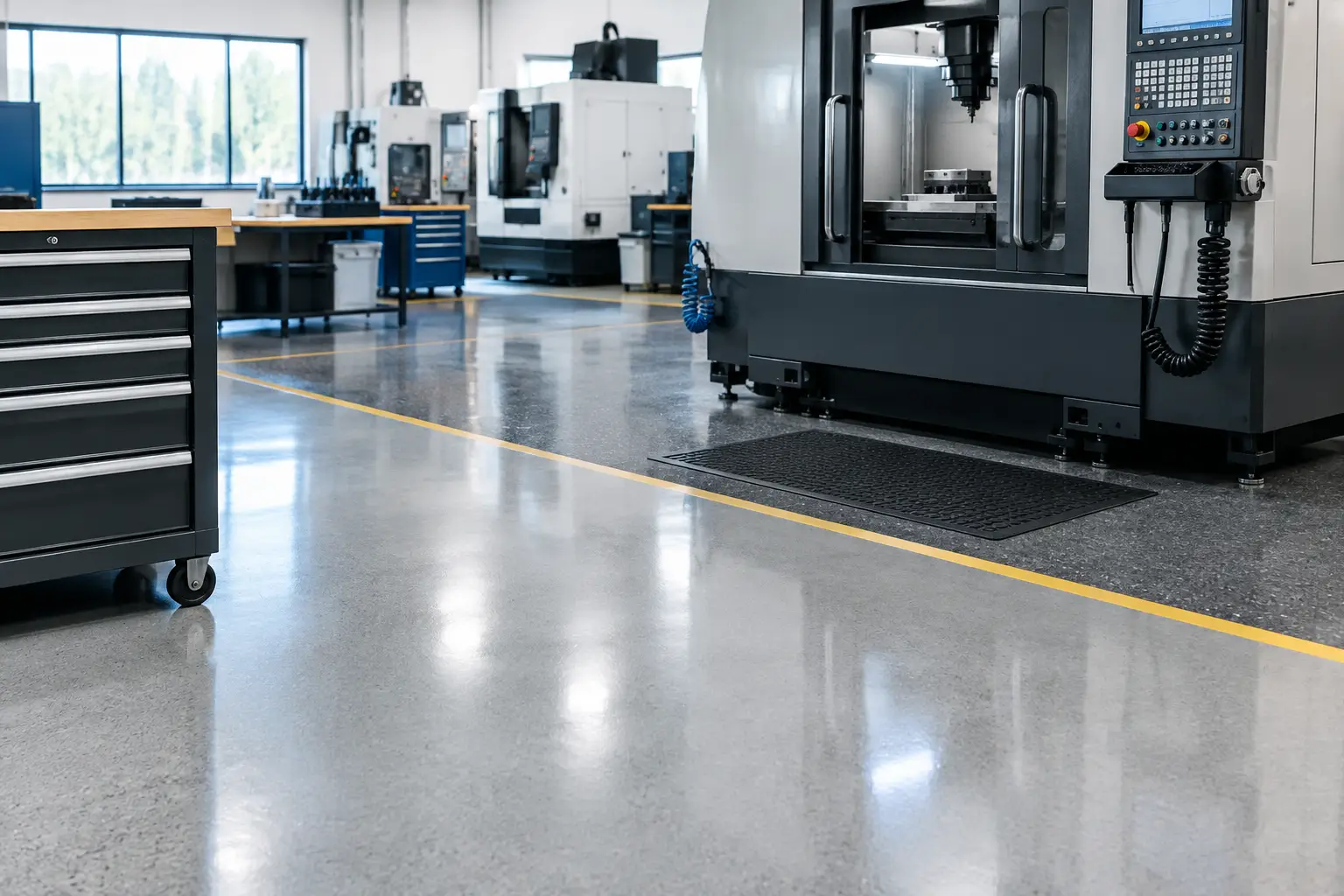
The completed repair at PCDC AE stands as a testament to Osis Group’s ability to solve complex industrial flooring problems under pressure. The new thresholds provide a seamless, level transition that eliminates the "thumping" of forklifts, protecting both the facility’s rolling stock and the physical health of the drivers.
Key achievements included:
- Zero Thermal Lag: No requirement to warm the freezer, saving thousands in energy costs.
- High Compressive Strength: The repair material reached over 60 MPa within hours, exceeding the strength of the original concrete.
- Impact Resilience: The specialized resin remains localized and flexible enough to absorb the vibrations of heavy machinery without cracking.
Looking Forward: 2026 and Beyond
As cold storage facilities continue to scale in Greece and the wider Mediterranean region, the demand for "live-environment" repairs will only increase. At Osis Group, we continue to invest in the technologies and training required to keep these vital facilities running, no matter how cold the environment or how tight the deadline.
Client: PCDC AE (Piraeus Container Terminal)
Location: Sembo Ikonio, Perama, Greece
Project Date: 2026
Scope: Structural Sub-Zero Threshold Restoration
Contractor: Osis Group