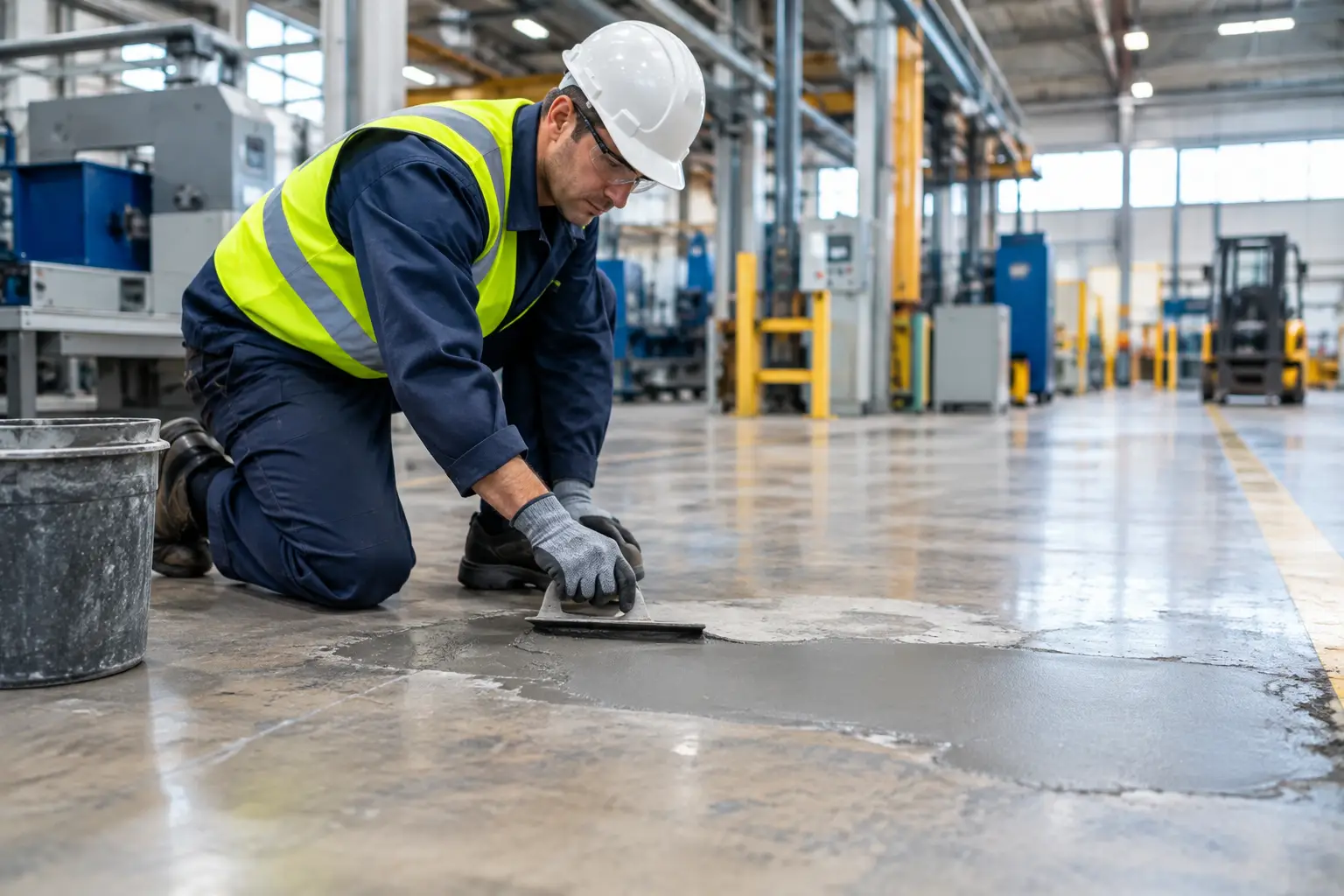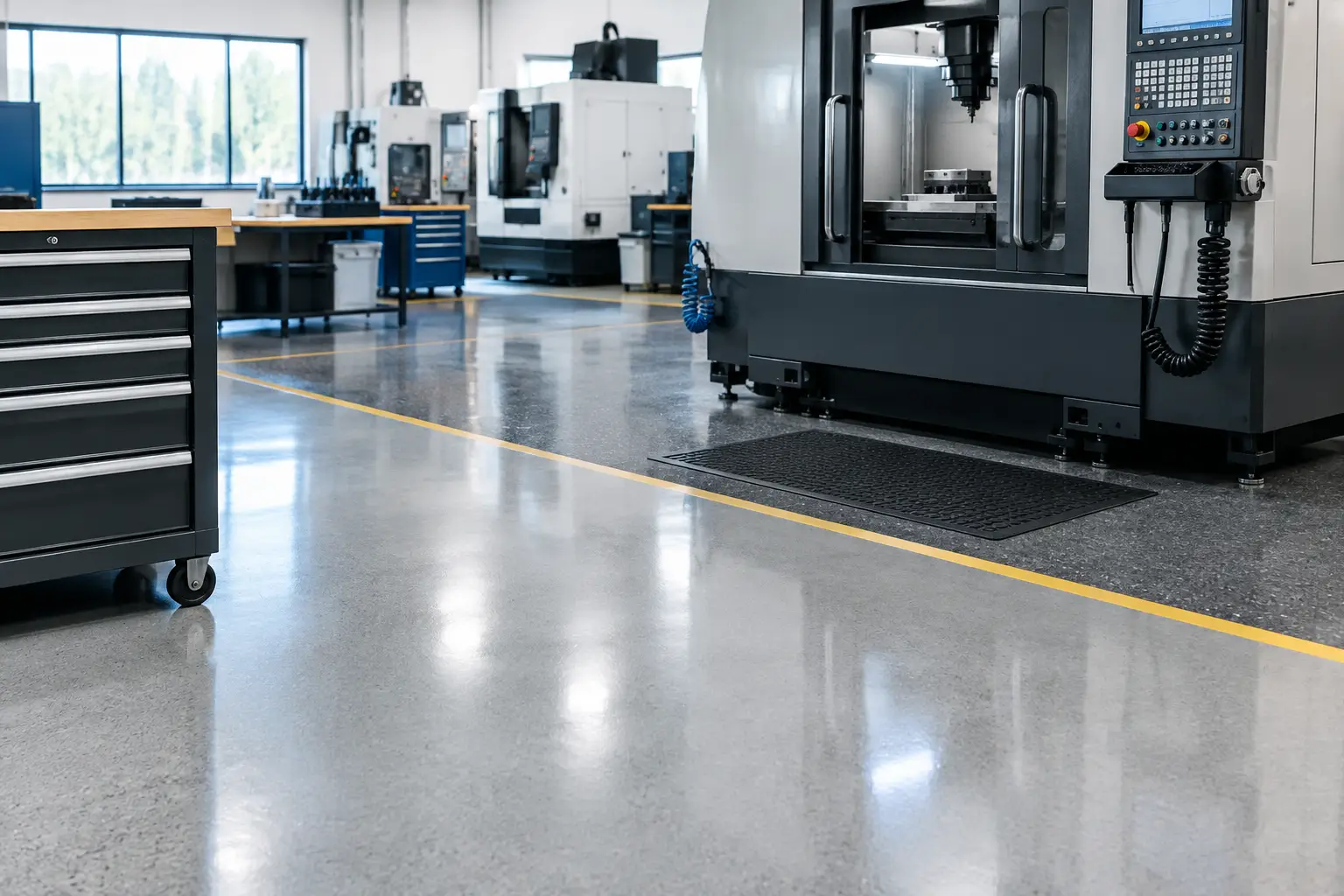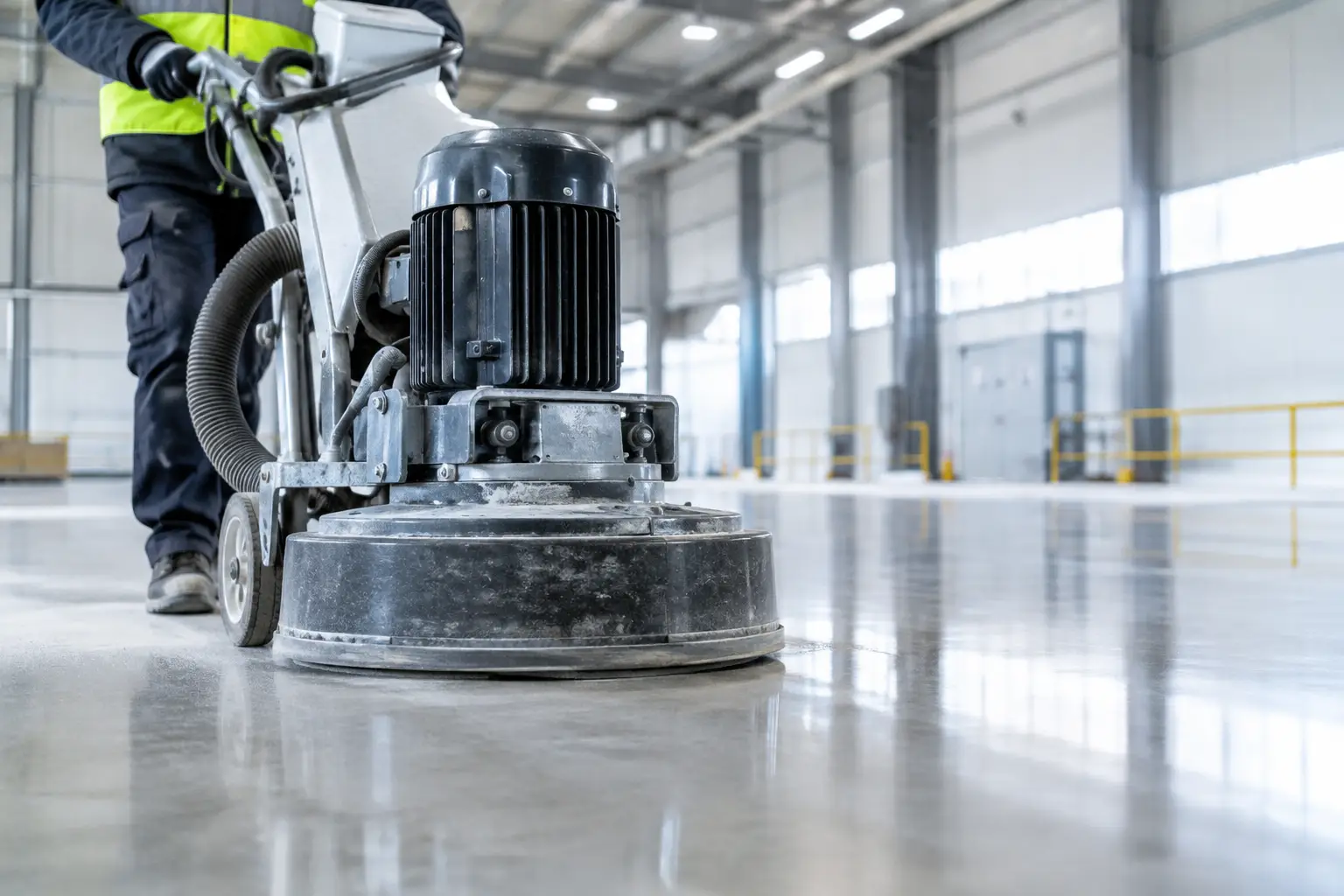

Forklift traffic does not fail a floor all at once. It starts at the joints: broken arrises, loosened sealant, wheel impact, moisture entry, and repairs that return more often than they should. This jointless flooring system review examines whether a monolithic industrial floor is the right answer for facilities where traffic, sanitation, and uptime place constant pressure on conventional slab joints.
A jointless system can reduce several common floor failure points, but it is not a cure-all and it is not simply a coating decision. Its value depends on the operating environment, the condition and movement of the existing substrate, traffic loads, drainage, chemical exposure, and the quality of surface preparation and installation. For the right facility, it can produce a cleaner, more durable surface with fewer maintenance interruptions. For the wrong application, forcing a jointless finish can create cracking or debonding that costs more to correct.
What a Jointless Flooring System Is
In industrial use, a jointless flooring system generally describes a continuous floor surface designed to minimize exposed control joints, construction joints, and transitions across the operational area. The finished surface may be a resinous system, a cementitious overlay, or a purpose-designed slab solution. The objective is practical: remove vulnerable interruptions that collect debris, absorb liquids, transmit impact, and disrupt material handling.
The term requires care. No floor is truly free of every movement provision. Perimeter isolation joints, structural expansion joints, building interfaces, and planned termination points may still be necessary. A qualified system does not ignore substrate movement. It manages it deliberately, rather than leaving unprotected joints across high-traffic travel paths.
That distinction matters for operations leaders. A floor marketed as “jointless” should not mean that movement has been wished away. It should mean the system has been engineered and installed to limit exposed joints where they create the greatest operational risk.
Jointless Flooring System Review: Where It Performs Best
Jointless floors are strongest where an uninterrupted, cleanable working surface is a performance requirement rather than a visual preference. Food and beverage facilities, pharmaceutical and life-science areas, distribution operations, manufacturing plants, warehouses, and commercial processing spaces can all benefit when the floor specification matches the work being performed.
High-Traffic Material Handling
Repeated forklift and pallet-jack crossings are hard on conventional joints. Small impact events accumulate. The joint edge chips, wheels strike the damaged area harder, and the defect expands. A continuous flooring surface reduces those impact points and can improve ride quality for equipment and operators.
This benefit is especially relevant in predictable travel lanes, staging areas, and pick paths. It does not eliminate the need to evaluate wheel loads, lift-truck axle loads, turning forces, and rack layout. A jointless system must be built for the traffic pattern it will carry, not just the square footage it covers.
Sanitation and Washdown Areas
Open joints create collection points for dirt, fines, liquids, and biological residue. In washdown environments, they can also allow moisture migration below the finished surface. A properly detailed monolithic floor is easier to wash, inspect, and maintain because there are fewer interruptions in the surface.
Chemical resistance remains material-specific. Epoxy systems, urethane cement, and other resinous technologies have different strengths under thermal shock, acids, oils, solvents, and cleaning chemicals. The best jointless floor for a cold-room washdown area may not be the best choice for a dry manufacturing line or a battery charging room.
Facilities With Downtime Pressure
A failing joint rarely stays a small maintenance item. Once it affects truck movement, product handling, sanitation, or safety, repair work can interrupt an entire area. Jointless systems can reduce the frequency of localized joint repair, which is a meaningful lifecycle advantage for facilities operating multiple shifts or under strict production schedules.
The installation schedule still deserves scrutiny. Some systems require substantial cure time, moisture mitigation, or phased work. Others can be installed in planned shutdown windows. The right contractor should define access restrictions, cure milestones, odor considerations, and handback conditions before work begins.
The Trade-Offs That Need an Honest Review
Jointless flooring has clear advantages, but it requires more discipline than a simple “cover the slab” approach. The first trade-off is substrate condition. Existing concrete may contain active cracks, moisture vapor transmission, contamination, weak surface paste, or poorly repaired joints. A high-performance finish cannot compensate for unresolved slab problems.
Cracks also need a realistic assessment. A dormant shrinkage crack can often be treated differently from an active structural crack or a moving expansion joint. Bridging movement with a rigid finish may produce a clean appearance initially, then telegraph cracking through the new system. In some cases, retaining and properly treating a movement joint is the more durable decision.
Cost is another consideration. A jointless floor may carry a higher initial cost than a basic coating or isolated joint repair, particularly when extensive grinding, shot blasting, moisture control, or substrate reconstruction is required. The proper comparison is not material cost per square foot alone. It is the cost of ownership: maintenance labor, repair frequency, lost operating time, equipment wear, sanitation exposure, and the risk of an unplanned shutdown.
Aesthetic expectations should also be grounded in industrial reality. Resinous floors can provide a uniform appearance, but color variation, texture changes, and evidence of repairs may occur depending on the system, substrate, lighting, and application conditions. Performance and serviceability should lead the specification.
Installation Quality Determines the Result
Most premature flooring failures trace back to preparation, moisture, detailing, or installation control. The visible topcoat is only one part of the system. Surface profiling must be appropriate for the material. Contaminants must be removed. Cracks, spalls, and deteriorated concrete need sound repair. Moisture testing and mitigation decisions must be based on actual site conditions.
Temperature, humidity, slab moisture, and sequencing with other trades also matter. Installing before overhead work is complete can expose a new floor to damage, contamination, and rework. Installing too late can conflict with opening deadlines. Strong project management coordinates these realities rather than treating flooring as a final cosmetic task.
For active facilities, phasing is equally important. A well-planned project can isolate work zones, maintain safe travel routes, coordinate equipment moves, and return areas to service in a controlled sequence. That planning protects production as much as the flooring system itself.
Questions to Ask Before Specifying a Jointless Floor
A useful specification begins with operational facts. What equipment crosses the floor, and how often? Are there point loads, hard-wheel traffic, thermal cycling, washdowns, oils, acids, or abrasive materials? Does the floor need texture for slip resistance, or a smooth profile for cleanability and wheeled transport? Where are drains, doorways, racks, and existing structural joints located?
Facility teams should also establish the acceptable outage window and the required return-to-service date. A floor system with excellent chemical resistance is not automatically the right choice if its installation sequence conflicts with the operating schedule. Conversely, a faster-curing solution may not be the best long-term answer if it does not meet the facility’s thermal, impact, or cleaning demands.
Ask the installer how joints will be handled, not merely whether they will disappear. Request a clear approach for cracks, transitions, vertical surfaces, drains, and slab movement. Those details determine whether a continuous floor performs as intended after traffic and cleaning cycles begin.
When Jointless Is the Right Investment
A jointless system is usually worth serious consideration when joint deterioration is recurring, hygiene demands are high, wheeled traffic is constant, or floor repairs are disrupting operations. It is particularly effective when the facility needs a surface that supports predictable movement, efficient cleaning, and a more controlled maintenance profile.
It may be less appropriate where significant structural movement is unresolved, the substrate is unstable, or limited traffic does not justify the investment. In those cases, targeted joint repair, slab rehabilitation, grinding, or a different flooring strategy may deliver better value.
Osis Group approaches jointless floors as an operational asset, not a surface upgrade. The standard should be clear: select the system for the environment, prepare the substrate correctly, and deliver the work with the control required for an industrial facility.
The right floor should make itself known by causing fewer problems. When forklifts move cleanly, washdowns finish faster, repairs decline, and production stays on schedule, the flooring decision has done its job.