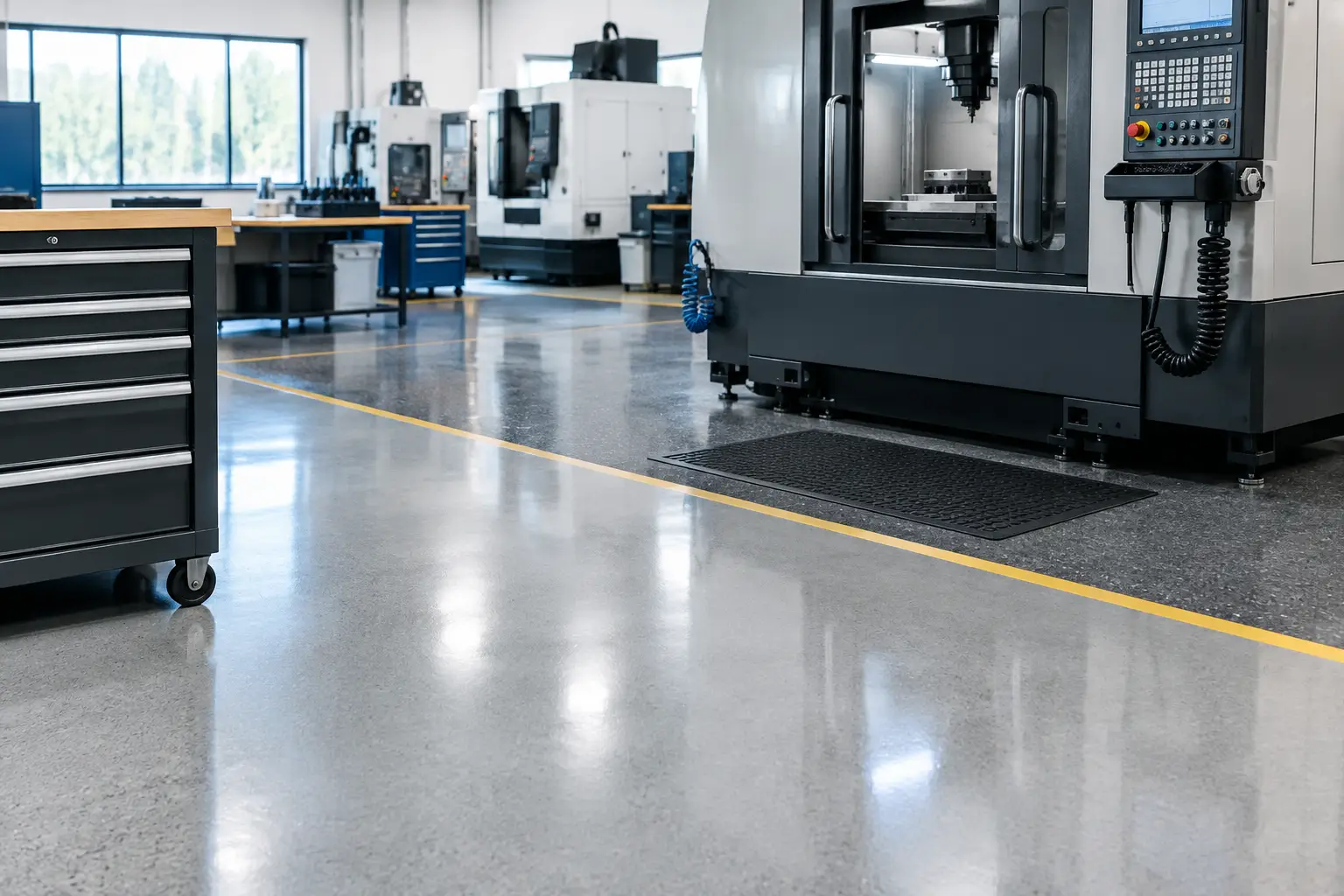
A resin floor can perform for years around production equipment, but only if the work begins with the equipment rather than the coating. To install resin floors around equipment successfully, the contractor must account for bases, anchor points, drainage paths, operating temperatures, vibration, access restrictions, and the facility's available shutdown window. A clean-looking floor is not the objective. A continuous, durable system that supports safe operations is.
In active industrial facilities, the area around equipment is often the hardest part of a flooring project. It sees forklift turns, dropped materials, oils, washdowns, chemical exposure, and concentrated traffic from operators and maintenance teams. It may also include aged concrete, failed patching, damaged joints, and areas that cannot remain out of service for long. The specification and installation plan must address those conditions before resin reaches the slab.
Start With the Equipment and the Operating Plan
Equipment determines the scope of work. A large mixer, packaging line, process skid, conveyor system, or utility unit creates edges and transitions that cannot be treated as ordinary open-floor installation. The contractor needs to establish what remains in place, what can be lifted or isolated, where crews can work, and which areas must stay accessible throughout the project.
This assessment should include the equipment footprint, housekeeping pads, anchor bolts, trenches, drains, electrical penetrations, door clearances, and traffic lanes. It should also identify the substances that reach the floor. Water may call for a different system than oils, solvents, acids, caustics, thermal shock, or frequent high-pressure washdowns.
The practical questions matter: Can production stop completely? Is a phased installation possible? Can forklifts use alternate routes? Will maintenance need access to panels, valves, or drains during cure time? A floor system can be technically suitable and still fail the project if the installation sequence does not fit operations.
Select the Resin System for Actual Exposure
Not every resin floor belongs around every piece of equipment. Epoxy, urethane cement, polyurethane, and methyl methacrylate systems each have different strengths, cure profiles, and limitations. The right selection depends on service conditions, not a generic preference for a particular material.
Epoxy systems are commonly specified where chemical resistance, cleanability, and abrasion performance are priorities. They can provide a dense, jointless finish and accommodate broadcast textures for slip resistance. However, some epoxy systems may not be the best choice for repeated thermal cycling or aggressive hot washdowns.
Urethane cement is often better suited to wet process areas, food and beverage environments, and operations exposed to thermal shock. Its tolerance for demanding service conditions can justify a higher initial investment where premature failure would disrupt production. Fast-cure resin options may also support compressed shutdown schedules, although accelerated installation requires close control of substrate conditions and crew coordination.
Thickness is equally important. A thin coating may be appropriate for controlled light-duty areas, while equipment zones exposed to impact, point loading, and abrasive traffic may require a thicker mortar or broadcast system. The floor should be designed for what happens around the machine, not simply for the machine's static weight.
Concrete Preparation Is the Deciding Factor
Most resin floor failures begin below the coating. Oil-contaminated concrete, weak surface paste, high moisture vapor emissions, unsound repairs, and improper surface profile can compromise adhesion regardless of product quality.
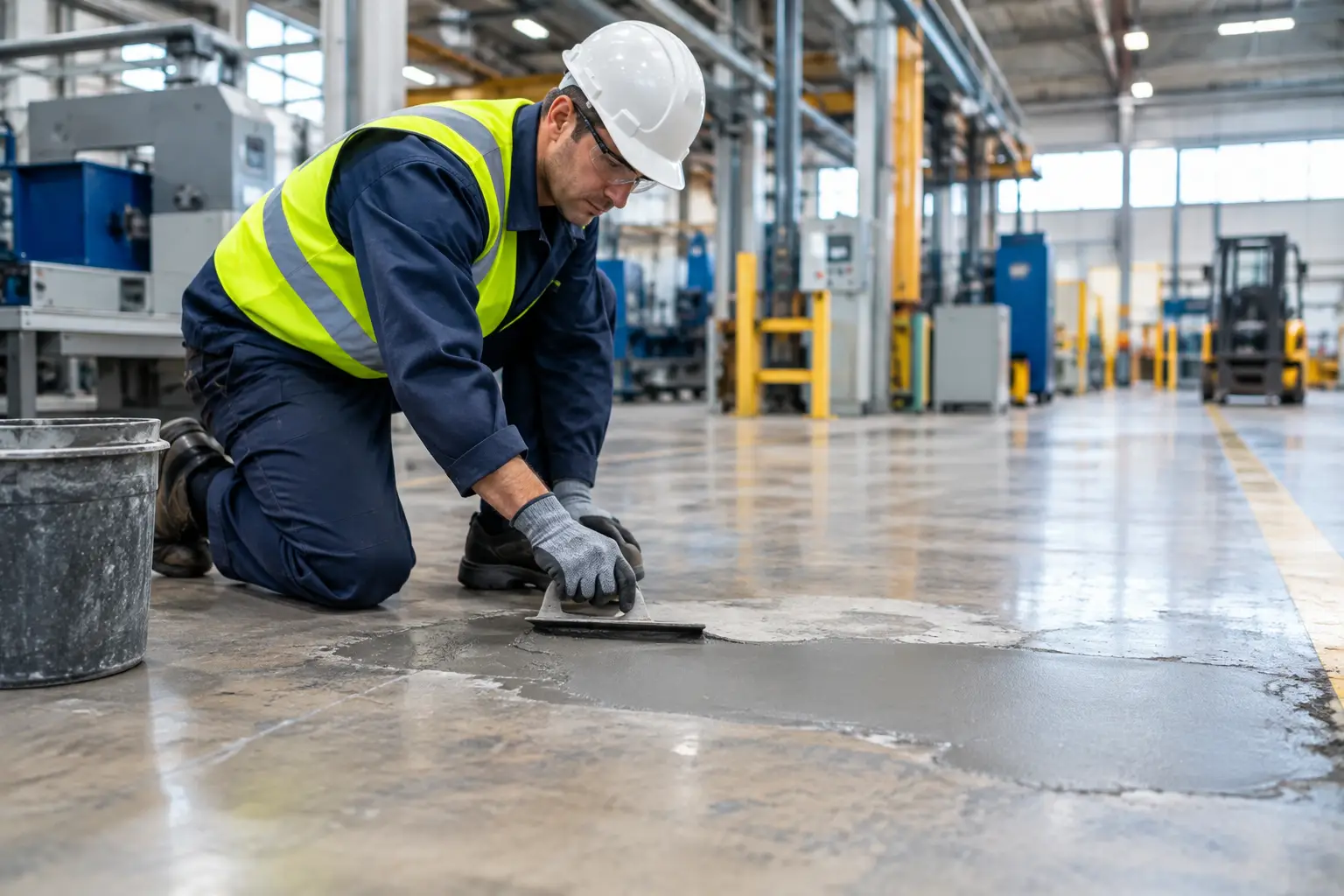
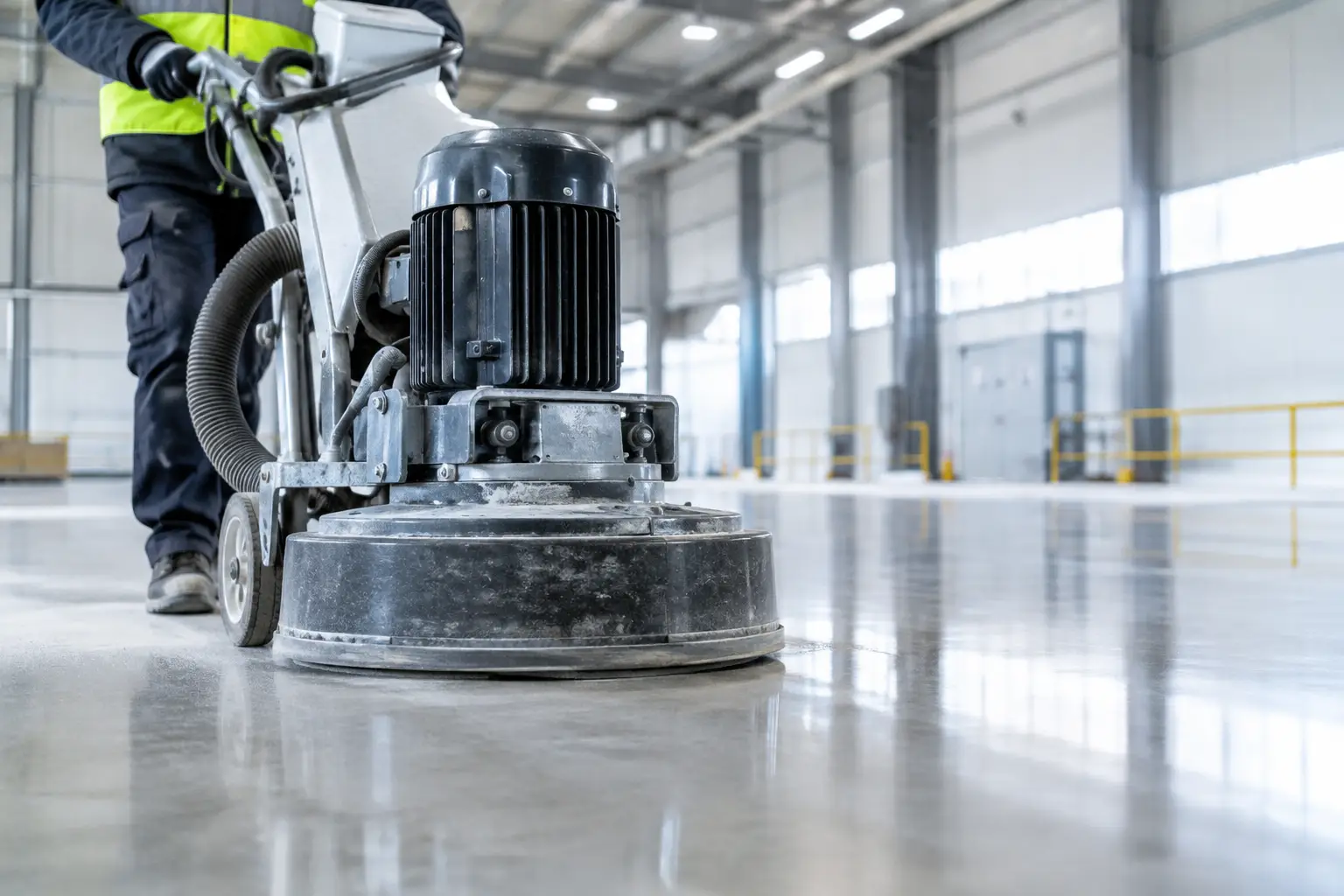
Mechanical preparation is the standard for industrial work. Shot blasting, diamond grinding, scarifying, or a combination of methods removes failed material and creates the profile required by the selected resin system. The method must suit the substrate and the available work area. Tight areas around equipment often require hand-held or specialized preparation equipment, but the quality standard cannot change because access is difficult.
Before installation, the team should verify several conditions:
- Concrete soundness, including delamination, spalls, cracks, and weak prior repairs.
- Surface contamination from lubricants, process fluids, cleaners, and embedded oils.
- Moisture conditions and vapor transmission risk.
- Existing control joints, construction joints, and moving cracks.
- Required surface profile for the specified resin system.
Moisture deserves particular attention. A resin floor can look acceptable when installed and later blister, debond, or deteriorate because moisture pressure was not evaluated. Where conditions require it, a compatible moisture mitigation system should be built into the specification rather than treated as an afterthought.
Detail the Perimeter Around Bases, Pads, and Penetrations
The most vulnerable locations are often the edges: where flooring meets an equipment pad, a steel base plate, a wall, a drain frame, or a pipe penetration. These interfaces need deliberate detailing because they collect moisture and debris while being exposed to movement, cleaning, and impact.
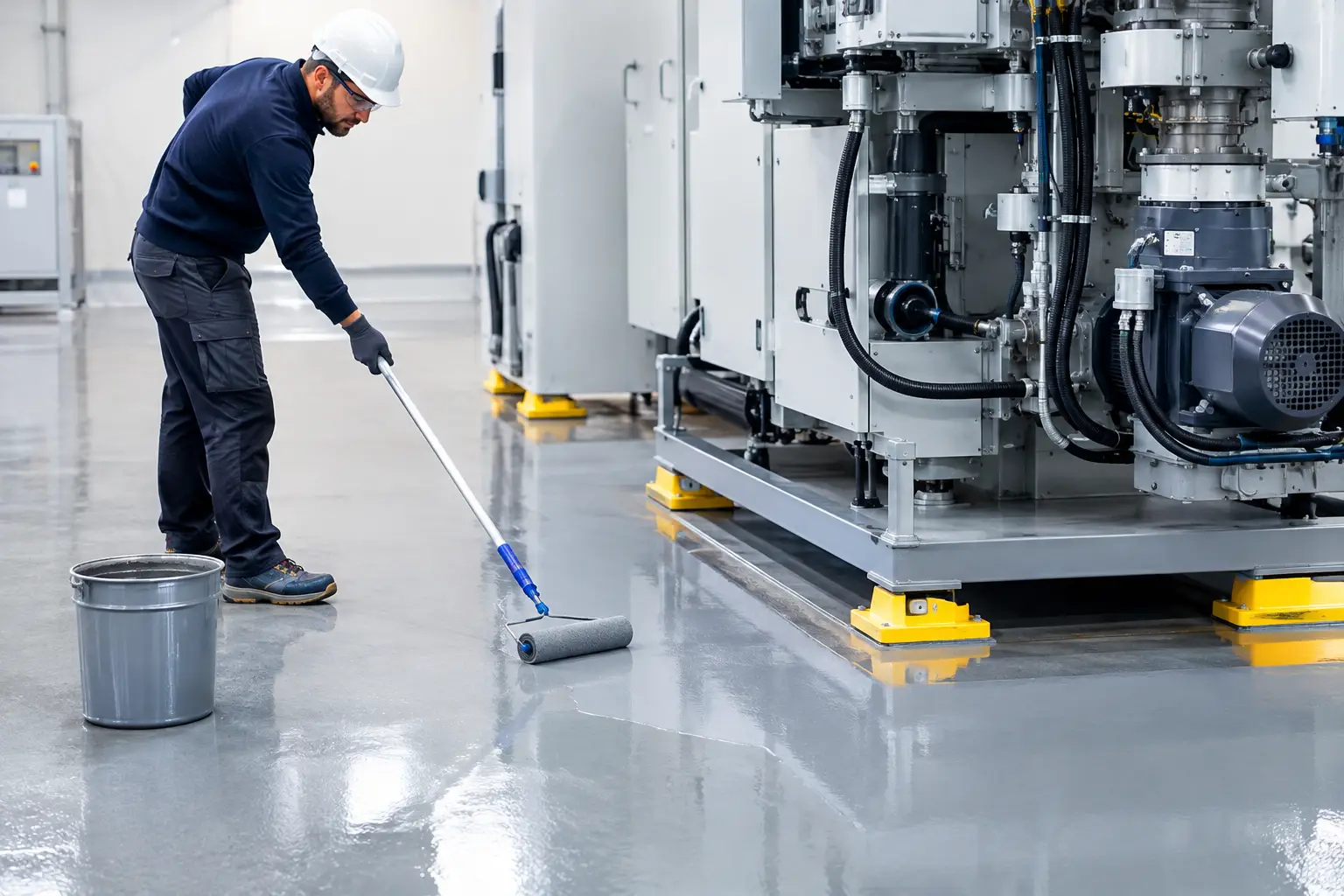
Where equipment sits on a concrete housekeeping pad, the project team must decide whether the resin will stop at the pad, continue up the vertical face, or coat the entire pad. Coating the vertical face can improve cleanability and prevent liquid from reaching an exposed concrete edge. The transition should be properly prepared and detailed, not brushed on as a cosmetic finish.
Anchor bolts and steel penetrations require similar care. Resin should not bridge an active movement point in a way that invites cracking. Depending on the condition, an isolation detail or compatible sealant may be required around the penetration. This is especially relevant for equipment subject to vibration, heat, or regular maintenance removal.
Coving may be appropriate where sanitation, washdowns, or spill containment are priorities. A resin cove creates a cleanable transition between floor and wall or equipment curb, eliminating the dirt-catching corner found in conventional right-angle details. It is not required in every area, but it adds value where cleaning standards are high.
Respect Joints and Cracks
A jointless resin finish does not mean every concrete joint can be covered permanently. Structural and moving joints must continue to move. If they are rigidly filled and coated without proper treatment, the movement will telegraph through the resin system.
Control joints may be filled when slab movement has stabilized and the selected system allows it, but this decision depends on the slab, building conditions, and service demands. Expansion joints, isolation joints, and known moving cracks need a flexible joint treatment compatible with the floor system and the expected movement.
This distinction is critical around equipment. Traffic may be concentrated over joints near equipment pads, and failing joint edges can create trip hazards, contamination traps, and rapid coating damage. Floor and joint repair should be completed before the resin installation, with materials selected for the final service condition rather than a short-term patch.
Build a Phased Installation Schedule
The best way to protect uptime is to plan the work in zones. Equipment-side flooring is rarely a single uninterrupted pour. It may require several tightly controlled phases that preserve access routes, isolate work areas, and allow cure time before traffic returns.
A disciplined project plan identifies shutdown dates, access restrictions, material staging locations, dust-control measures, cure windows, and return-to-service requirements. It also establishes decision points before the work begins. If preparation reveals deeper concrete deterioration, extensive oil contamination, or unexpected moisture, the team needs a clear process for addressing it without losing control of the schedule.
Dust management is particularly important in operating facilities. Mechanical preparation generates dust unless it is properly captured, and the work zone must be protected from adjacent production, inventory, and sensitive equipment. Good containment supports both installation quality and operational safety.
For facilities with very narrow shutdown windows, fast-cure systems can be a strong option. They are not a shortcut around preparation, repairs, or moisture evaluation. They simply reduce cure time when the complete system and installation conditions support that approach.
Verify the Finished Floor Before Turnover
A professional installation ends with inspection, not the final coat. The completed floor should be checked for coverage, thickness where applicable, bond integrity, texture consistency, clean transitions, joint treatment, and defects around equipment edges. Drainage should also be confirmed in wet areas. A floor that ponds water beside a process unit will create cleaning and safety problems even when the resin itself is intact.
The facility team should receive practical guidance on cure times, cleaning methods, chemical exposure limits, and maintenance expectations. Harsh cleaning practices, unapproved chemicals, and metal scraping can shorten service life. Maintenance personnel should also know which floor details need periodic inspection, including joints, coves, drain interfaces, and high-impact corners.
The Standard Is Long-Term Performance
Installing resin flooring around equipment is not a finish-trade exercise. It is a coordinated industrial project where slab conditions, equipment details, resin selection, and production schedules must work together. The lowest-cost approach often overlooks the preparation and detailing that determine whether the system lasts.
Osis Group approaches these projects with the execution discipline required for operational environments. When the floor is designed around the real demands of the equipment and the facility, it becomes a dependable part of the operation rather than the next source of downtime.