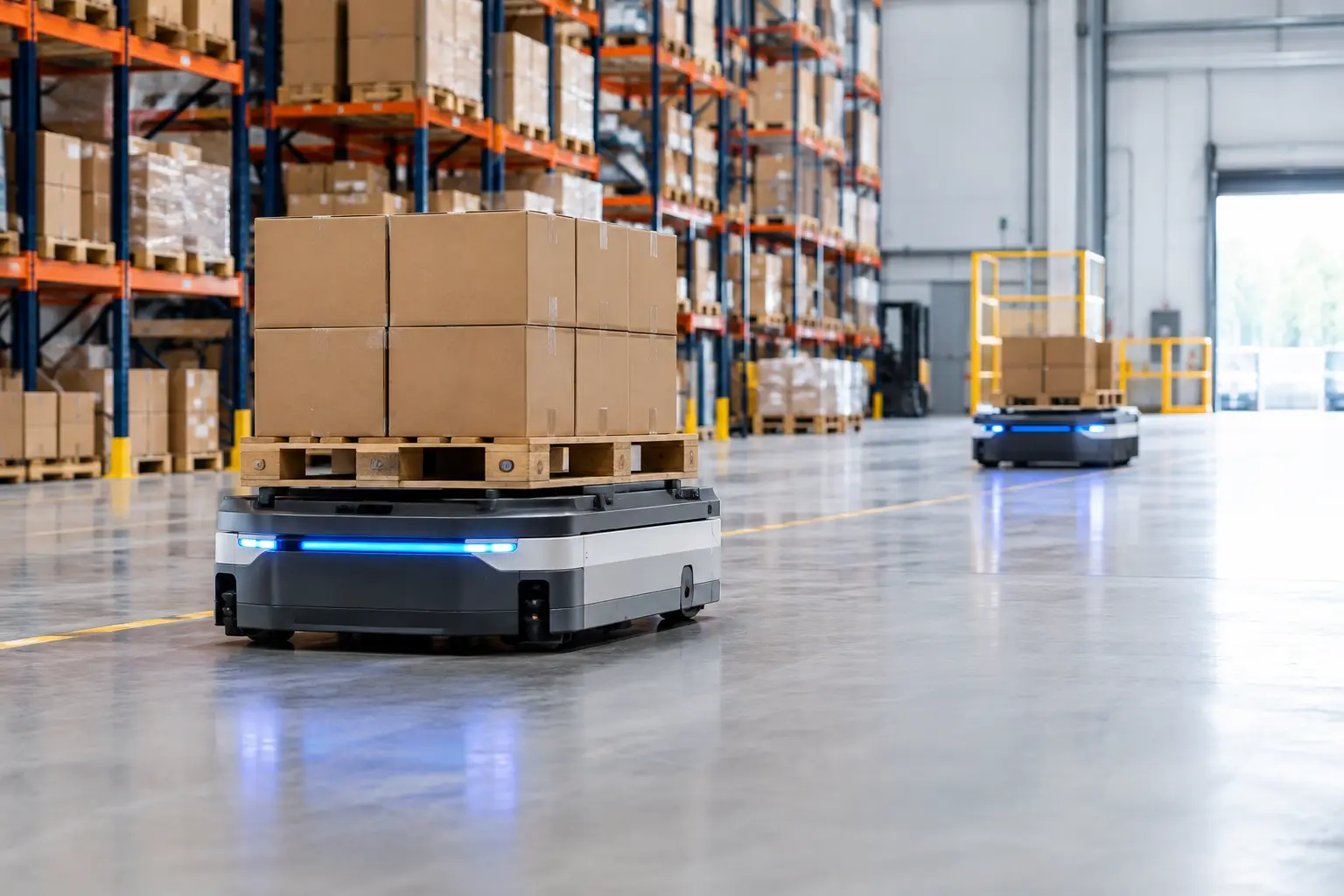
Autonomous vehicles do not compensate for an unsuitable slab. They expose every weakness in it. Flooring automation trends are pushing warehouse and industrial operators to treat floor condition as operating infrastructure, not a finished construction detail. A floor that was acceptable for conventional forklifts may not meet the tolerances, traffic patterns, or maintenance demands created by automated material handling.
For facilities investing in automation, the floor must support consistent movement, precise navigation, high wheel loads, and uninterrupted throughput. That changes how projects should be specified, installed, assessed, and maintained.
Flooring Automation Trends Start at Floor Level
Automated guided vehicles, autonomous mobile robots, very narrow aisle trucks, and high-density storage systems all depend on predictable travel surfaces. Their sensors, controls, and guidance technologies vary, but the operating requirement is consistent: the floor must perform within defined tolerances over its full service life.
A conventional visual inspection is not enough. Small variations in floor elevation, abrupt joints, surface defects, and localized settlement can create vibration, wheel wear, navigation errors, product instability, and reduced travel speed. These problems may appear minor when a facility is operating manually. Under automated traffic, they become recurring operational constraints.
The strongest automation projects address floor performance early, before equipment is commissioned or layouts are fixed. This protects the automation investment and reduces the risk of disruptive corrective work after operations begin.
Superflat Floors for VNA and Automated Traffic
Superflat floor construction has become more critical as facilities maximize vertical storage and reduce aisle widths. VNA operations require controlled floor flatness and levelness because truck movement and mast behavior are directly affected by slab geometry. In automated environments, those tolerances can be even more consequential.
A superflat floor is not simply a smooth-looking floor. It is a measured surface built to meet project-specific flatness and levelness requirements. The right specification depends on the equipment, aisle arrangement, wheel configuration, rack height, load profile, and operating speed. A specification that is too general can leave the owner with a floor that passes a basic standard but does not support the actual equipment reliably.
For defined traffic paths, narrow-aisle floor tolerances should be evaluated where the wheels will run, not only across broad random sample areas. This distinction matters. A floor can perform well under a general testing approach while presenting unacceptable variation in a critical wheel path.
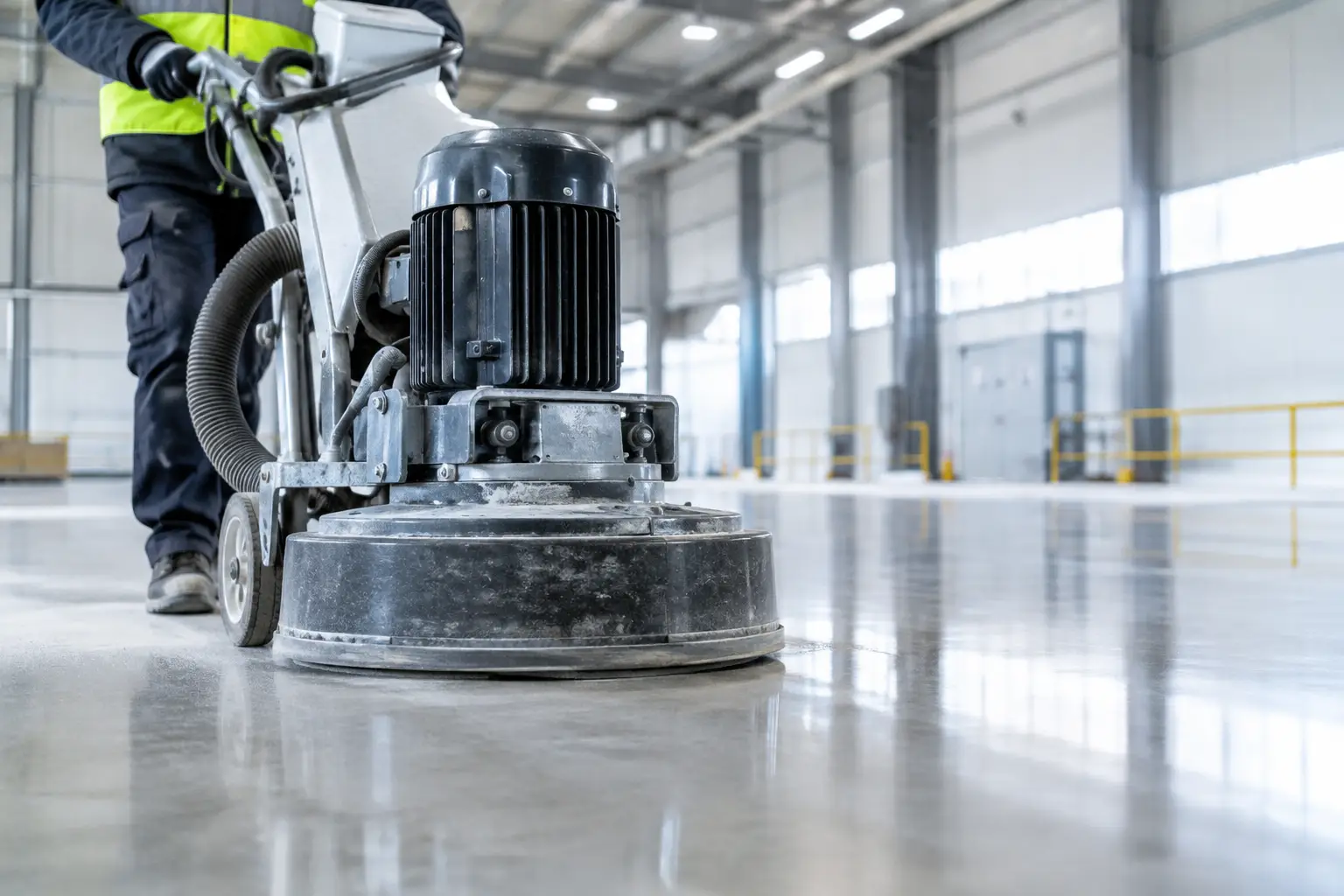
Existing facilities require the same discipline. Floor upgrade and grinding work can correct targeted high areas, transitions, and localized defects, but it is not a substitute for understanding the root condition of the slab. Grinding should follow survey data and equipment requirements. Otherwise, the work can become expensive cosmetic correction without delivering measurable operational improvement.
Joints Are a Major Automation Risk Point
Joints are often the first failure point in a high-traffic industrial floor. Repeated wheel crossings can break joint edges, widen openings, create impact, and accelerate wear on both the floor and material-handling equipment. Automated vehicles are especially sensitive because they cross the same routes repeatedly, often around the clock.
The trend toward jointless and reduced-joint floor systems reflects a practical need for smoother, more durable travel surfaces. Fewer joints can reduce impact points, simplify sanitation, and improve long-term ride quality. However, jointless construction is not automatically the right answer for every facility. Slab design, pour size, subbase conditions, environmental exposure, loading, and project schedule all affect the best solution.
Where joints remain necessary, they need to be designed and protected for the expected traffic. Joint selection, edge reinforcement, filling materials, curing conditions, and timing of installation all influence performance. A poorly detailed joint may become a maintenance issue within months. A properly executed joint system can protect uptime for years.
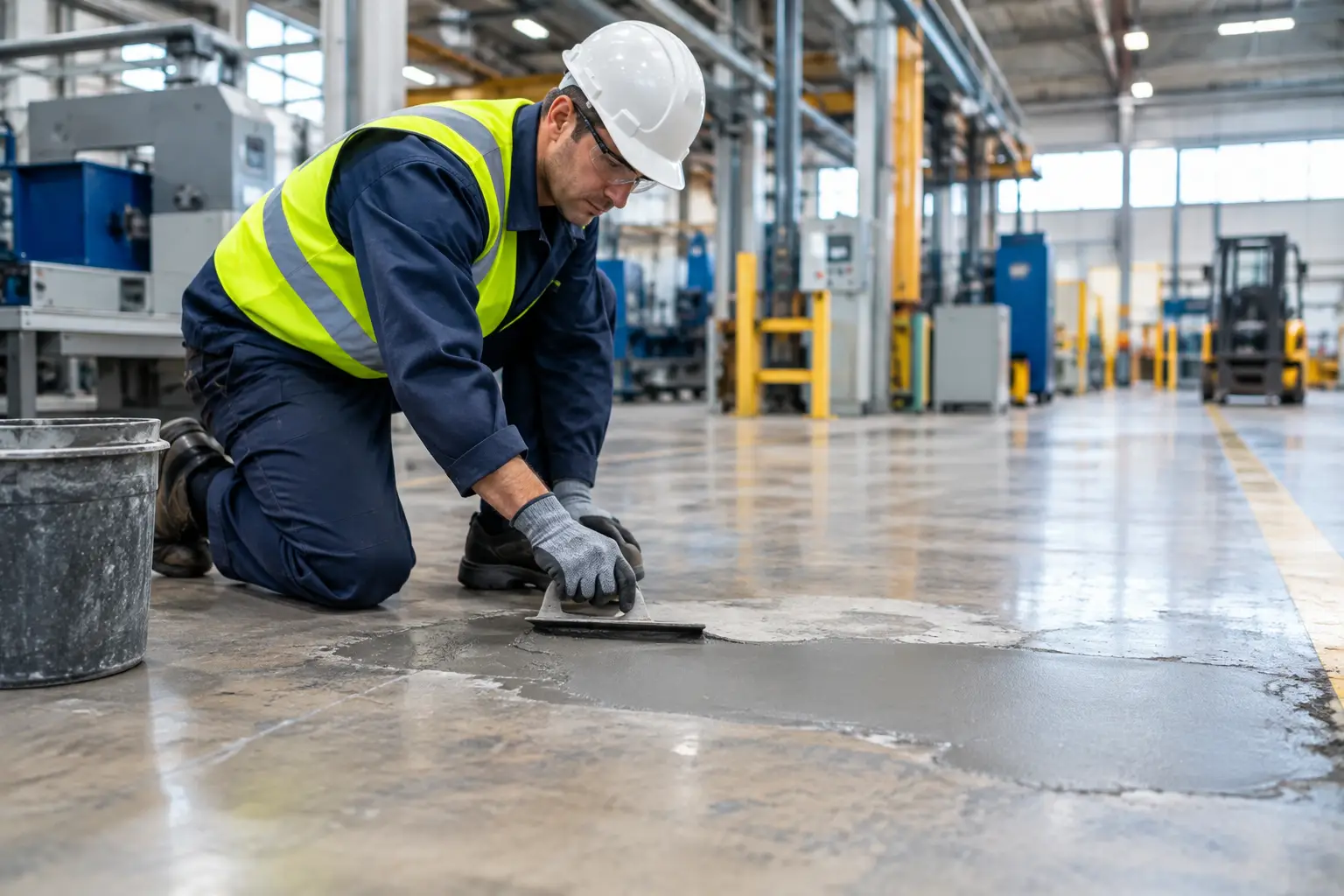
Floor and joint repair should also be treated as a production activity, not a reactive patching exercise. The repair material must match the traffic, temperature, moisture, and cure-time requirements of the facility. A fast repair that cannot withstand hard-wheel traffic is not a repair. It is a scheduled repeat failure.
Guidance Systems Need Stable Installation Conditions
Wire guidance remains a dependable option for VNA fleets and other guided truck applications. Its accuracy depends on more than the guidance wire itself. The wire path, saw cuts, floor profile, joint locations, and repair history all affect installation quality and long-term reliability.
Before wire guidance is installed, the floor should be assessed for cracking, spalling, delamination, uneven transitions, and problematic joints. Routing wire across unstable slab conditions can create avoidable troubleshooting later. Coordination is also essential when layouts include racking, charging areas, safety barriers, and future expansion zones.
For facilities using laser, vision, or sensor-based navigation rather than wire guidance, the floor still matters. These systems may not follow an embedded wire, but they are affected by vibration, tire contact, wheel slip, debris accumulation, and interruptions in the travel surface. Automation technology changes the guidance method. It does not remove the need for a high-performing floor.
The Most Valuable Trend Is Lifecycle Planning
The real shift in industrial flooring is not a particular machine or material. It is the move from one-time installation thinking to lifecycle planning. Operations leaders are recognizing that floor condition influences automation availability, maintenance costs, operator safety, inventory protection, and equipment life.
This changes the project conversation. Instead of asking only, “What will the floor cost to install?” decision-makers should ask how the floor will perform under the anticipated traffic pattern and what it will cost to maintain over ten years. The lowest initial bid can be costly when it produces premature joint failure, recurring repairs, equipment damage, or operating restrictions.
Lifecycle planning begins with a clear operating profile. Define the equipment type, wheel loads, travel paths, shift schedule, cleaning methods, chemical exposure, temperature conditions, and uptime windows. Then align the floor system, surface preparation, joint strategy, and repair plan with those conditions.
It also requires realistic maintenance planning. Even high-quality floors need inspection and intervention before defects grow. Regular assessment of joints, travel lanes, surface wear, cracks, and drainage areas allows maintenance teams to address small issues during planned downtime. Waiting until a defect interrupts automation usually increases both repair cost and operational impact.
Automation Projects Need Better Coordination
Flooring is frequently scheduled as an early construction activity, while automation equipment is selected or finalized later. That sequence creates risk. By the time the operations team identifies floor-related requirements, the slab may already be complete and racking layouts may be fixed.
The better approach is early coordination among the owner, general contractor, racking provider, automation integrator, and flooring contractor. Critical inputs include rack geometry, vehicle specifications, aisle orientation, guidance method, battery charging locations, slab joints, equipment access, and acceptance testing. These details influence each other.
Active facilities add another layer of complexity. Repairs, grinding, coatings, and joint work must be planned around traffic, sanitation requirements, curing times, and safety controls. The best technical solution is not valuable if it cannot be executed without unacceptable disruption. Professional project management means defining work zones, sequencing activities, controlling dust, and returning areas to service on schedule.
Specify Performance, Not Assumptions
Automation can make a facility faster, more consistent, and more productive. It can also make floor deficiencies visible sooner. That is why performance-based specifications matter. Requirements should state the floor tolerances, traffic loads, joint performance expectations, surface condition, testing methods, and acceptance criteria that support the intended operation.
Generic language leaves too much room for interpretation. Measurable requirements create accountability for every project partner. They also give facilities teams a reliable basis for future maintenance, repair, and expansion decisions.
Osis Group approaches industrial flooring as a performance system. For automation-driven facilities, that means evaluating the floor in relation to the operation it must support, then delivering the preparation, installation, upgrade, or repair work with disciplined execution.
Before committing to a new automation layout or accepting an existing slab, verify the floor against the actual equipment and traffic it will carry. That single step can prevent years of avoidable downtime.