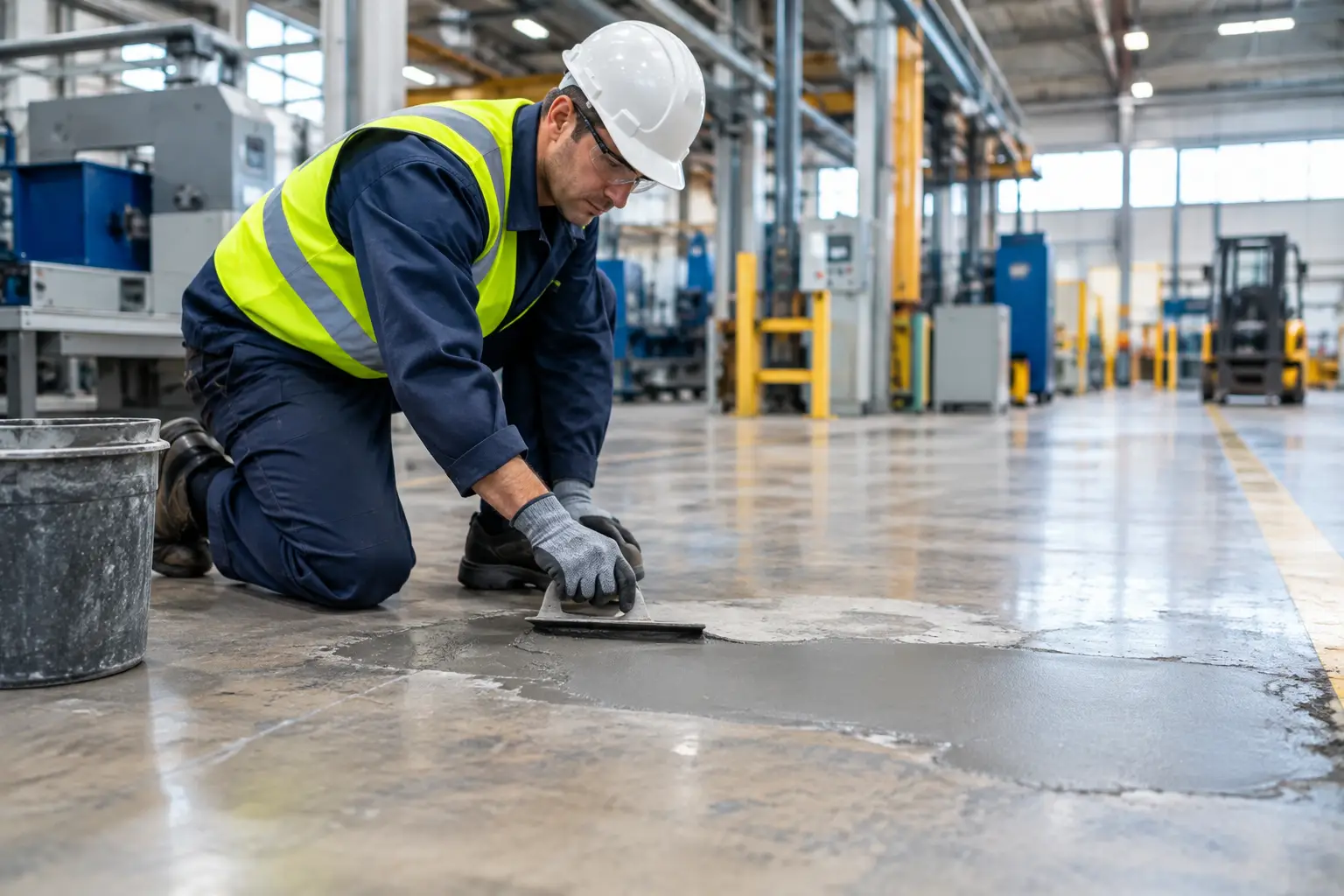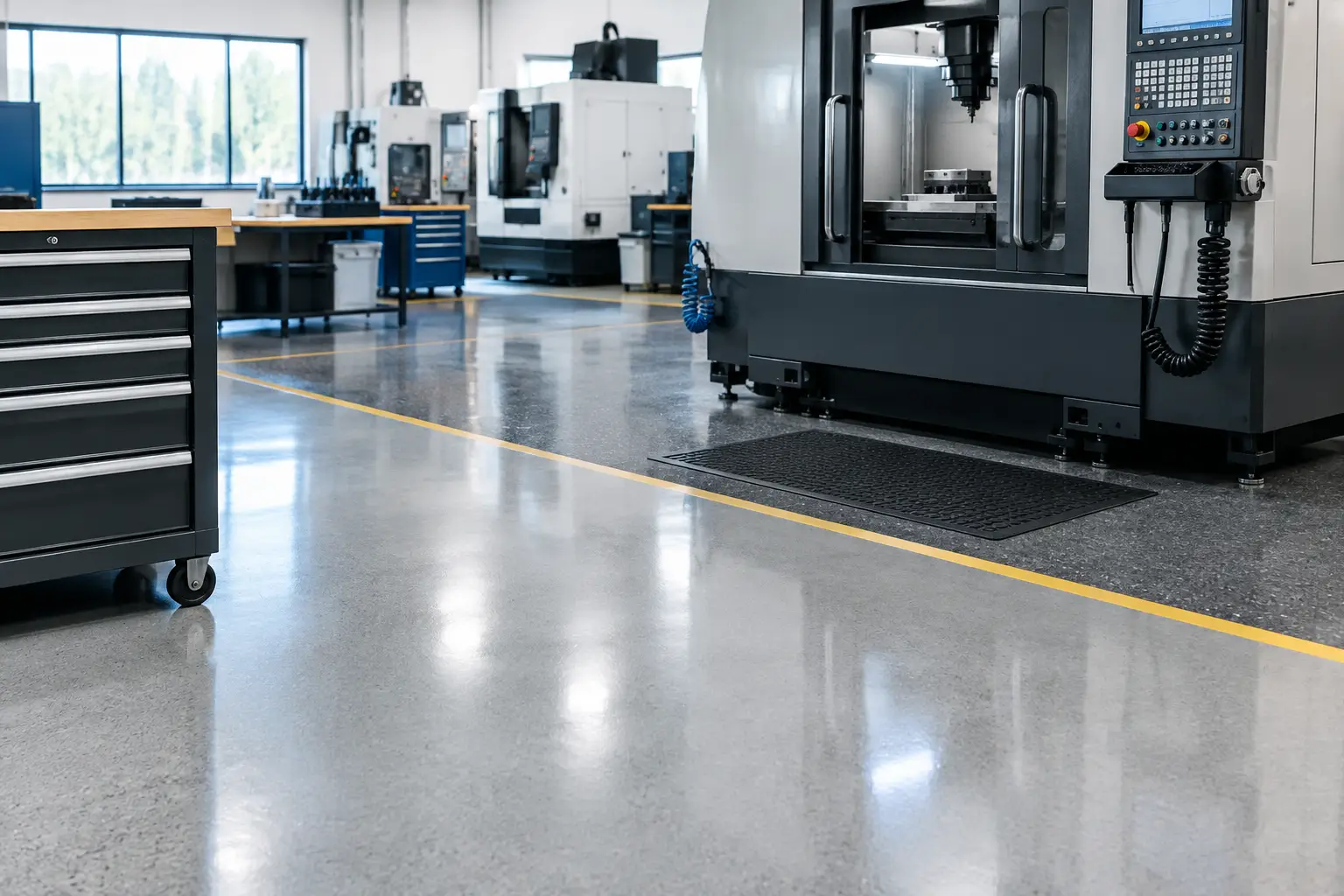
A worn concrete floor rarely needs just “surface prep.” The method chosen determines whether the finished floor accepts its coating, supports equipment safely, meets flatness requirements, and returns to service on schedule. In floor grinding vs scarifying, the right answer depends on the condition of the slab, the required surface profile, and the performance standard the facility must meet.
Grinding and scarifying are both mechanical concrete-preparation methods, but they produce very different results. Treating them as interchangeable can lead to unnecessary concrete removal, a profile that is too aggressive for the specified system, or remedial work that extends shutdown time.
What floor grinding does
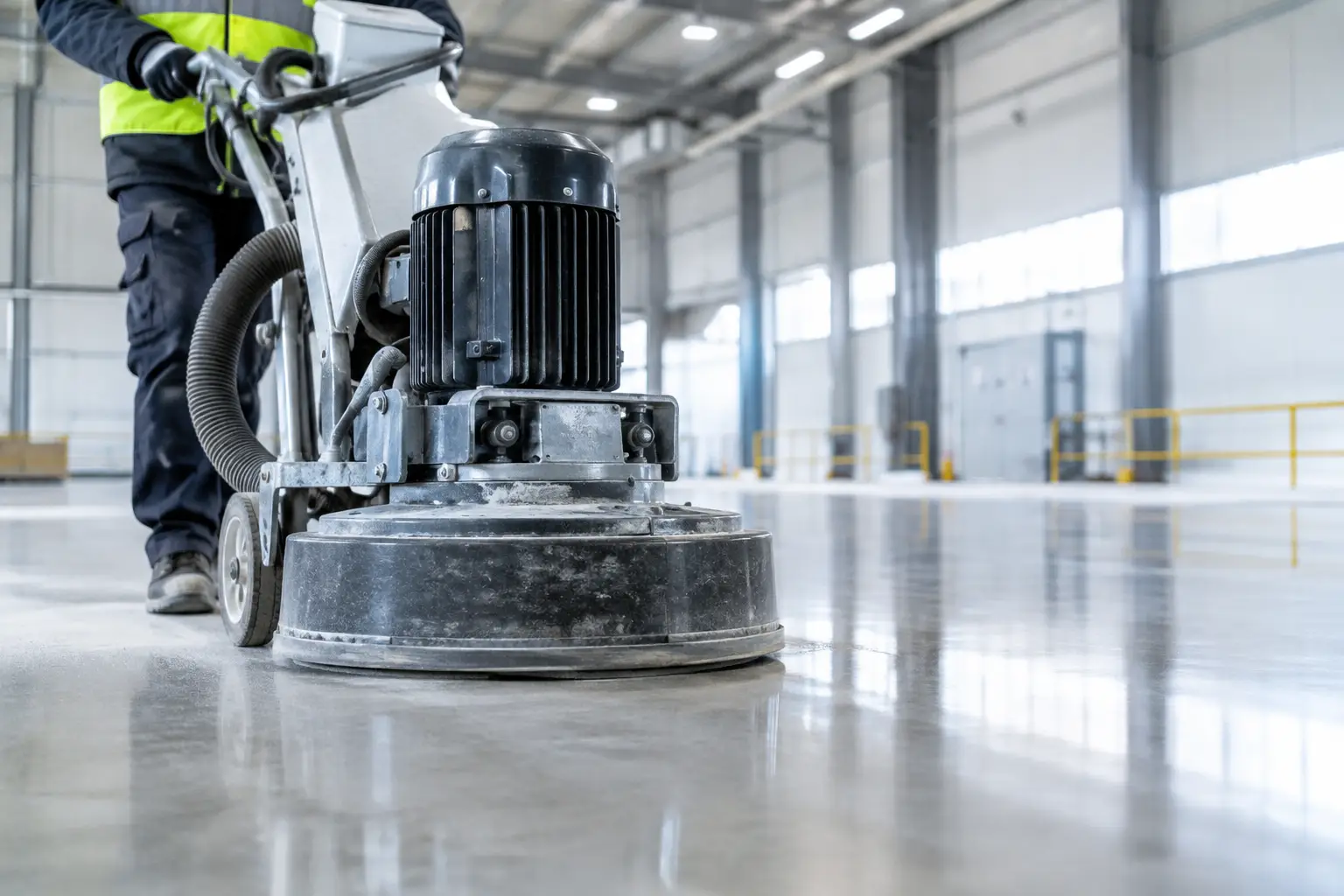
Floor grinding uses diamond abrasives to cut, refine, and level the concrete surface. The process is controlled, with the ability to use progressively finer tooling depending on whether the objective is coating preparation, removal of contaminants, correction of high spots, or a polished concrete finish.
For industrial work, grinding is commonly selected when precision matters. It can remove thin coatings, adhesives, curing compounds, laitance, minor surface irregularities, and localized high areas without the heavy impact associated with scarifying. It also produces a more uniform finish, which is often necessary before applying thin-film resinous flooring systems.
The key advantage is control. A properly planned grinding program can target specific elevations, work around joints and penetrations, and leave a consistent surface for epoxy, urethane cement, MMA, or other specified systems. Dust-controlled equipment also helps maintain cleaner working conditions in active facilities.
Grinding is not automatically the fastest method for every condition. Thick coatings, heavy buildup, deep contamination, or substantial concrete removal can make diamond tooling slow and costly. Tooling selection, concrete hardness, slab condition, and access all affect production rates.
Where grinding delivers the best result
Grinding is generally the stronger choice for floor upgrades where flatness, finish quality, and coating adhesion are central to the scope. It is especially effective for VNA and superflat floor corrections, where measured elevation changes must be made with discipline rather than broad, aggressive cutting.
It is also appropriate when a coating manufacturer calls for a light to medium concrete surface profile. Many industrial coatings require an open, sound substrate, but they do not perform well over deep grooves or uneven ridges. Grinding can create the required profile while preserving a uniform plane.
What scarifying does
Scarifying, sometimes called concrete planing or milling, uses rotating drums fitted with cutters that strike and chip the concrete surface. It is a high-removal process designed for heavy-duty work. Scarifiers can remove thick coatings, built-up materials, failed overlays, traffic markings, and deteriorated concrete more quickly than grinders in the right conditions.
The trade-off is surface texture. Scarifying leaves a rougher, more irregular profile than grinding. Depending on the cutters and production settings, it can create grooves and a concrete surface profile that is suitable for thicker overlays but too aggressive for thin resinous systems.
Scarifiers are valuable when the priority is production and material removal rather than refinement. On a slab with a thick failed coating or widespread high spots, scarifying can reduce the bulk of the material efficiently. The surface may then require follow-up grinding to meet the final specification.
Where scarifying is the better choice
Scarifying is well suited to removal scopes that would consume excessive diamond tooling or labor hours. Examples include thick industrial coatings, hard adhesives, elevated patching compounds, and surfaces requiring a significant reduction in elevation before a new overlay is installed.
It can also provide the more aggressive profile needed for certain cementitious toppings and thicker restoration systems. The specified flooring system should drive that decision. An aggressive profile is not better simply because it is more visible. It must match the system thickness, bond requirements, and service environment.
Floor grinding vs scarifying: the practical differences
The first question is not which machine is available. The first question is what the finished floor must do.
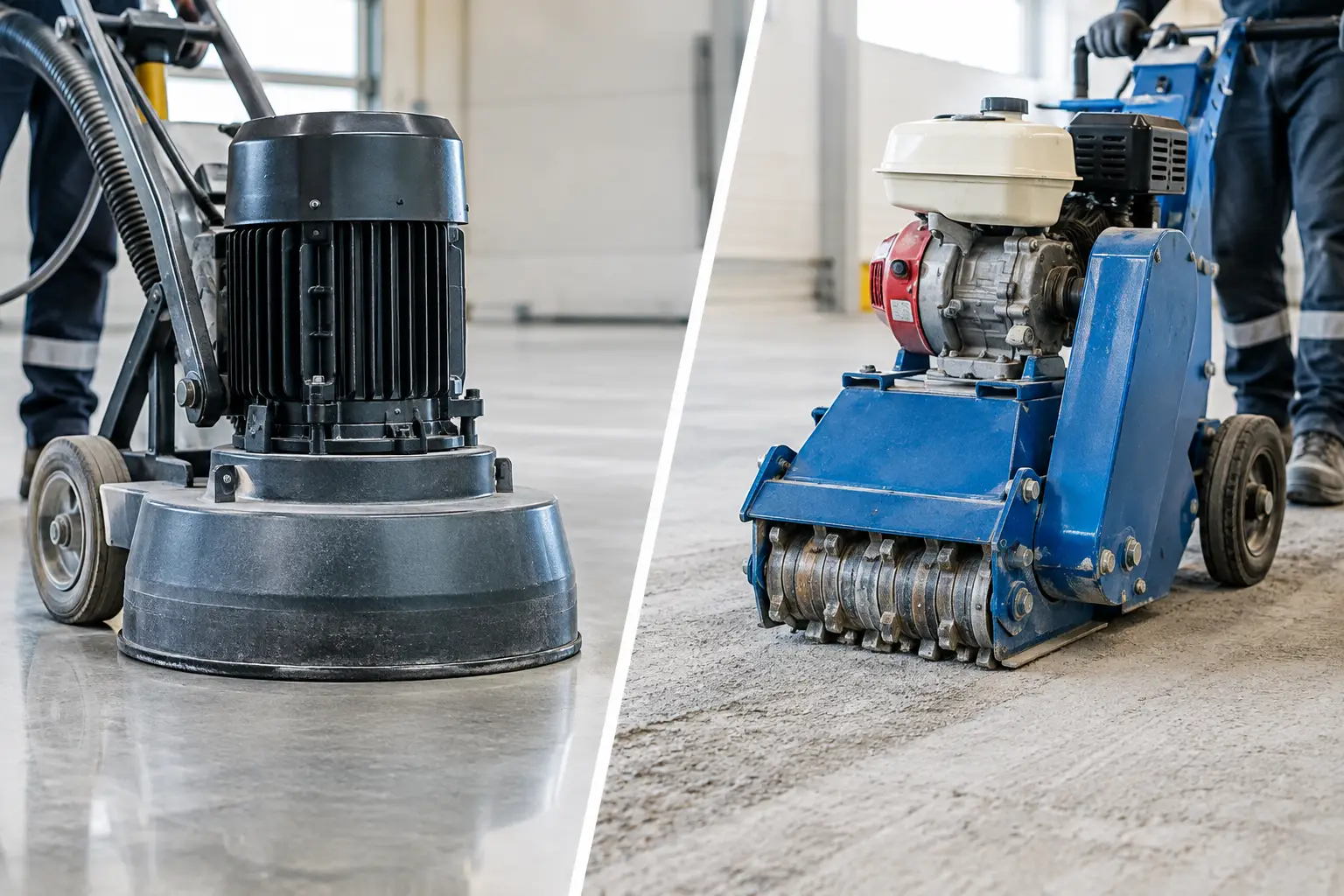
Grinding is a controlled cutting and refining method. It is typically selected for coating preparation, flatness correction, smooth transitions, removal of thin materials, and finished surfaces that must be consistent. Scarifying is an impact-removal method. It is typically selected for fast removal of thicker materials, aggressive profiling, and large-scale reduction before another preparation step.
A grinder follows the slab more closely and can refine its surface. A scarifier removes material aggressively but may leave a ridged pattern that needs additional work. For facilities installing thin-film epoxy or urethane systems, that difference can determine whether the floor achieves a uniform appearance and bond line.
Noise, vibration, and edge conditions also matter. Scarifying can be more disruptive in occupied environments and requires careful control near joints, drains, columns, and slab edges. Grinding is not silent or disruption-free, but it generally offers greater precision in constrained areas.
Neither process eliminates the need for substrate evaluation. Cracks, unsound concrete, moisture vapor transmission, oil saturation, joint movement, and slab curl require specific corrective measures. Mechanical preparation creates a suitable surface. It does not solve every concrete failure mechanism beneath that surface.
Choose based on the flooring system, not the existing damage alone
A common project mistake is choosing scarifying because the existing surface looks severe, then discovering that the new coating requires a finer profile. Another is choosing grinding for a thick coating removal scope and losing time to slow production. The best approach starts with the finish requirement and works backward.
For a thin resinous flooring system, grinding is often the final preparation method because it can create a controlled profile and remove weak surface concrete. For a thick mortar or cementitious overlay, scarifying may provide the needed texture and removal rate. For many industrial renovations, the answer is both: scarify to remove bulk material, then grind to correct the profile, refine transitions, and prepare for installation.
This sequence is particularly useful in facilities with failed coatings, uneven prior repairs, or old traffic lanes. It avoids asking one process to perform work it is not designed to do.
Flatness work requires a different level of control
When a distribution center operates very narrow aisle equipment, floor preparation is not simply cosmetic. Elevation variation can affect truck stability, mast movement, rack clearance, wheel wear, and productivity. Superflat and VNA floor work demands measurement, mapping, and controlled correction.
Grinding is the primary tool for this precision work because it can remove high areas incrementally. The process should be guided by verified floor data and the required FF, FL, or defined VNA tolerance. Broad scarifying may remove material quickly, but it is not the preferred method for fine elevation correction where each cut affects the travel path.
Joint conditions must also be considered. Damaged, spalled, or rocking joints should be repaired as part of the floor-upgrade scope, not treated as an afterthought. A smooth travel path across the slab includes the joint line, the repair material, and the surrounding concrete.
Plan for downtime, dust control, and access
In active plants and warehouses, preparation work must be planned around operations. The fastest removal method on paper is not always the shortest path to turnover if it creates excessive cleanup, blocks traffic routes, or requires additional refinement before coating installation.
A sound work plan defines the removal depth, expected profile, edge-detail requirements, dust collection standard, staging area, traffic segregation, and cure window for follow-on materials. It should also account for equipment access, rack protection, drain details, and the sequence of joint repair or crack treatment.
Dust collection is a performance and safety issue, not a housekeeping preference. Industrial preparation should use properly matched vacuum systems and containment practices to control airborne silica dust and protect adjacent operations. Verification matters: the prepared slab must be clean, sound, dry as required by the flooring system, and free of loose debris before installation begins.
The specification should set the method
The strongest flooring decisions are made from a clear scope: existing condition, required concrete surface profile, removal depth, flatness tolerance, flooring system, and operational return date. That scope may call for grinding, scarifying, or a sequenced combination of both.
For facility owners and general contractors, the goal is not to select the most aggressive preparation method. It is to deliver a substrate that allows the finished floor to perform under traffic, abrasion, washdowns, chemical exposure, and daily operations. Osis Group approaches preparation as part of the flooring system, because long-term floor performance is established before the first coat is installed.
A floor that is prepared to the right profile, elevation, and cleanliness standard gives every subsequent step a better chance to hold up. That is where reliable industrial flooring starts.