A forklift mast does not care whether a floor problem began as poor finishing, slab movement, or years of abrasion. It responds to the result: vibration, impact, lost load stability, damaged equipment, and slower travel. The decision between floor grinding versus slab replacement should therefore start with operational requirements and the actual condition of the concrete, not with the lowest initial price.
Grinding can restore profile, flatness, and serviceability when the slab remains fundamentally sound. Replacement is the right call when defects extend beyond the surface or the floor cannot reliably support the facility’s traffic, loading, and performance standard. The difference matters most in active industrial facilities, where a failed repair strategy can create a second shutdown and a larger capital cost.
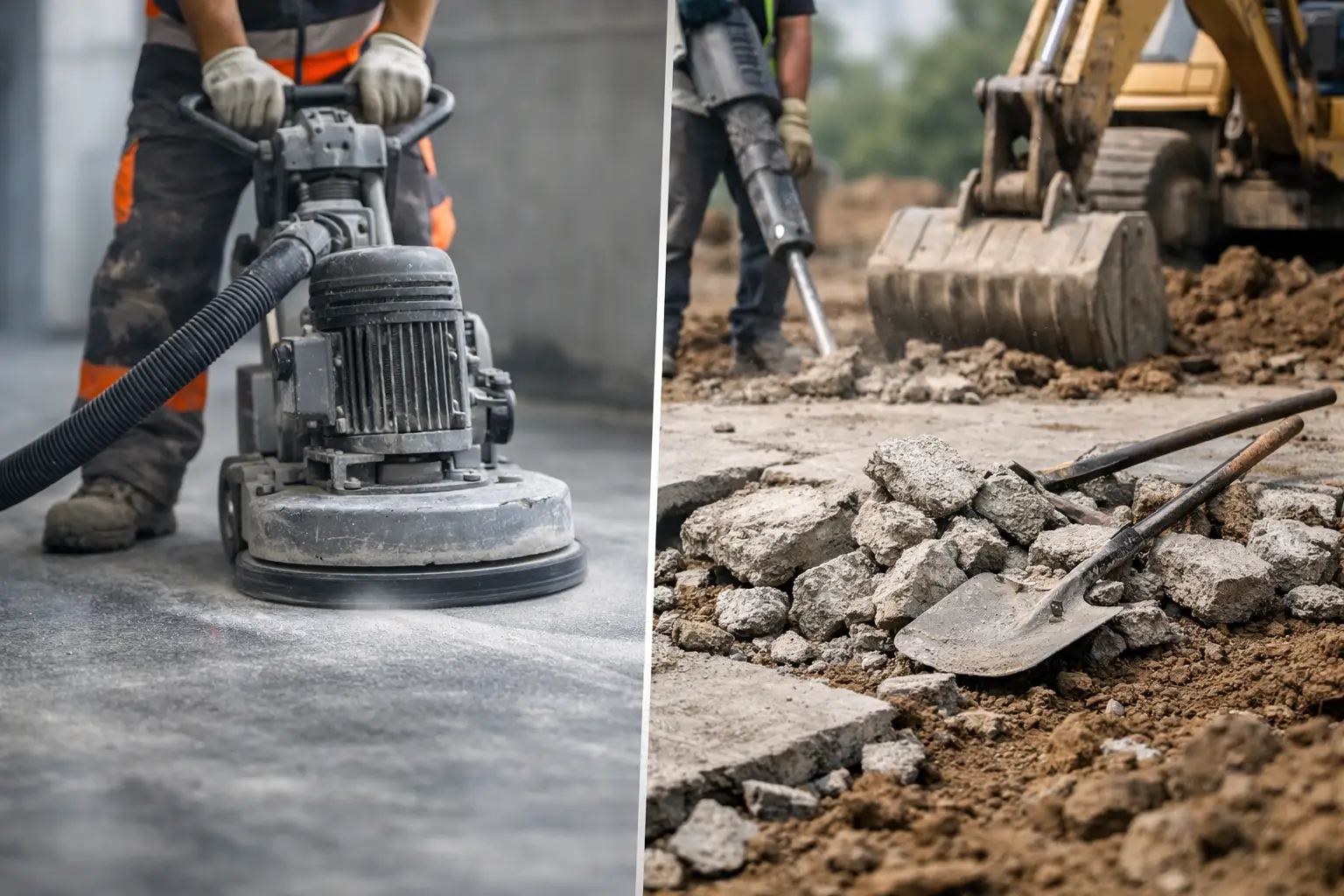
Floor Grinding Versus Slab Replacement: The Core Difference
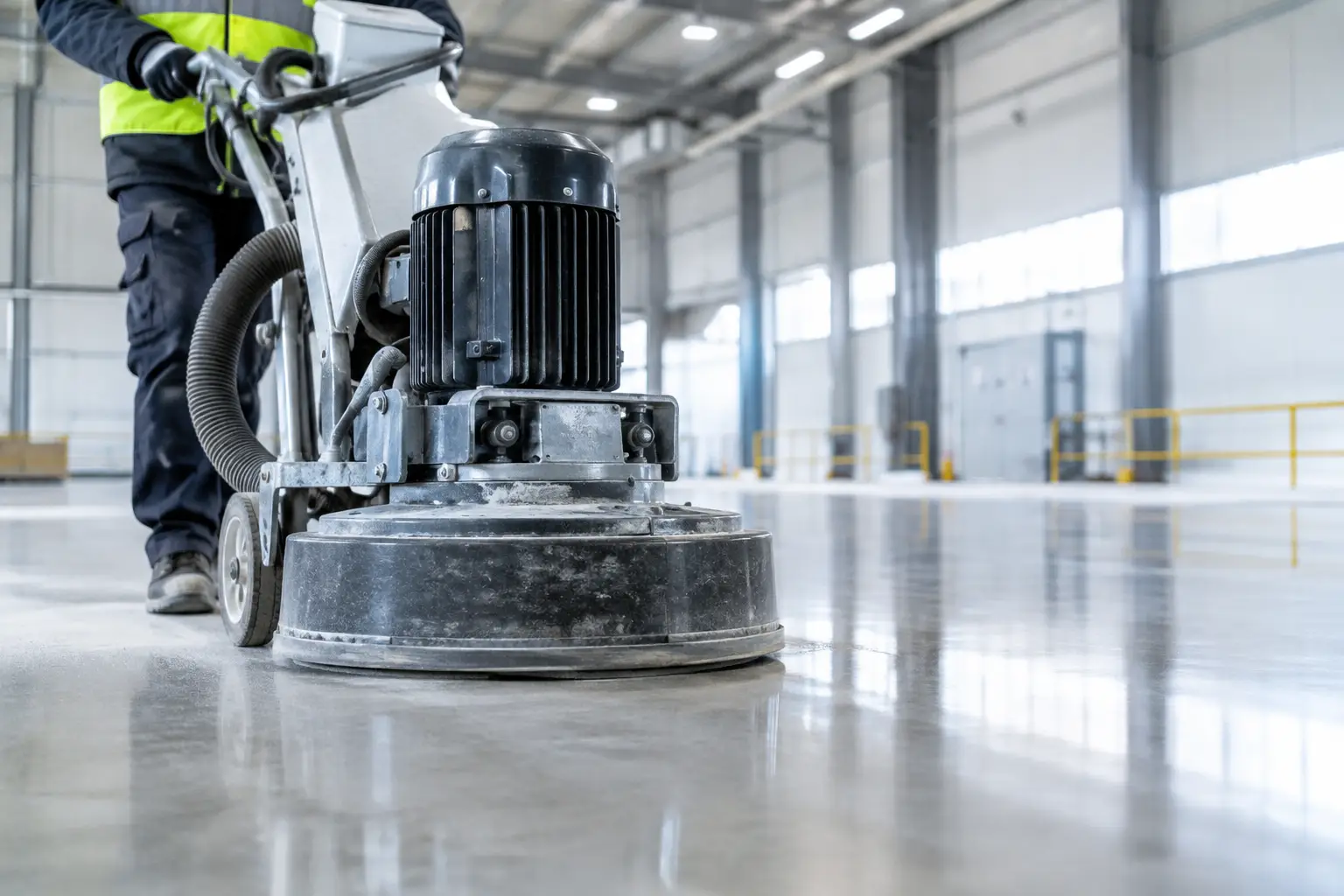
Floor grinding removes a controlled amount of concrete from high areas, surface contaminants, coatings, rough patches, and localized defects. Diamond tooling can refine the surface, improve flatness within practical limits, prepare concrete for a new flooring system, and reduce trip points at repairs or transitions. It is a precision surface-preparation and correction process.
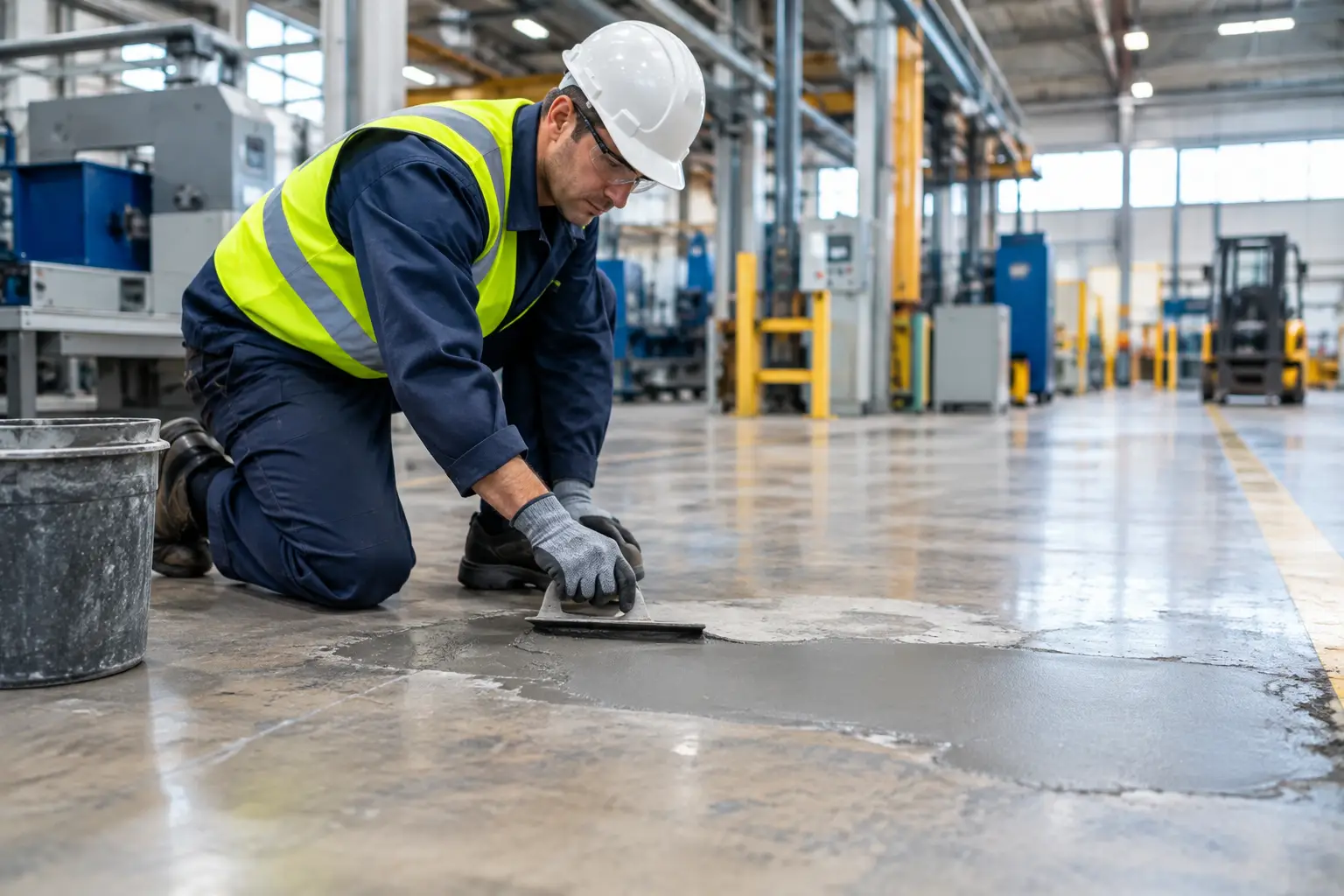
Slab replacement removes deteriorated concrete and reconstructs the affected area. Depending on the failure, that work may include saw cutting, demolition, subgrade correction, reinforcement, dowels, new concrete placement, joint design, curing, and surface finishing. It addresses deeper causes that grinding cannot reach.
This distinction is decisive. Grinding does not correct an unstable subbase, widespread delamination, deep structural cracking, significant settlement, inadequate slab thickness, or recurring joint failure caused by movement. Conversely, replacement is not automatically the superior solution when defects are confined to the wearing surface or a limited high spot. Removing sound concrete adds cost, disruption, and schedule risk without necessarily improving performance.
When Floor Grinding Is the Right Investment
Grinding is commonly the better option when the slab has sound concrete at depth and the operational issue is concentrated at the surface. Facilities may need to remove old coatings, adhesive residue, laitance, tire marks, high edges, localized spalls after repair, or surface irregularities that affect traffic.
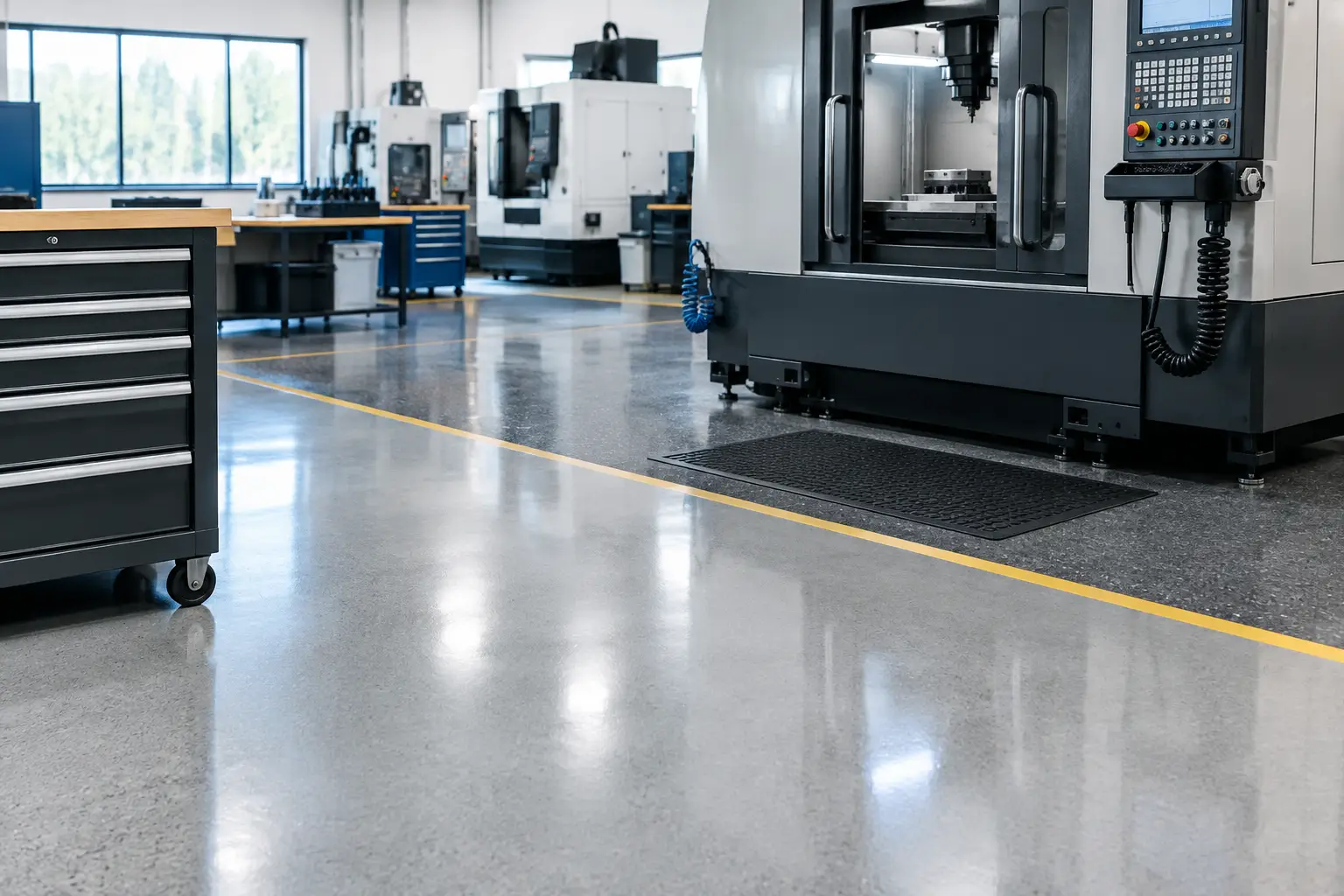
It is also a practical route for upgrading existing floors before installing an industrial coating, resinous system, polished concrete finish, or other protective treatment. Proper grinding creates the required concrete surface profile and removes weak material that could compromise bond. A flooring system is only as dependable as the substrate preparation beneath it.
For warehouse operations, grinding can help correct localized ride-quality issues and reduce abrupt transitions that stress forklifts and rack loads. In selected cases, it can improve floor flatness enough to support conventional lift-truck traffic or improve conditions in defined travel lanes. The achievable result depends on the existing slab geometry, the degree of correction required, and how much material can be safely removed.
Grinding is usually favored when uptime is tight. Work can often be phased by aisle, room, bay, or shift, with dust-controlled equipment and coordinated access planning. That does not mean it is disruption-free. The work still requires clear work zones, protection of adjacent operations, debris management, and time for any following flooring system to cure. But compared with demolition and concrete replacement, the path back to service is typically shorter.
Where Grinding Reaches Its Limit
A grinder follows the concrete it contacts. It can lower high points, but it cannot raise low ones without a compatible repair or topping system. It also cannot make a badly undulating slab suitable for very narrow aisle requirements simply by removing enough concrete. Excessive material removal can expose aggregate, weaken intended cover over reinforcement, or create unacceptable elevations at doors, drains, equipment pads, and adjoining slabs.
Superflat VNA floors require particular discipline. Turret trucks operate in narrow aisles with high lift heights, so small deviations in floor profile can affect truck behavior, operator safety, productivity, and rack interaction. A broad grinding approach may improve a local condition, but it should not be assumed to deliver a defined VNA flatness specification. The floor must be measured against the operating equipment, aisle layout, and specified tolerances before selecting a corrective method.
Recurring cracks and joint distress also demand investigation. A joint that repeatedly breaks under hard-wheel traffic may indicate poor load transfer, slab movement, inadequate joint geometry, or deterioration at the arris. Grinding the damaged edge may smooth the symptom temporarily, but a proper floor and joint repair is often needed to restore durable traffic performance.
Signs That Slab Replacement Is Necessary
Replacement becomes the stronger long-term choice when the concrete has lost its integrity or the causes of failure originate below the wearing surface. The assessment should include visual inspection, sounding for delamination, crack mapping, elevation review, traffic patterns, moisture conditions, and where appropriate, cores or other testing.
Conditions that commonly justify partial or full slab replacement include:
- Widespread delamination, scaling, or weak concrete extending beyond a shallow removal depth.
- Settlement, rocking slabs, pumping, or evidence of subgrade and base failure.
- Structural cracks, severe curling, or movement that cannot be stabilized through repair.
- Slab thickness or reinforcement conditions that are inadequate for current loading.
- Repeated failures in the same area after prior repairs, particularly at joints, dock approaches, and high-traffic lanes.
Replacement is also appropriate when the facility is changing its use. A slab built for light storage may not perform under heavier forklifts, concentrated rack loads, automated guided vehicles, high-impact manufacturing traffic, or frequent washdowns. In these cases, the question is not whether the existing surface can look better. It is whether the floor system can carry the next operating model safely and consistently.
Partial replacement can be highly effective when deterioration is isolated. The new section must be engineered and detailed to integrate with the surrounding slab, including load transfer, joint layout, elevation control, and transitions. A patch that is strong by itself but poorly connected to adjacent concrete will often fail at its perimeter under repeated traffic.
Compare Downtime by the Full Project Sequence
Initial cost often favors grinding. It uses less material, avoids extensive demolition, and can reduce time spent waiting for concrete strength gain. That comparison is incomplete if grinding is applied to a slab that needs structural work. A short shutdown followed by recurring patches, equipment damage, and another closure is not a low-cost outcome.
Replacement requires more planning. Demolition generates noise, vibration, debris, and access constraints. New concrete must be placed, cured, protected, and brought to the required moisture condition before some flooring systems can be installed. Depending on the specification and operating demands, return-to-service timing may be governed by strength development, not just whether the concrete appears dry or hard.
The right schedule is built around the facility. Work can be sequenced around production lines, warehouse zones, shipping windows, or shutdown periods. Temporary traffic routes, isolation barriers, equipment relocation, and handover milestones should be established before crews mobilize. For mission-critical sites, execution planning is part of the flooring solution, not an administrative afterthought.
Cost Should Be Measured Against Performance Risk
A grinding proposal and a replacement proposal are not interchangeable bids. Each solves a different level of problem. The useful comparison includes direct construction cost, operational disruption, expected maintenance, safety exposure, equipment wear, and the likelihood of future remediation.
A sound slab with a damaged surface often has substantial remaining value. Grinding, targeted repair, and a properly specified protective system can extend its working life at a fraction of replacement cost. This is especially true where the goal is improved cleanability, chemical resistance, abrasion resistance, or a more reliable surface for daily operations.
When concrete failure is progressive, however, preserving the slab can become false economy. Joint breakdown can accelerate under forklift wheels. Moisture-related deterioration can undermine coatings. Settlement can turn a minor elevation difference into a persistent operational hazard. Replacement costs more because it corrects conditions that surface work cannot resolve.
Make the Decision From Measured Conditions
The best decision process begins with a site-specific condition assessment rather than a generic repair preference. Review the floor’s current use, future loads, traffic type, rack layout, drainage, exposure to chemicals or thermal cycling, and required downtime window. Then identify whether the defect is superficial, localized through the slab, or driven by subgrade movement.
For flatness-sensitive applications, measure the floor using the standard and testing method relevant to the equipment and operation. For damaged areas, determine the depth and extent of unsound concrete before defining repair boundaries. For coating or jointless flooring upgrades, confirm substrate moisture and surface preparation requirements early. These details prevent scope gaps that become expensive once work begins.
Osis Group approaches floor upgrade and grinding work with the same standard applied to new industrial flooring: the selected solution must perform in the operating environment. That means matching the repair method, preparation level, flooring system, and project sequence to the facility’s real exposure and uptime requirements.
The productive question is not, “Can this floor be ground?” It is, “What work will give this operation a dependable floor for the years ahead?” Answer that question with measured conditions, realistic traffic demands, and a repair scope built to hold up after the crews leave.