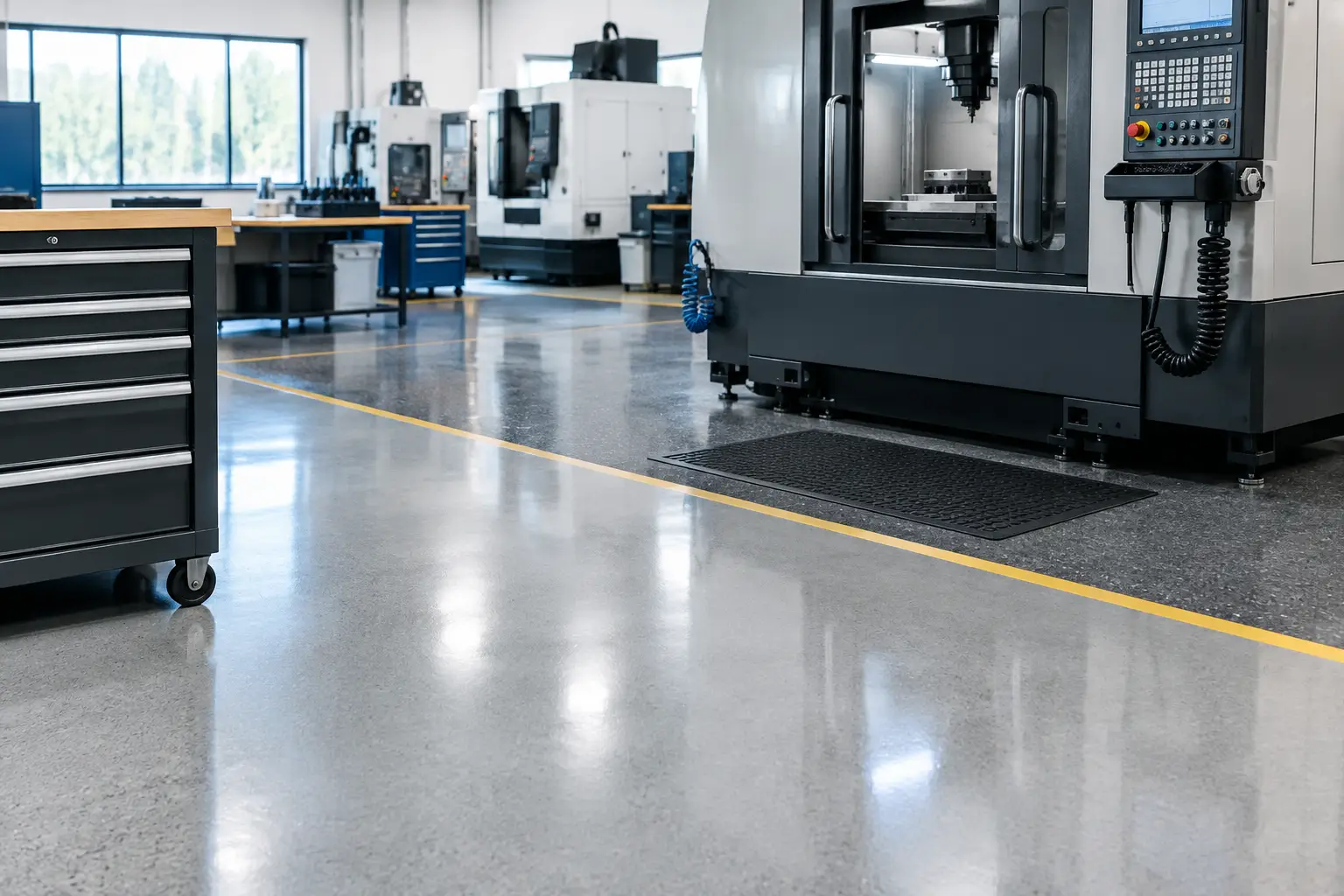
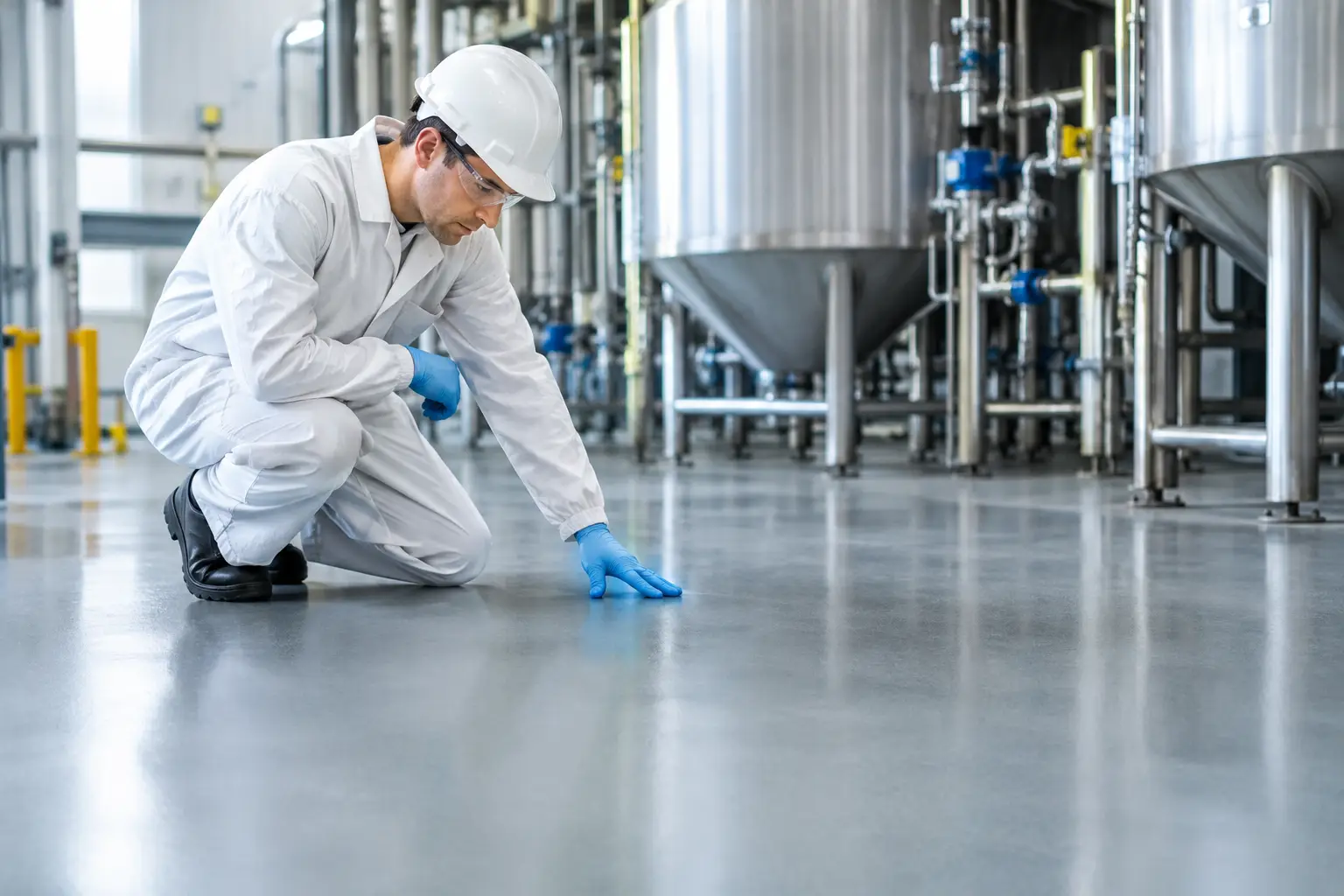
A failed floor rarely starts as a floor problem. It starts with a spill that sits too long, a washdown routine the coating was not built to withstand, or a slab that was not properly prepared before installation. Chemical resistant flooring is engineered to prevent those failures in facilities where exposure, traffic, sanitation, and uptime all place demands on the same surface.
For plant managers, facilities directors, and project teams, the objective is not simply to select a harder coating. The objective is to specify a complete floor system that withstands the actual operating environment while remaining safe, cleanable, and practical to maintain.
What Chemical Resistant Flooring Must Withstand
Chemical exposure is not a single condition. Acids, alkalis, solvents, oils, salts, cleaners, and process fluids attack flooring in different ways. A system that performs well against intermittent oil exposure may soften, stain, or lose bond when subjected to hot caustic washdowns. A coating that resists a particular acid may not be the right choice where thermal shock or heavy forklift traffic is equally significant.
The first question is not, “What coating is chemical resistant?” It is, “What is on the floor, how long does it remain there, and at what temperature?” Concentration, frequency, dwell time, and cleaning procedures all affect system selection. So does the chance of mixed exposure. In many active facilities, a floor must handle process chemicals, tire traffic, impact, moisture, and aggressive cleaning products in the same shift.
Chemical resistance also depends on the condition of the concrete below. Chemicals can migrate through cracks, failed joints, pinholes, and weak coating areas. Once they reach the slab, they may degrade concrete, corrode embedded steel, and create a larger repair scope than a surface-level failure.
Start With an Exposure Assessment
A dependable specification begins at the operating level. Review safety data sheets, process flow, spill history, washdown protocols, drainage patterns, equipment routes, and areas where personnel work. Chemical exposure around a fill line is different from exposure in a battery charging room, wastewater area, food-processing wash bay, or pharmaceutical production suite.
Document the chemicals by type and concentration. Identify whether contact is occasional, daily, or continuous. Record fluid temperatures, including heat from washdown water or process discharge. A chemical that is manageable at room temperature may be far more aggressive when hot.
The assessment should also identify physical demands. Forklift and pallet-jack routes, point loads, dropped materials, steel-wheeled carts, abrasion, and vibration all matter. Chemical resistant flooring is only effective when it has the compressive strength, thickness, texture, and bond profile to survive the way the facility actually operates.
Drainage deserves close attention. Standing liquid increases chemical dwell time and exposes weak details at coves, drains, penetrations, and joints. In wet-process areas, floor slope and drainage performance are part of the flooring system, not separate issues to resolve later.
Selecting the Right System for the Exposure
There is no universal chemical-resistant floor. The right material depends on the chemical environment and the operating demands around it.
Epoxy Systems
High-build epoxy systems are widely used for industrial environments because they provide a dense, cleanable surface with good adhesion and strong resistance to many oils, fuels, and chemicals. They can be applied in multiple build levels, from protective coatings to thicker mortar systems that address damaged or uneven slabs.
However, standard epoxy is not the correct answer for every chemical environment. Certain solvents, strong acids, thermal cycling, and sustained high-temperature washdowns can exceed its performance range. Epoxy also requires proper moisture evaluation and surface preparation. A well-selected epoxy installed over a contaminated or moisture-compromised slab can still fail prematurely.
Novolac Epoxy Systems
Where chemical exposure is more aggressive, novolac epoxy may be specified. Novolac formulations are designed for stronger resistance to concentrated acids, solvents, and harsh process chemicals than conventional epoxy systems.
This added resistance comes with a requirement for disciplined installation. Surface preparation, primer selection, film thickness, cure conditions, and detail work must all match the system requirements. A material data sheet cannot compensate for thin spots, poor edge termination, or a weak bond to the concrete.
Urethane Cement Systems
Urethane cement is often a strong choice for wet processing, food and beverage, manufacturing, and washdown environments. It tolerates moisture during installation better than many resin systems and performs well under thermal cycling, hot-water washdowns, impact, and abrasion.
Its chemical resistance must still be evaluated against the facility’s actual exposure list. Urethane cement can be highly effective in demanding service, but it is not automatically the best choice for every concentrated solvent or acid. Topcoats may also be needed where stain resistance, color retention, or additional chemical protection is required.
Vinyl Ester and Specialty Linings
For highly aggressive environments, such as concentrated acid containment, chemical processing, and certain wastewater applications, vinyl ester or specialty corrosion-resistant linings may be necessary. These systems are selected for specific chemical challenges and usually require detailed engineering of terminations, joints, drains, and vertical protection.
They are generally a more specialized investment. That cost is justified when exposure severity makes a standard coating an unacceptable risk. Selecting a lower-cost system that fails under known conditions is not a saving.
Installation Quality Determines Service Life
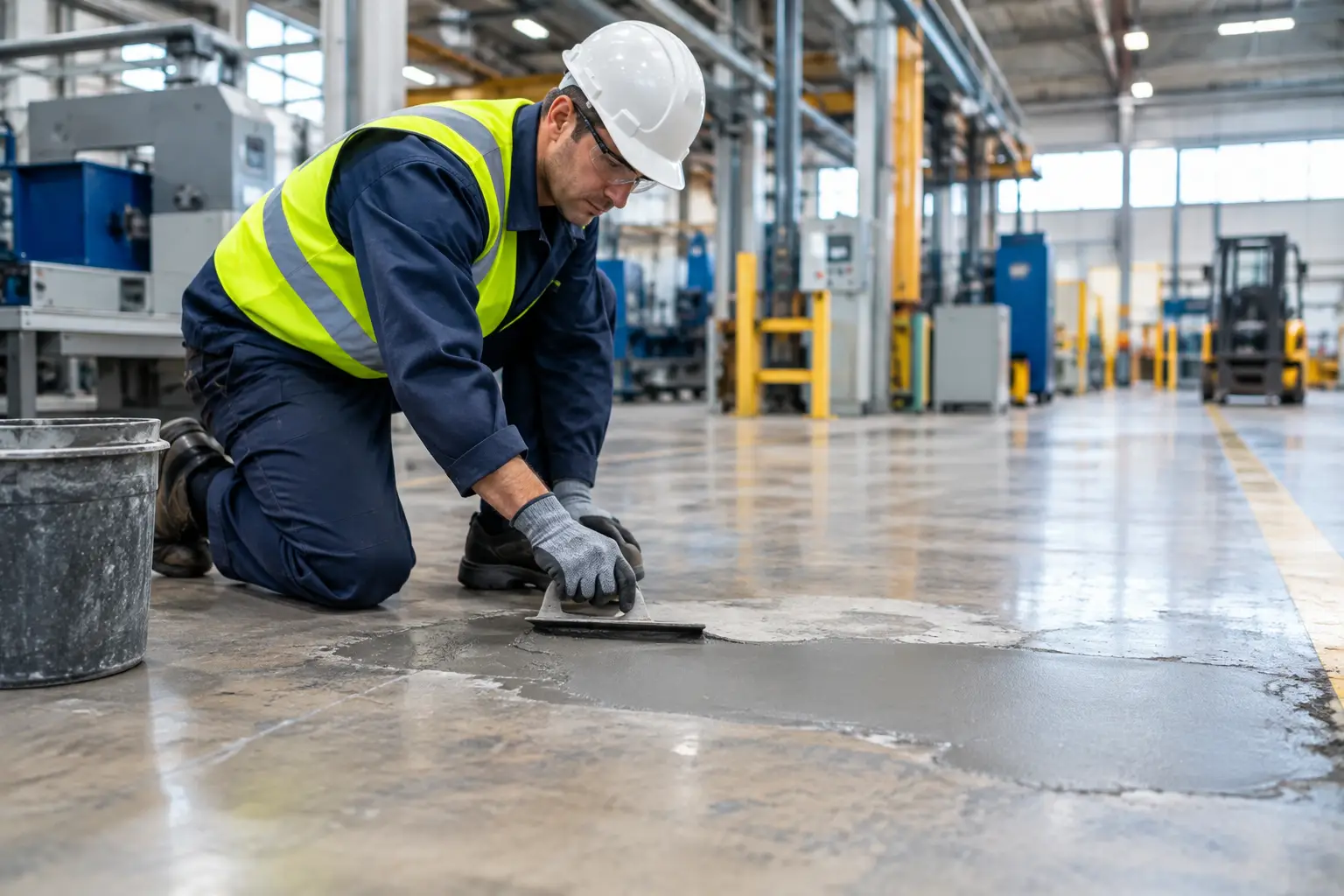
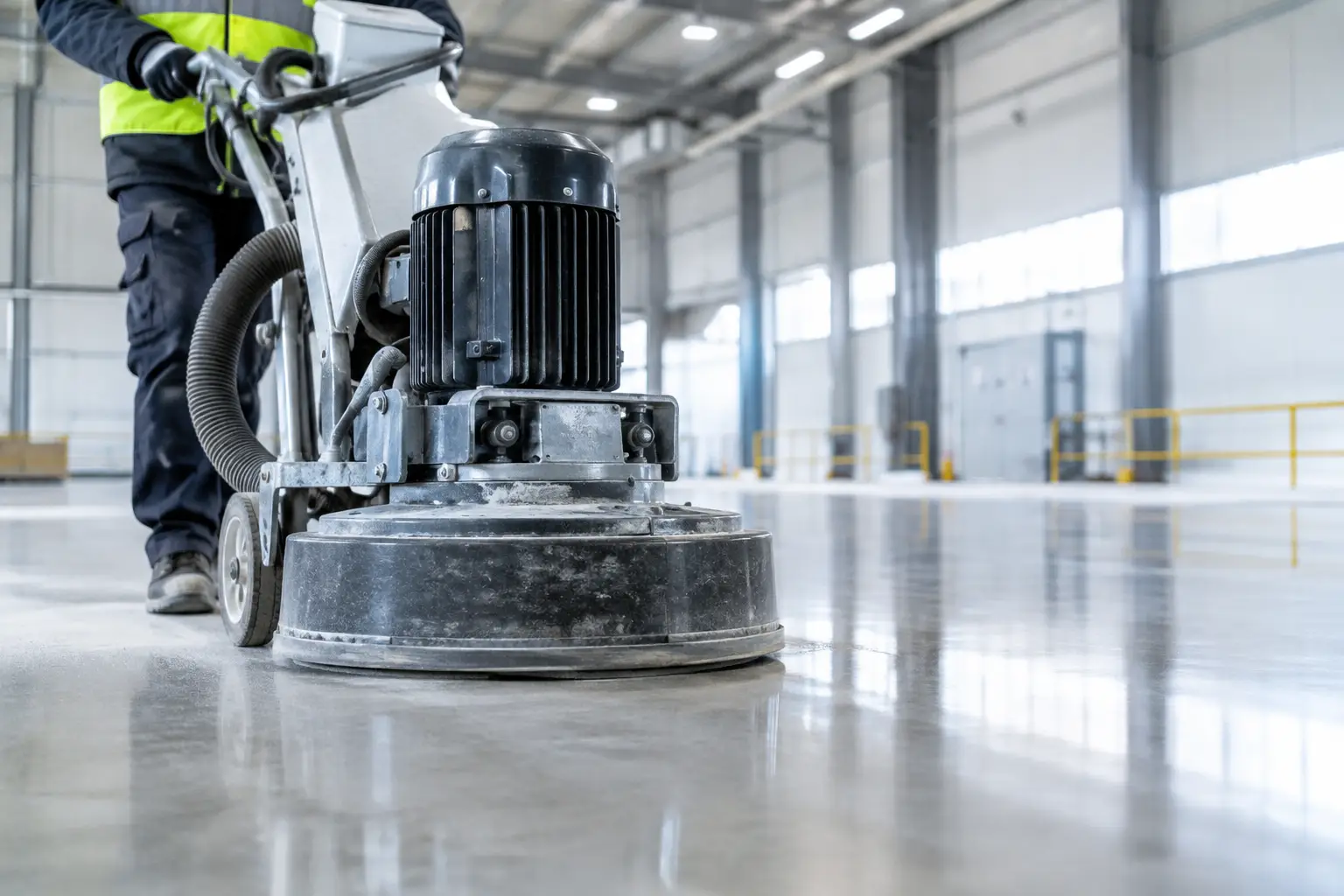
The best flooring material cannot overcome poor preparation. Concrete must be evaluated for soundness, contamination, moisture conditions, and existing coating failure. Surface preparation creates the profile needed for mechanical bond and removes weak material that would otherwise become the failure plane.
Grinding, shot blasting, scarifying, and localized concrete repair may all be part of the scope. The method depends on slab condition and the specified system. Oil-contaminated concrete, deteriorated joints, spalled areas, and failed prior coatings require direct treatment before a new system is installed.
Detail work is equally important. Chemical exposure finds edges. Drains, trench edges, pipe penetrations, equipment bases, wall transitions, and control joints must be addressed as part of the installation plan. In washdown environments, integral cove bases can help eliminate difficult-to-clean seams and reduce paths for liquid intrusion.
Active facilities also need an installation approach that respects production schedules. Phased work, controlled access, cure planning, dust containment, and clear turnover areas reduce operational disruption. The correct system is one that performs after installation and can be installed without creating unnecessary risk to the operation.
Do Not Ignore Joints and Repairs
Joints are expected movement locations, not areas to bury under a rigid coating and hope for the best. Movement joints generally need to be honored and sealed with materials compatible with the traffic, chemical exposure, and expected movement. Failed joint sealants allow fluids to reach slab edges, accelerating breakdown and creating rough, unsafe travel paths.
Floor repairs should also be compatible with the surrounding system. A patch that has adequate compressive strength but poor chemical resistance or weak bond may become the next failure point. Repair sequencing matters: stabilize the substrate, restore damaged areas, address joints and cracks appropriately, then install the protective system.
This is especially relevant where heavy equipment traffic is present. Forklift turning, hard braking, and repeated wheel loads concentrate stress at joints, repairs, and transitions. A durable floor requires these high-stress areas to receive the same level of attention as the open slab.
Specify for Lifecycle Value, Not Initial Price
Chemical resistant flooring should be evaluated against the cost of interruption, cleanup, repair, safety exposure, and replacement. A floor failure can force an unplanned shutdown, contaminate a process area, damage equipment routes, or create compliance concerns. Those consequences usually outweigh the difference between a basic coating and a correctly engineered system.
A sound specification defines chemical exposure, substrate condition, required thickness, texture, drainage details, joint treatment, curing requirements, and acceptance standards. It also identifies where different systems are needed within the same facility. A chemical storage room, production line, loading area, and maintenance bay may require different solutions because their risks are different.
Osis Group approaches these projects as operational protection work. The focus is on surface preparation, system selection, workmanship, and project delivery that supports long-term facility performance.
Before the next coating project is released for pricing, verify the chemical exposure map and inspect the slab where failures are most likely to begin. That early discipline gives the finished floor its best chance to protect the operation for years, not just pass the first inspection.