A failed slab joint is not a cosmetic issue when forklifts, reach trucks, pallet jacks, or automated vehicles cross it all day. Spalled edges create impact, vibration, product damage, and progressive concrete failure. The best joint repair materials are selected around joint movement, traffic type, slab condition, and the required return-to-service window - not simply by what is available on site.
For most industrial traffic lanes, the priority is restoring edge support. A repair that looks clean but remains too soft, too brittle, or poorly bonded will fail under repeated hard-wheel impact. The right material, installed with proper joint preparation and geometry, protects the slab and supports predictable facility operations.
What a Joint Repair Material Must Do
Industrial floor joints serve different purposes. Saw-cut control joints encourage shrinkage cracking in a planned location. Construction joints separate slab placements. Isolation and expansion joints accommodate movement between slabs, walls, equipment foundations, or other fixed elements. Treating every opening with the same repair material is a common cause of premature failure.
In a warehouse or manufacturing facility, a traffic-bearing control or construction joint usually needs a semi-rigid filler or repair system that supports the concrete arris - the vulnerable upper edge of the slab. It must transfer wheel loads across the joint without crushing, chipping, or debonding.
A true expansion or isolation joint has a different requirement. It needs to remain compressible and accommodate movement. Filling it with a rigid epoxy may restrain movement and drive damage into the surrounding slab. Material selection begins with determining what the joint is designed to do, then assessing what it is doing now.
Best Joint Repair Materials by Application
There is no universal winner. The best joint repair materials match the service conditions and the type of joint being repaired.
Semi-Rigid Polyurea for High-Traffic Warehouse Joints
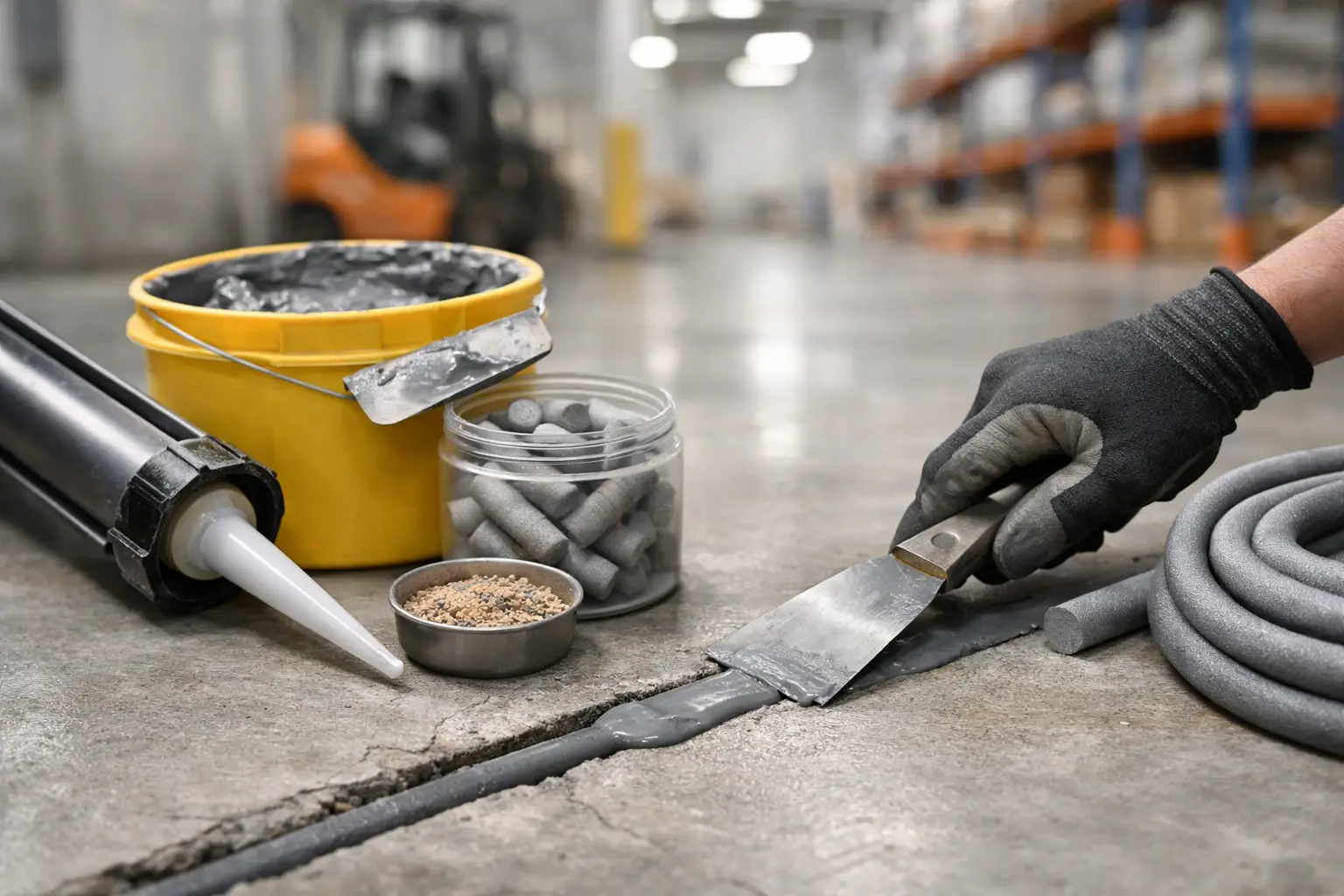
Semi-rigid polyurea is often the preferred solution for active distribution centers, cold storage facilities, manufacturing aisles, and other hard-wheel traffic areas. It cures quickly, develops strong adhesion when the concrete is properly prepared, and provides the joint edge support needed for forklift and VNA traffic.
Fast cure is a major operational advantage. Many polyurea systems can be cut flush and returned to service within hours, making them suitable for phased repairs in occupied facilities. This can reduce disruption compared with slower curing materials.
The trade-off is movement capacity. A semi-rigid polyurea is intended for relatively stable, traffic-bearing joints, not joints with significant ongoing expansion and contraction. It also requires disciplined installation. The joint must be cleaned, dry enough for the product requirements, properly routed where necessary, and filled to the correct depth. Poor preparation can defeat a premium material.
Semi-Rigid Epoxy for Stable, Heavy-Duty Joints
Semi-rigid epoxy fillers remain a strong choice for stable joints subjected to heavy rolling loads. They provide excellent compressive strength, durable edge support, and resistance to many industrial contaminants. Epoxy is particularly effective where joint movement has largely occurred and the facility needs a hard, long-term traffic-bearing repair.
Compared with polyurea, epoxy commonly has a longer cure time and may be less practical where a lane must reopen the same shift. Temperature also matters. Low slab temperatures can slow curing or affect installation performance, so scheduling and environmental control should be considered before specification.
Epoxy is not an expansion-joint solution. Its high strength is valuable where support is needed, but it can be too rigid for joints that continue to move. In facilities with large temperature swings, unconditioned loading areas, or young slabs still undergoing shrinkage, the joint condition needs careful evaluation first.
Cementitious Repair Mortars for Spalled Concrete
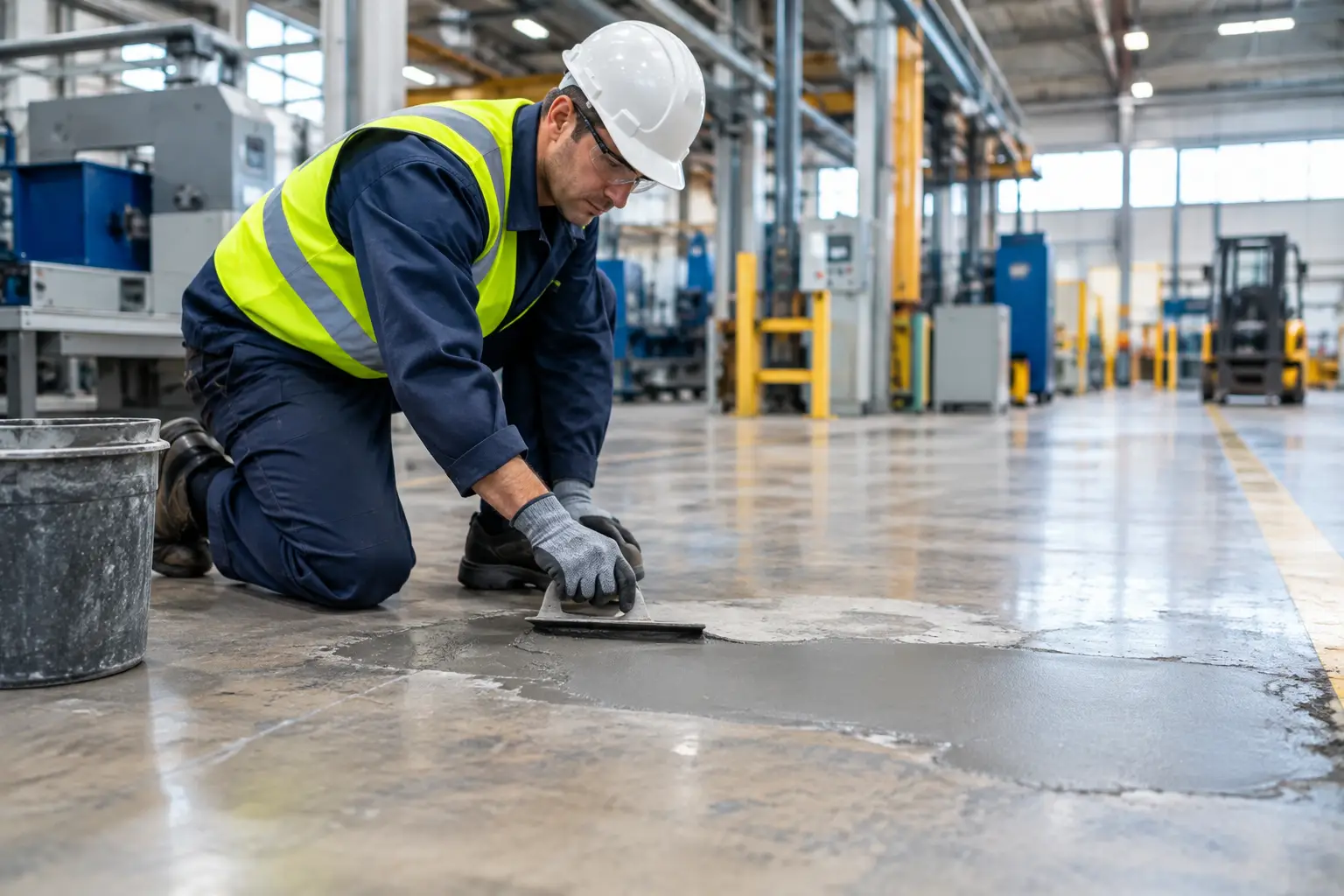
When the failure extends beyond the joint opening and concrete edges have broken away, a cementitious repair mortar may be part of the system. These products are used to rebuild deeper spalls, broken arrises, and damaged slab sections before the joint is re-established with a suitable filler.
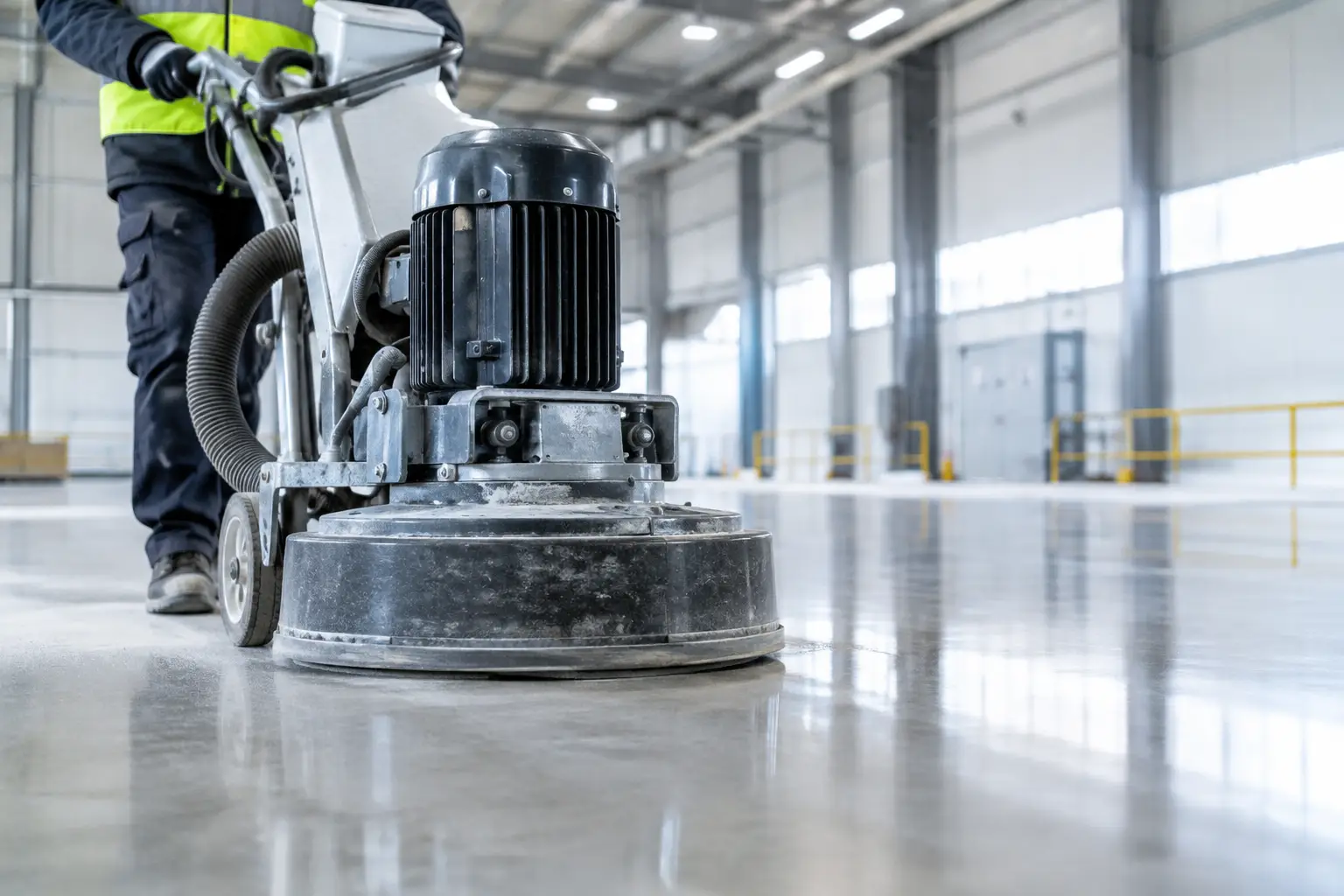
For industrial repairs, use a purpose-designed, high-strength material with the bond and abrasion resistance required for the area. Surface preparation is decisive. Unsound concrete must be removed, repair boundaries should be cut cleanly, and the substrate must be prepared to the material manufacturer’s profile and moisture requirements.
Cementitious mortars are valuable for structural rebuilding, but they are not automatically the final answer for a traffic-bearing joint. If the repaired area includes an active saw-cut or construction joint, that joint usually needs to be recreated and filled after the concrete repair has achieved the necessary condition.
Elastomeric Sealants for Expansion and Isolation Joints
Elastomeric polyurethane, silicone, and similar sealants are appropriate when a joint must move. They can protect the joint from water, dirt, and chemical entry while remaining flexible through expansion and contraction.
Their limitation is load support. Soft sealants do not protect slab edges from repeated hard-wheel impact in the same way semi-rigid fillers do. They are better suited to perimeter joints, building expansion joints, washdown areas, and joints where movement is the primary design requirement. In forklift lanes, the joint layout or traffic path may need additional consideration to prevent edge damage.
The Joint Condition Determines the Repair Scope
Material choice matters, but repair scope matters just as much. A narrow surface crack along a joint may need routing and refilling. A joint with widespread edge spalling, loose concrete, and differential elevation needs more than a bead of filler.
Start by identifying the failure mechanism. Hard wheels crossing an unsupported joint produce impact damage. Water or chemical exposure can weaken concrete and compromise bond. Joint filler installed too shallow can tear out. A joint filled before slab shrinkage has stabilized may develop adhesive failure or separation. If the slabs are curling or rocking under traffic, a surface repair alone may not address the underlying condition.
Facility teams should also inspect traffic patterns. Damage is often concentrated at rack aisles, dock approaches, turning zones, and intersections where wheels cross joints at an angle. In VNA environments, joint condition has a direct relationship to ride quality, wire guidance performance, equipment wear, and safe truck operation. These areas demand tighter execution tolerances than general warehouse traffic lanes.
Installation Quality Is Part of the Material System
A high-performance filler cannot compensate for weak preparation. Industrial joint repair requires sound edges, clean joint walls, controlled geometry, and correct filling technique. Dust, oils, residual sealant, and weak concrete reduce bond. Excessive joint width or depth can require different repair details than a standard fill-and-cut procedure.
For spalled joints, the repair contractor should remove deteriorated concrete back to sound material rather than feathering a patch over damaged edges. Repair materials need adequate thickness and a defined termination to resist wheel impact. Once rebuilt, the joint should be routed or sawed as required, filled completely, and shaved flush after cure so traffic crosses a smooth transition.
Timing is also operationally important. A material with a short cure window can support overnight or weekend work, but fast return to service should not mean rushed preparation. The work sequence must allow for inspection, material conditioning, cure verification, and safe reopening. This is especially important in active facilities where traffic control and phased access are part of the project.
How to Specify the Right Repair
A practical specification should define the joint type, existing distress, traffic loads, wheel type, exposure conditions, and required downtime. “Repair floor joints” leaves too much to interpretation. A stronger scope identifies whether the contractor is repairing spalled concrete, removing failed filler, rebuilding edges, installing a semi-rigid filler, or replacing a flexible expansion-joint sealant.
Ask for the product’s intended joint application, cure time at expected slab temperature, hardness or modulus, adhesion requirements, and chemical resistance where relevant. Confirm whether the material is designed for continuous hard-wheel traffic. Also define the finished condition: flush-filled joints, clean transitions, no exposed weak edges, and a reopening plan aligned with operations.
For facilities with recurring failures, a broader floor assessment is often more cost-effective than repeated spot repairs. The issue may be a material mismatch, but it may also involve slab movement, moisture exposure, traffic concentration, poor original joint geometry, or an installation detail that does not suit current equipment.
The best repair is the one that matches the joint’s function and the floor’s real operating demands. When heavy traffic is crossing a joint every minute, treating edge support, preparation, and execution as one system is how a repair earns its service life.