In the evolution of modern logistics, the drive toward spatial efficiency has led to the rise of Very Narrow Aisle (VNA) racking systems. By reducing aisle widths to as little as 1.6 meters, facilities can increase storage capacity by up to 50% compared to traditional wide-aisle configurations. However, operating heavy machinery at heights of 15 meters or more within such tight tolerances requires more than just skilled operators; it requires absolute precision in vehicle tracking.
At Osis Group, we specialize in the critical infrastructure that makes this efficiency possible: Inductive Wire Guidance Systems.
What is Wire Guidance?
Wire guidance is an electromagnetic system used to steer VNA trucks (Man-up or Man-down turret trucks) automatically through storage aisles. Unlike mechanical rail guidance, which relies on physical steel rails bolted to the floor, wire guidance uses a frequency-generator and a copper wire embedded precisely into the concrete floor.
The truck is equipped with sensors that detect the magnetic field generated by the wire, allowing the vehicle’s steering motor to keep it perfectly centered. This eliminates the risk of rack impact and allows the operator to focus entirely on the lifting and picking process.
The Advantages of Wire Over Rail
While both systems provide guidance, many of our clients in Qatar, the UAE, and KSA are transitioning to wire guidance for several strategic reasons:
- Easier Housekeeping: Without steel rails, there are no "dirt traps" at the base of the racking. Floor cleaning machines can operate freely across the entire facility.
- Flexibility: Modifying a warehouse layout is significantly easier when you only need to re-cut a wire slot rather than unbolting and re-installing tons of steel.
- Reduced Component Wear: Mechanical rails cause friction and wear on truck guide rollers. Wire guidance is non-contact, reducing long-term maintenance costs for the fleet.
- Aesthetics and Safety: The floor remains flush, reducing trip hazards and maintaining a clean, modern industrial look.
Technical Specifications and Installation Excellence
Installing a wire guidance system is a task of extreme precision. At Osis Group, our process adheres to international standards to ensure 100% signal reliability.
1. The Precision Cut
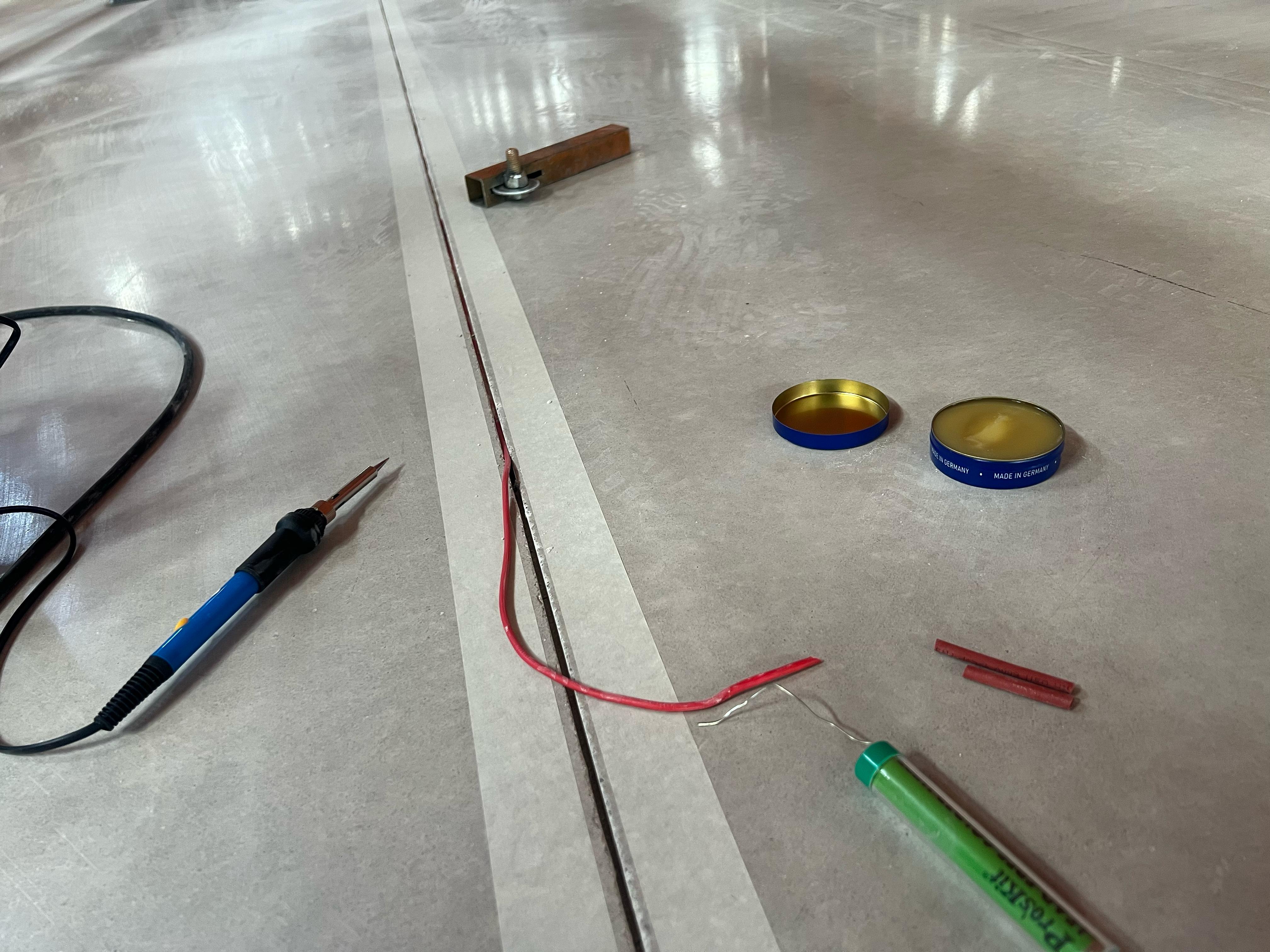
Using specialized floor saws, we cut a groove typically 3mm to 5mm wide and 10mm to 15mm deep into the concrete. The path must be perfectly straight; even a minor deviation can cause a VNA truck to "hunt" or wobble, which can be dangerous at full mast extension.
2. Signal Frequency and Interference
The copper wire is laid into the groove and connected to a low-voltage frequency generator. We typically operate on frequencies between 5kHz and 40kHz.
- A Technical Challenge: One of the most critical aspects of installation is accounting for the reinforcing steel (rebar) within the concrete. If the wire is placed too close to high concentrations of steel, the magnetic field can be distorted. Our engineers conduct thorough floor audits to ensure optimal signal strength.
3. Encapsulation
Once the wire is tested for continuity and signal strength, the groove is filled with a high-strength, semi-rigid epoxy or polyurea resin. This material must be:
- Non-conductive.
- Durable enough to withstand constant heavy wheel traffic.
- Flexible enough to accommodate the natural expansion and contraction of the concrete slab.
The Critical Synergy: Floor Flatness and Wire Guidance
A common misconception is that a wire guidance system can compensate for a poor floor. In reality, the two are inseparable.
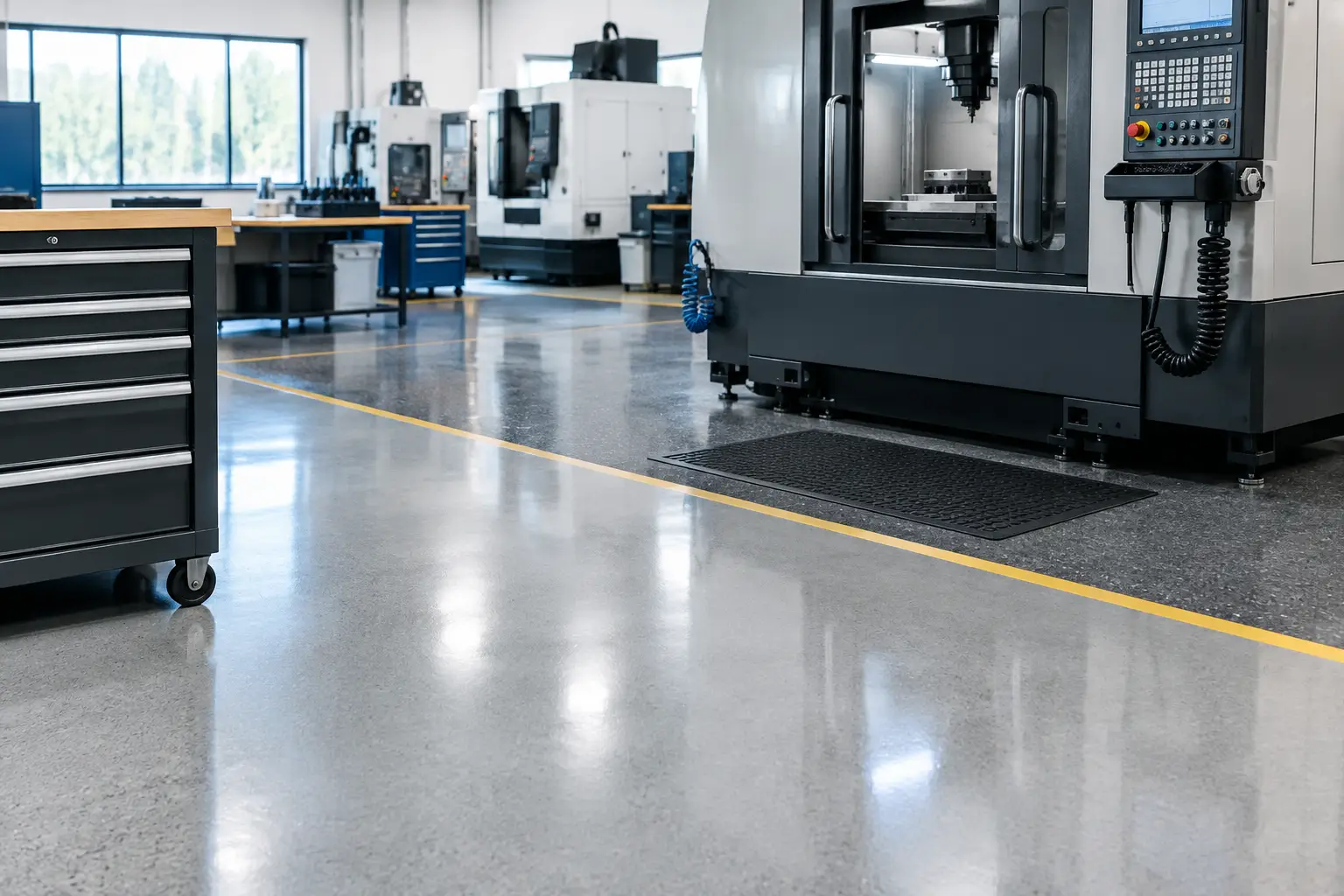
For a VNA truck to operate safely, the floor must meet TR34 DM (Defined Movement) or ACI F-min classifications. In an DM categories floor (the "Superflat" standard), the surface regularity is so high that the truck remains perfectly stable.
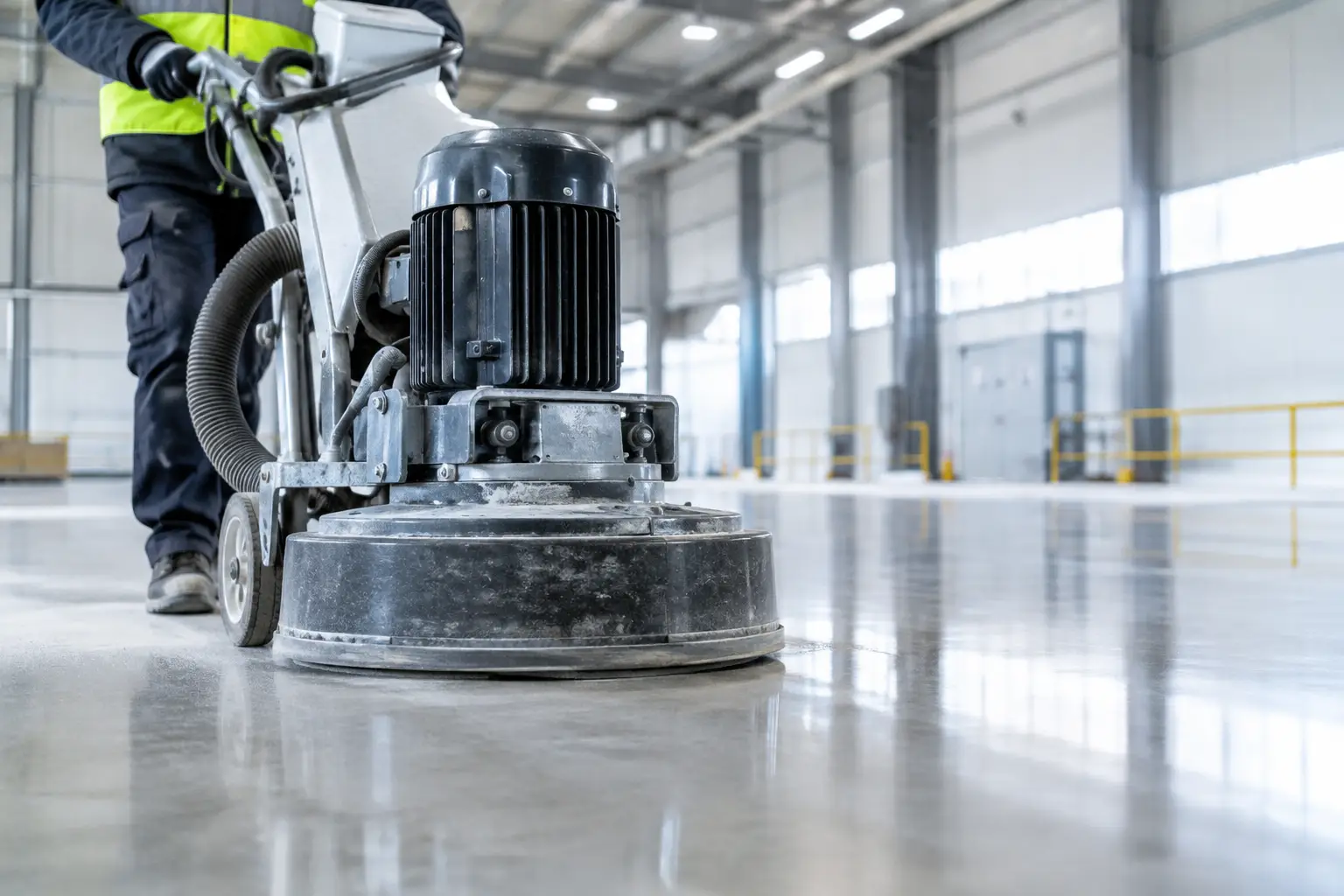
If the floor is uneven, the truck will sway as it moves. Even if the wire keeps the base of the truck on path, the top of the mast—carrying a heavy pallet—could lean dangerously toward the racking. At Osis Group, we offer a turnkey solution: Laser-Screed floor construction or Floor Grinding to FM2 standards combined with professional wire guidance installation.
Maintenance and Joint Stabilization
The longevity of a wire guidance system depends heavily on the condition of the floor joints. If a wire crosses a "curled" or unstable joint, the movement of the concrete slabs under heavy loads can eventually snap the copper wire.
As part of our specialized flooring services, Osis Group provides joint stabilization and joint repair prior to wire installation. By utilizing heavy-duty joint fillers and, if necessary, sub-slab stabilization, we ensure the wire remains protected for the lifespan of the facility.
Conclusion
In the competitive landscape of Middle Eastern logistics, high-density warehousing is no longer a luxury—it’s a necessity. Wire guidance provides the technological "backbone" for these operations, combining safety, speed, and spatial efficiency.
Whether you are developing a new cold storage facility in Riyadh or a logistics hub in Doha, Osis Group brings the technical expertise required to install wire guidance systems that meet the most rigorous global standards.
Contact Osis Group today to discuss your VNA flooring requirements and how our wire guidance solutions can optimize your warehouse performance.